


How to refinish wood furniture? Knowing how to refinish wood furniture is a fulfilling craft that allows you to transform worn-out pieces into beautiful, personalized treasures. Whether you’re restoring an antique or updating a modern piece, learning how to refinish wood furniture involves patience, attention to detail, and the right tools. By following a systematic approach—from stripping away old finishes to applying new stains and protective coats—you can breathe new life into furniture and create stunning pieces that reflect your style and creativity. With each step, you’ll discover the joy of preserving furniture’s integrity while adding your unique touch to enhance its beauty and functionality.
6 Benefits of Furniture Refinishing
Knowing how to refinish wood furniture not only revitalizes its appearance but also brings a myriad of benefits to your home and lifestyle. Beyond the aesthetic appeal of transforming tired, worn pieces into stunning focal points, refinishing allows you to personalize your decor and create furniture that matches your unique style preferences. Moreover, by preserving and enhancing existing furniture rather than buying new, you contribute to sustainability efforts, reducing waste and environmental impact. This process also presents an opportunity to explore your creativity and craftsmanship, turning each piece into a testament to your skill and dedication. Whether you’re restoring a family heirloom or updating thrift store finds, therefore get to know how to refinish wood furniture offers a rewarding journey filled with both practical and artistic rewards.

1. Brings New Life to Your Furniture
Knowing how to refinish wood furniture will give your beloved pieces a fresh breath of life. You might have a vintage table that has seen better days or a dresser that’s been through countless moves. By learning how to refinish wood furniture, you can restore these pieces to their former glory, preserving their charm and character. This not only revives the aesthetic appeal but also enhances the functional value of the furniture.
2. Increases Value
When you know how to refinish wood furniture, it often results in a significant increase in the value of the piece. An old, worn-out table might not fetch much in a garage sale, but once it’s been carefully sanded, stained, and polished, it could become a valuable item. This is especially true for antique or high-quality pieces that simply need a bit of TLC to shine again.

3. Lasts Longer
One of the most practical benefits of learning how to refinish wood furniture is the increased lifespan of your pieces. Instead of discarding worn furniture and purchasing new items, refinishing allows you to keep your beloved pieces in use for many more years. This longevity is particularly valuable for items with sentimental value or those that are irreplaceable.
4. Saves Time and Money
Anyone can learn how to refinish wood furniture with the right tools and patience,and it is also a cost-effective way to update your home decor. Purchasing new furniture can be expensive, and often, new items lack the quality and craftsmanship of older pieces. By refinishing, you save money and avoid the time-consuming process of shopping for new furniture. Plus, refinishing can be a fun and rewarding DIY project.
>> Related post: What Color Furniture Goes with Beige Walls: A Comprehensive Guide
5. Environmentally Friendly
Choosing to refinish rather than replace your furniture is an environmentally friendly decision. It reduces waste and minimizes the demand for new resources. Discovering how to refinish wood furniture can transform your old pieces into new treasures, reducing your environmental footprint.
6. Older Is Better!
Older furniture pieces often boast superior craftsmanship and materials compared to modern mass-produced items. When you understand how to refinish wood furniture, you’re preserving this quality. Mastering how to refinish wood furniture allows you to maintain the integrity and history of older pieces, keeping their stories and craftsmanship alive.
When Should You Decide To Refinish Antique Furniture?
Before embarking on refinishing wood furniture, you should consider whether these damages are caused by the original wood material. Because sometimes, the flaking layers are just the surface paint, and you just need to clean it and you’re done. However, these notes can sometimes be difficult for women or inexperienced people, so we all should know how to refinish wood furniture to protect our beloved furniture products. themselves most effectively.
Many people think that regular maintenance of interior products will affect their original beauty and value. However, with the tips and tricks provided by Q-Furniture, we believe that your home’s furniture will not only become more beautiful but will also be worth it for many years to come.
However, you should also consider how damaged your wooden furniture products are. If a wooden chair is too old and the restoration does not bring value in the future, you should not do this repair. But sometimes when the combination of concrete and wood furniture products can continue to be used for many years to come, the maintenance is absolutely creating good value.

Things To Prepare For Refinish Wood Furniture
It’s critical to organize your resources before beginning your job to restore or refinish wooden furniture in order to work more quickly and effectively. A handy checklist of materials is provided below for you to use when starting your subsequent effort to restore wood furniture:
- Towels, sponges, and dish soap
- Paint remover
- Paint thinner
- Sander Electric
- Sandpaper with different grits
- Scrapers for paint (plastic or metal)
- Acrylic putty
- Varnish, wood sealant, and polyurethane
- Paint or wood stain (Min wax is a wonderful brand; choose the right color!)
- Fabric droplets
- Wax coating item
- Eye protection
- Gloves resistant to chemicals
- Cleaner of carpets
- Safety gear
- Drop cloths
- Sandpaper or sanding block
- Acetone
- Tack cloth

Step 1: Apply Stripper
The first step, we should clean the surface of wooden furniture products to remove layers of dirt and peeling paint. This is the most effective way to refinish wood furniture.
Many individuals believe that employing a heavy-duty cleaner will be more productive on a piece that is very unclean. However, using just a warm water and dish soap solution to clean and protect the item is the quickest and most efficient method. Some experts advise using Dawn or another comparable brand of dish detergent to complete the task.
Use a sponge that has been soapy to gently scrub the surface; if your piece has carvings and moldings that need to be reached, use a paintbrush. Use the wrung-out sponge to rinse the surface with new water once thoroughly clean it. Once the soap has been removed, use a towel to pat the item dry.
Step 2: Remove Old Finish
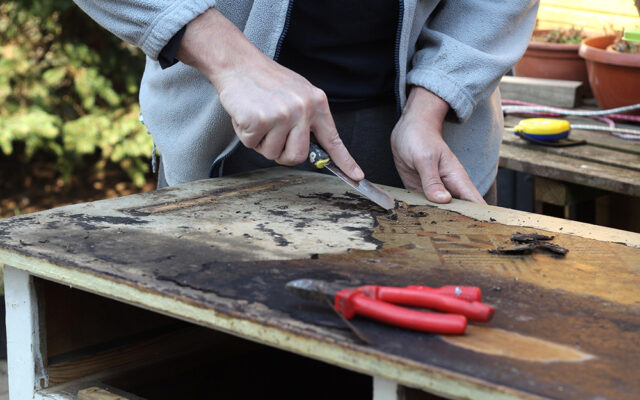
The hardest aspect of the job must be finished first when refinishing furniture. It can be difficult and messy to remove the old finish. You could initially think you’ve completely damaged the piece until you start getting down to the wood underlying the muck. Remain patient. By the time you reach the last step of the wood, you will have progressed from making a mess to producing a work of art. You’ll be pleased with what you were able to produce once you’re done.
For concrete furniture products such as concrete tables, curved concrete benches, concrete coffee tables, cleaning tasks will be much easier. Because they are almost not subject to termites or rotting. However, for refinishing wood furniture, you need more patience and hard work.
Old paint and varnish can be removed in a few different ways, mostly by sanding and using chemical strippers. Heat guns can be used for stripping as well, and they are occasionally added to other techniques to help remove extremely difficult finishes.
Step 3: Clean With Mineral Spirits
Chemical strippers can be harmful if handled poorly, despite how useful they are. When utilizing these compounds, make sure you have enough ventilation, rubber gloves, and eye protection. They are intended to soften, peel, and blister paint and varnish, after all. You don’t want them to harm your skin, lungs, or eyes in the same way. Must adhere to the safety instructions printed on the container.
Use strippers that can be rinsed away with water or don’t need to be cleaned. This kind of language will be on the label. Strippers labeled “do not clean” can leave behind residue that needs to be sanded. The “wash away” kind may have dirt washed off of it by running water over it. This is one of the crucial phases in how to refinish wood furniture, according to Q-Furniture. Keep in mind that water might cause the wood grain to bulge, necessitating a quick light sanding.

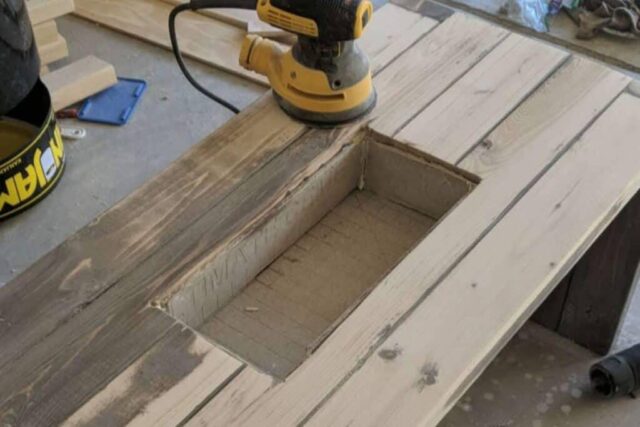
Step 4: Sand Smooth
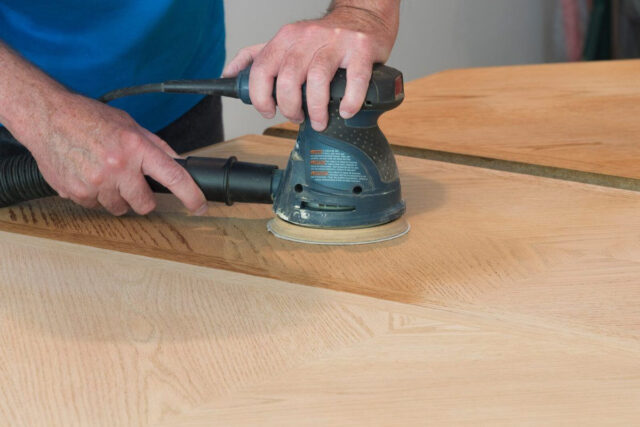
Recall to maintain the best possible level of cleanliness in your workspace during the entire furniture refinishing procedure. This involves sweeping up any leftover dust after sanding. It is possible for dust to become entrapped on the wood’s surface and penetrate the stains and topcoats. After vacuuming out the dust, use a moist cloth to clean the wood before applying the finish.
Use a moist towel to wipe off the project before applying the finish. Sand the wood to remove the elevated grain after allowing it to dry. To lessen the likelihood that the water in the finish may increase the grain when applied, you might wish to repeat this process a few times. If you already applied water-based stain using this method, you shouldn’t need to do anything.

Step 5: Remove Sanding Residue
When it comes to stains, there are many options available. Stains can be gel, oil, or water-based. There are also goods that function as both a stain and a finish. Before starting the staining process, make sure to adhere to the directions on the product label. The brand of stain to use is Min wax. Since there are many options, test the stain color on a different piece of wood before using it on your furniture.
There are numerous alternatives for paints as well. There are several paint finishes available, such as latex or oil-based enamel, that will offer a long-lasting coating. Prior to painting, follow the directions on the product’s label.

Step 6: Apply Stain
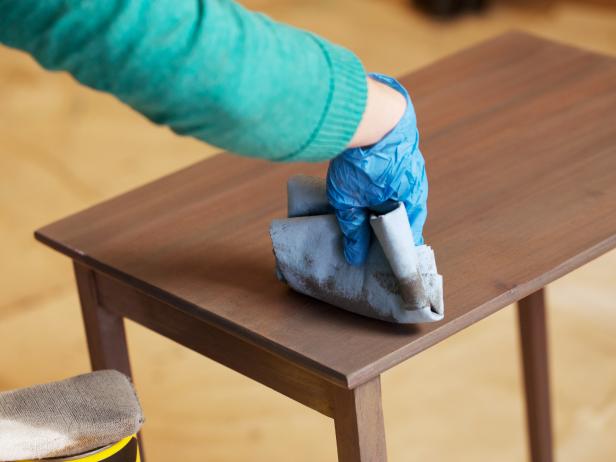
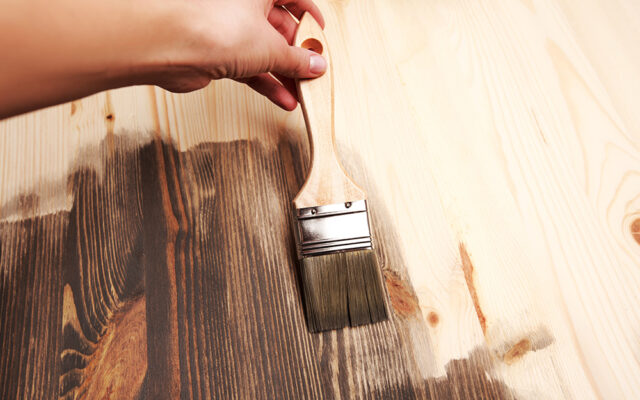
Always abide by the instructions provided by the product’s manufacturer. Liquid stains are often applied using a brush or rag and let to soak into the wood. The color will become darker the longer the stain is allowed to stay on the surface. This, however, only partially succeeds. The artwork is then given time to dry once the excess stain has been removed with a clean rag. Repeating these procedures results in a darker finish.
To get the appropriate color and tone, gel finishes are applied with a rag, rubbed on, and then wiped off as needed. When the stain has dried for the advised amount of time, the furniture piece should be rubbed with a dry, clean rag.
Step 7: Remove Excess Stain
Due to their simplicity of use, one step stains and finishes are common. After all, the object receives both the color and the finish at the same time, skipping numerous processes and perhaps even several hours of labor. With these products, getting a really nice finish can be trickier. Since the finish itself is colored, the color doesn’t penetrate the wood like a penetrating stain but rather sits on top of it.
Thus, sections with a thicker finish will have more color than those with a thinner finish. The final finish will make brush strokes against the grain or other surface flaws more noticeable. These coatings are also less translucent, which could mask beneficial grain qualities.
Step 8: Apply Clear Coat
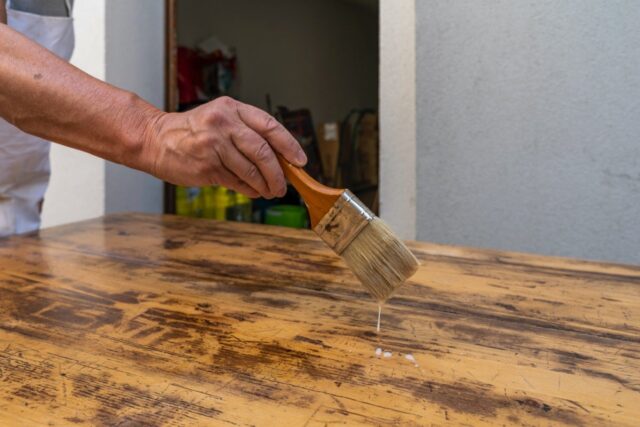
Applying a finish coat is the final step after staining or painting which is how to refinish wood furniture. There are various finish products available. Your decision will be influenced by a number of things, such as:
You want the appearance of wood furniture.
The toughness you require
The kind of wood used to make your furniture, how frequently and how the item will be used
Your level of expertise
Certain finishes need additional spray equipment to complete the job because they are designed to be sprayed on. It is advised to choose finishes you can wipe on or brush on for beginners and amateurs.
Step 9: Let Dry
Prior to usage, make sure the chair has been cured for 24 hours in a warm, dry, well-ventilated space. Now free of rust and freshly painted, this chair is prepared for a few more years of outside use.
>> Related post: Authentic Craftsmanship – Your Guide to Sourcing Furniture Made in Vietnam
Tips For Refinishing Wooden Furniture
- Use full or natural light: Make sure you’re working in a well-lit area when staining, painting, and finishing your wood furniture piece. You’ll be able to see any drips, runs, or missed locations thanks to this before it’s too late.
- Remember to maintain your workspace as spotless as you can throughout the entire furniture refinishing procedure. It is possible for dust to become entrapped on the wood’s surface and penetrate the stains and topcoats.
- Stirring goods Never jiggle a stain or finish container. Instead, give the mixture a little toss to make sure all the ingredients are evenly distributed and haven’t sunk to the bottom.
Transform Your Home with Q-Furniture: A Beginner’s Guide to Refinishing Wood Furniture
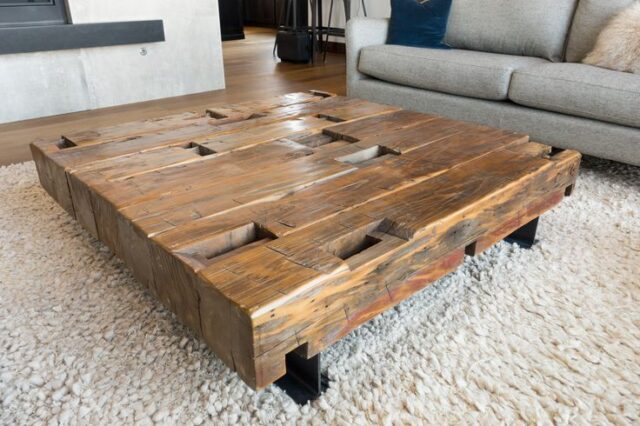
Mastering how to refinish wood furniture is an art that brings a touch of elegance and personality to your home decor. Whether you’re dealing with a cherished family heirloom or a thrift store find, the process of refinishing can turn any piece into a showstopper. Not only does it breathe new life into old furniture, but it also provides a sense of accomplishment and creativity. For those new to this craft, mastering how to refinish furniture might seem daunting, but with the right guidance and a bit of patience, anyone can master the skill. Let’s explore the easiest ways to transform your worn-out wood furniture into stunning pieces that you’ll be proud to showcase in your home. And for those seeking quality pieces to start with, look no further than Q-Furniture, where you can find an array of items perfect for refinishing and personalizing.Explore our expert suggestions and visit QF – Factory Direct Furniture and Q-Furniture LinkedIn.
Conclusion
Understanding how to refinish wood furniture is a rewarding process that can breathe new life into old pieces. By following these steps and understanding the benefits, you can transform your furniture and enhance your home decor. Whether you’re a beginner or have some experience, learning how to refinish wood furniture is essential and is a valuable skill that offers numerous benefits.








