


Choosing outdoor furniture for a hotel, resort, rooftop café, restaurant, or commercial garden is not only about appearance. A product may look beautiful at first, but if it wears out quickly, becomes unstable, or requires frequent replacement, it can increase operating costs and affect the customer experience.
That is why outdoor concrete and wood furniture has become a strong option for B2B buyers who need furniture that looks premium, feels durable, and performs well in demanding outdoor environments.
The combination of concrete, especially GFRC, with natural wood such as teak creates a balance between strength and warmth. Concrete gives the product a solid architectural character, while wood adds a natural, welcoming feeling.
However, concrete and wood furniture is not suitable for every project. To make the right sourcing decision, buyers need to understand when this material combination works best and when another solution may be more practical.

What Is Outdoor Concrete and Wood Furniture?
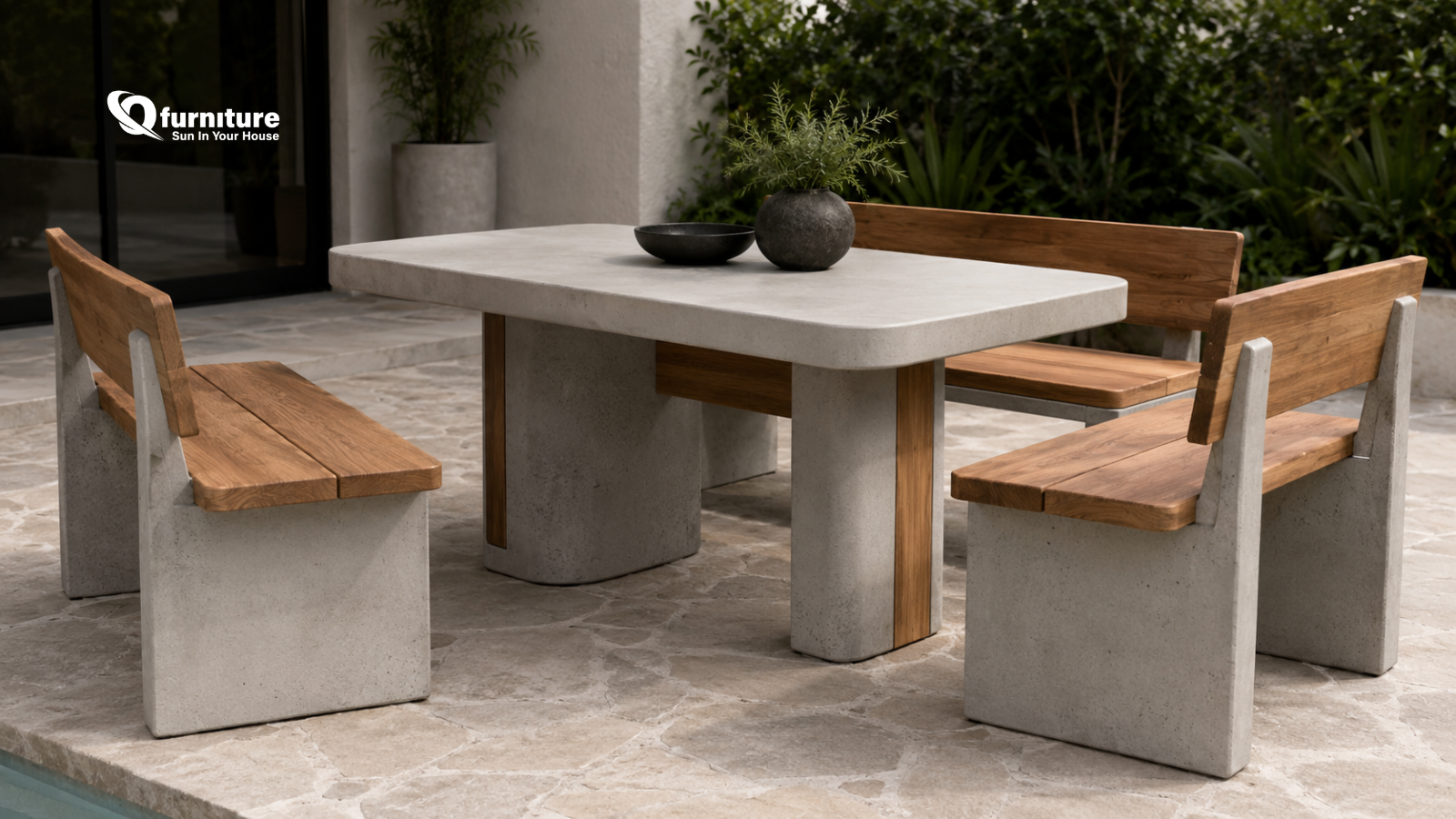
Outdoor concrete and wood furniture refers to furniture that combines concrete elements with natural wood or outdoor-grade wood components. The concrete part can be used for table bases, tabletops, stools, benches, planters, side tables, or decorative structures. The wood part is often used to soften the design and create a warmer user experience.
In commercial outdoor furniture, the concrete used is often not traditional heavy solid concrete. Many manufacturers use GFRC, which stands for Glass Fiber Reinforced Concrete. GFRC allows the furniture to keep the real texture and premium appearance of concrete while reducing unnecessary weight compared to solid cast concrete.
Common product types include concrete and wood dining tables, GFRC coffee tables, outdoor benches with teak wood details, resort lounge tables, poolside side tables, commercial planters, and custom furniture for hospitality projects.
Why Concrete and Wood Furniture Works Well Outdoors
Outdoor spaces require materials that can handle sun, rain, humidity, wind, temperature changes, and daily use. In commercial environments, furniture is used much more frequently than in private residential spaces. Guests sit, move, lean, place food and drinks, and interact with the furniture throughout the day.
This is where outdoor concrete and wood furniture provides strong value. Concrete creates a sense of stability and permanence. It feels solid, architectural, and reliable. Wood adds comfort and visual warmth, making the furniture suitable for spaces that need both durability and hospitality appeal.
For hotels, resorts, restaurants, and cafés, furniture is also part of the brand image. A well-designed concrete and wood furniture collection can make an outdoor area look more refined, premium, and professionally planned.
When Should You Use Outdoor Concrete and Wood Furniture?
Use It When the Project Needs a Premium and Distinctive Look
Outdoor concrete and wood furniture is a good choice when the project needs to communicate quality, stability, and design value. Concrete has a modern architectural appearance, while wood prevents the overall look from feeling too cold or industrial.
This combination works especially well for luxury resorts, boutique hotels, rooftop bars, premium cafés, poolside lounges, and outdoor restaurant areas. It helps the space feel more designed, more permanent, and more memorable.
Use It When the Furniture Must Handle Heavy Commercial Use
In B2B projects, outdoor furniture must perform under daily pressure. A restaurant terrace, hotel garden, or resort pool area may serve many guests every day. Furniture that is too light, too thin, or poorly constructed can quickly become damaged or unstable.
Concrete and wood furniture, especially when made with GFRC and properly treated teak wood, is suitable for areas that need strong performance over time. It is a practical choice for dining areas, lounge zones, hospitality terraces, pool bars, and commercial outdoor seating layouts.
Use It When Stability Is Important
Some outdoor spaces need furniture that does not move easily. Rooftop cafés, open terraces, coastal resorts, and windy garden areas often require furniture with a certain level of weight and stability.
Concrete furniture provides this advantage. It gives users a secure and stable feeling. When designed correctly, GFRC furniture can achieve a good balance: solid enough for outdoor use, but not as difficult to handle as traditional heavy concrete.
Use It When the Buyer Cares About Long-Term Value
Many buyers focus only on the initial purchase price. However, in commercial projects, the real cost includes replacement, maintenance, damage risk, logistics, and brand impact.
Outdoor concrete and wood furniture may not be the cheapest option at the beginning, but it can offer better long-term value when the product is well designed and manufactured. A durable furniture collection can reduce replacement frequency and help the outdoor space maintain a high-end image for longer.
When Should You Avoid Outdoor Concrete and Wood Furniture?
Avoid It When the Layout Changes Too Often
If a space needs to move furniture every day, concrete and wood furniture may not be the most convenient choice. For example, pop-up events, small cafés that store furniture indoors every night, or highly flexible event spaces may need lighter furniture.
GFRC is lighter than traditional concrete, but it still has a solid weight. It is better suited for spaces with a stable layout or areas where furniture is moved only occasionally.
Avoid It When the Project Only Focuses on the Lowest Initial Price
Concrete and wood furniture is usually positioned above basic plastic, low-cost metal, or simple aluminum furniture. If the project only needs a short-term solution or has a very limited budget, other materials may be more suitable.
However, for hotels, resorts, restaurants, and commercial outdoor spaces that care about brand image and durability, concrete and wood furniture can be a better investment over time.
Avoid It When the Product Is Not Properly Designed for Outdoor Use
Not every concrete and wood product is suitable for outdoor environments. If the concrete surface is not sealed properly, it may absorb stains or moisture. If the wood is not suitable for outdoor use, it may crack, warp, or fade too quickly. If the connection details are weak, the product may become unstable after repeated use.
Before placing an order, buyers should ask about the material specification, surface treatment, drainage design, hardware quality, packaging method, and maintenance instructions.
Why GFRC and Teak Wood Are a Strong Combination
GFRC and teak wood are two materials that work well together in outdoor furniture.
GFRC provides the strength, texture, and architectural feeling of concrete while allowing more flexible forms and reduced weight. It can be used for table bases, tops, planters, benches, and custom outdoor structures.
Teak wood brings warmth, natural grain, and a premium outdoor appearance. When treated correctly, teak is suitable for outdoor environments and adds a softer touch to the furniture.
Together, GFRC and teak wood create furniture that feels both strong and refined. This makes the combination especially attractive for hotels, resorts, outdoor restaurants, cafés, and hospitality projects that need durable products with a high-end design language.
What Should B2B Buyers Check Before Ordering?
Check the Climate Conditions
The buyer should consider where the furniture will be used. A coastal resort, poolside area, rooftop terrace, tropical garden, and restaurant patio all have different exposure levels. Sun, rain, humidity, salt air, and wind can affect material performance.
Check the Usage Frequency
A high-traffic commercial space needs stronger furniture than a decorative area with limited use. Buyers should explain the expected usage level to the manufacturer before confirming the product specification.
Check the Weight and Installation Requirements
Concrete and wood furniture should be stable but still manageable for delivery, installation, cleaning, and maintenance. This is especially important for rooftop projects, resorts with large layouts, and export orders.
Check the Surface Finish
The concrete surface should be finished to reduce staining, moisture absorption, and surface damage. The wood should be properly treated for outdoor conditions. The finish should also match the design style of the project.
Check the Manufacturer’s Export Capability
For B2B sourcing, product design is only one part of the decision. Buyers should also check production consistency, quality control, packaging, loading method, documentation, and delivery reliability.
A good manufacturer should understand not only how to make the product, but also how to prepare it for commercial use and international shipping.
Conclusion: Choose Concrete and Wood Furniture for Long-Term Outdoor Value
Outdoor concrete and wood furniture is not the right choice for every project. It may not be ideal for spaces that require constant movement or projects that only focus on the lowest initial cost.
However, for hotels, resorts, cafés, restaurants, rooftop spaces, and commercial outdoor areas that need durability, stability, and a premium visual identity, this material combination offers strong long-term value.
When made with the right materials such as GFRC and teak wood, outdoor concrete and wood furniture can support both function and design. It helps commercial spaces look more refined, feel more stable, and perform better over time.
For B2B buyers looking for outdoor furniture that combines strength, natural warmth, and long-term usability, concrete and wood furniture is a practical and valuable solution.








