


Commercial buyers evaluating a concrete outdoor table usually need more than design inspiration. They need a broad view of the category, a clear understanding of where different table types fit, and a practical way to move from early research to supplier shortlisting. This pillar guide introduces outdoor concrete tables from a B2B perspective, covering major product types, application fit, selection factors, and sourcing direction for hospitality, café, and project use.
For buyers reviewing the wider material category before narrowing down specific table programs, it also makes sense to start from the broader Concrete Furniture range.
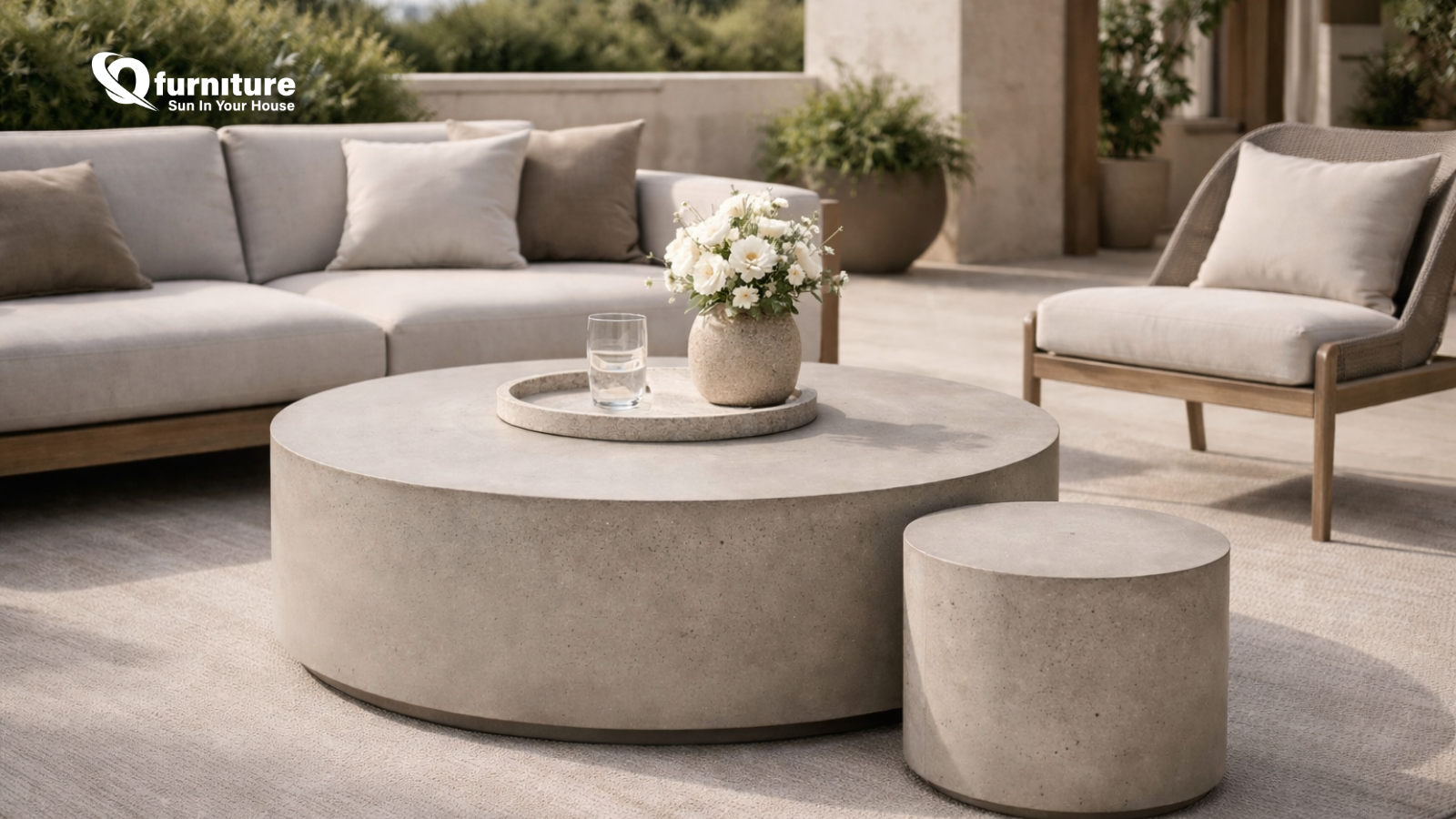
Outdoor Concrete Tables for Commercial Outdoor Spaces: What B2B Buyers Need to Know
Outdoor concrete tables sit at the intersection of material performance, visual consistency, and project suitability. For B2B buyers, the category is not only about appearance. It is also about whether a concrete outdoor table can meet the demands of commercial outdoor use, support repeatable procurement, and align with sourcing expectations across hospitality and project environments.
At a category level, outdoor concrete tables are often evaluated by how well they fit outdoor layouts, how consistently they can be produced, and how suitable they are for long-term use in commercial spaces. That makes this topic relevant for importers, distributors, procurement teams, hospitality buyers, and specifiers who are comparing table types and supplier capabilities at the same time.
What Defines an Outdoor Concrete Table in a Commercial Setting?
In a commercial setting, a concrete outdoor table is defined less by decorative appeal alone and more by use-case relevance. Buyers typically assess whether the table is appropriate for outdoor traffic, whether its look can stay consistent across multiple units, and whether it works within a broader furniture or project program.
This is an important distinction. Outdoor concrete tables for commercial use are not approached in the same way as homeowner-focused products. Commercial buyers usually look at function, durability expectations, finish consistency, and how well the table type fits real operational environments such as restaurant terraces, hotel rooftops, resort decks, or mixed-use outdoor zones.
Why Outdoor Concrete Tables Are Used Across Commercial Outdoor Spaces
Outdoor concrete tables are widely used across commercial outdoor spaces because they offer a strong material presence and a stable visual identity. In hospitality and project environments, that matters. Buyers often need furniture that can support a clear design language without feeling too lightweight or temporary in outdoor settings.
The category is also attractive because outdoor concrete tables are often associated with long-term use, practical upkeep expectations, and strong compatibility with contemporary hospitality and commercial concepts. For many buyers, the value lies in how the category balances visual weight with day-to-day usability.
Concrete Outdoor Table Types by Commercial Use
At a pillar level, the main value here is understanding how different table types serve different commercial functions. Rather than treating all outdoor concrete tables as one product group, buyers usually benefit from viewing them by intended use and placement.
Concrete Outdoor Dining Table
A concrete outdoor dining table is typically relevant for restaurant patios, resort dining zones, and outdoor dining terraces where seated meal service is a core function. In these settings, buyers often consider how the table supports layout planning, seating capacity, and visual consistency across multiple placements.
Because dining use usually involves repeatable formats, a concrete outdoor dining table is often reviewed not only for style but also for dimension planning and program scalability. Buyers exploring this subtype in more detail can continue to the Concrete Dining Tables category.
Concrete Outdoor Coffee Table

A concrete outdoor coffee table is commonly used in lounge areas, rooftop seating, and casual hospitality zones where the focus is interaction, waiting, or informal gathering rather than full dining service. Its role is usually social and spatial, helping define relaxed seating arrangements.
For B2B buyers, this subtype becomes relevant when the outdoor concept includes soft seating, conversation areas, or hospitality lounge programming. Buyers looking for deeper product exploration can move from this overview to Concrete Coffee Tables.
Concrete Outdoor Fire Table
A concrete outdoor fire table is generally associated with premium hospitality outdoor spaces and evening lounge environments. It often acts as a gathering point within rooftop, resort, or branded outdoor concepts where atmosphere and spatial anchoring matter.
At the pillar level, the key point is buyer relevance. A concrete outdoor fire table may be worth considering when the outdoor experience is designed around longer dwell time, premium positioning, or social gathering zones. More detailed compliance or specification questions should be handled separately at a narrower content level.
Concrete Outdoor End Table
A concrete outdoor end table is usually selected for modular seating support, accent utility, or companion-table use in outdoor lounge settings. It tends to serve a secondary but still practical function, supporting drinks, personal items, or layered furniture arrangements.
For buyers, this subtype is useful when the outdoor layout needs smaller tables to support seating clusters rather than anchor them. Since some product taxonomies group this function under side tables, this section should naturally direct readers toward Concrete Side Tables.
How to Evaluate Outdoor Concrete Tables for Hospitality, Café, and Project Use
Once buyers understand the category and subtype landscape, the next step is evaluation. This is where outdoor concrete tables move from broad category research into shortlist logic. The objective is not only to identify the right table type, but also to understand whether the product direction aligns with the operational needs of the project and the capabilities of the supplier.
Match Table Type to Space Function
The first evaluation step is to match the table type to the actual function of the space. A concrete outdoor dining table serves a different role from a concrete outdoor coffee table, a concrete outdoor fire table, or a concrete outdoor end table. Dining areas need a table type that supports seated meal service, while lounge areas often prioritize lower-profile gathering and flexible interaction.
In commercial settings, selecting by appearance alone often leads to weaker layout performance. Buyers usually get better outcomes when they first identify whether the space is intended for dining, casual lounging, centered gathering, or accessory support, then align the table type to that purpose.
Assess Material, Finish, and Maintenance Expectations
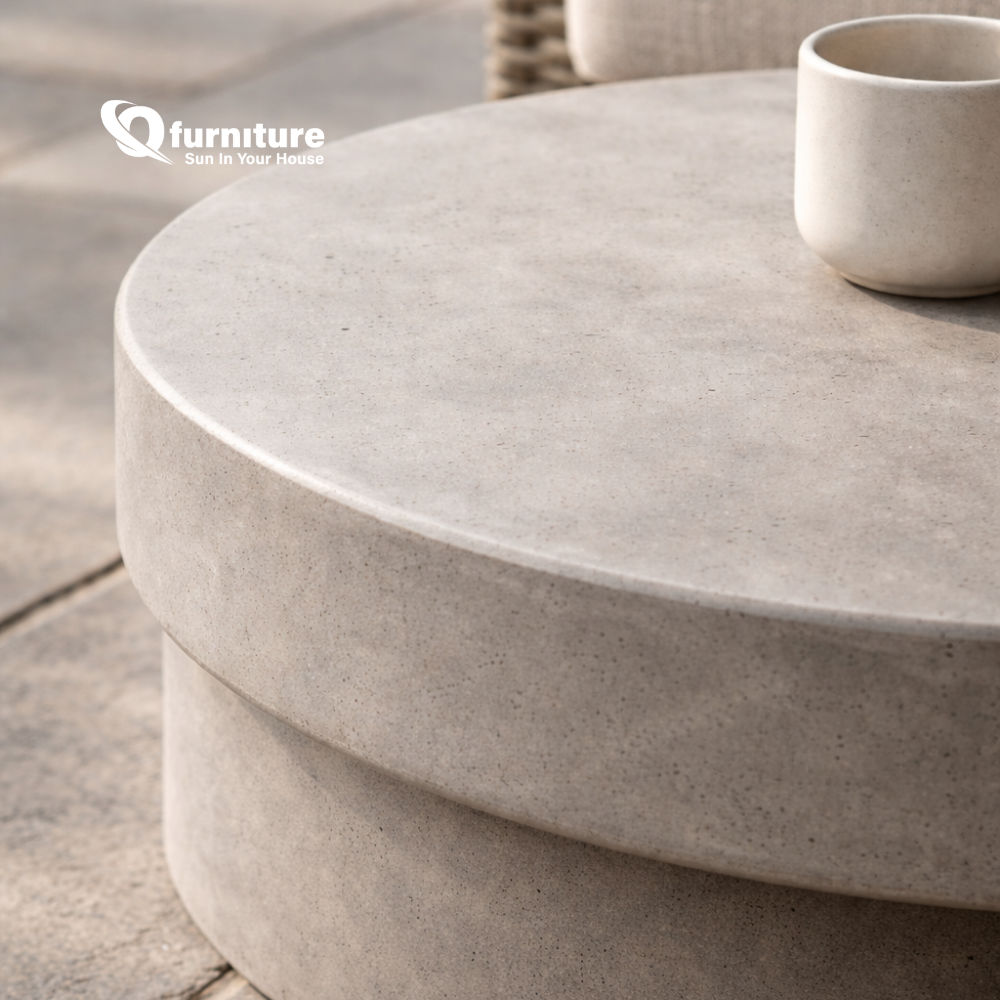
A concrete outdoor table should also be evaluated in terms of finish expectations and practical upkeep. Buyers often want a finish that supports the project concept, but they also need a realistic understanding of how the surface will perform in regular outdoor use.
At this pillar level, the important point is balance. Outdoor concrete tables can offer a strong material character, but buyers should still align appearance expectations with cleaning routines, sealing considerations, and general upkeep planning. This section should remain an overview rather than becoming a full maintenance guide.
Consider Scale, Layout, and Commercial Traffic
Scale is especially important in hospitality, café, and project environments. Outdoor concrete tables need to fit the spatial footprint, circulation paths, and seating density of the site. A table that looks appropriate in isolation may still feel too dominant or too limited once placed within a live commercial layout.
For B2B buyers, the better question is not only whether the table fits visually, but whether it supports movement, user interaction, and the intended operating rhythm of the space. This is particularly important in higher-traffic environments where layout efficiency and user flow directly affect performance.
Review Customization and Project Requirements Early
In many B2B projects, customization questions should be raised early rather than late. A concrete outdoor table program may require specific dimensions, finish alignment, or visual adjustments to match the broader outdoor concept. Waiting too long to define these requirements can slow down supplier evaluation and product development discussions.
This is also the point where commercial buyers often start moving toward OEM/ODM conversations, catalog review, or RFQ preparation. Early clarity helps buyers compare not only product ideas but also supplier fit.
Where Outdoor Concrete Tables Fit Best in Commercial Outdoor Environments
At a category level, outdoor concrete tables are most useful when buyers understand where they perform best. The category is broad, but its strongest fit usually appears in outdoor environments where durability, visual stability, and a clear material identity matter.
For broader inspiration around weather-appropriate applications, buyers can also explore Outdoor Concrete Furniture: Built to Withstand the Elements.
Hospitality Terraces, Resort Decks, and Café Patios
Hospitality terraces, resort decks, and café patios are among the clearest application areas for outdoor concrete tables. These environments often need furniture that feels substantial, visually grounded, and suitable for repeated guest use.
In these contexts, outdoor concrete tables can support both functional and visual goals. They work well where buyers want durability, outdoor relevance, and a consistent design language across dining and lounge zones.
Public, Mixed-Use, and Landscape Projects
Outdoor concrete tables can also fit public, mixed-use, and landscape-oriented projects where communal use and long-term placement are important. In these environments, buyers may be looking for furniture solutions that feel stable, durable, and appropriate for open outdoor use.
The category can be attractive here because it is often associated with longevity and reduced replacement pressure over time. At the same time, this pillar should stay at the application level rather than moving into technical engineering discussion.
Brand-Led Outdoor Concepts Requiring Custom Visual Direction
Some outdoor projects are strongly shaped by brand direction. In those cases, a concrete outdoor table may be part of a wider concept requiring consistency in finish, form, or visual tone across multiple outdoor pieces.
That makes the category relevant not only for standard procurement but also for projects that need custom direction. For buyers in this position, the value of outdoor concrete tables is not only in the category itself, but in how well the supplier can support alignment with the intended concept.
Sourcing Outdoor Concrete Tables from a B2B Export Manufacturer
For many commercial buyers, category research eventually leads to supplier evaluation. This is where the sourcing side becomes critical. Outdoor concrete tables may look straightforward at first, but B2B procurement usually depends on more than product appearance. Buyers also need to assess development support, production repeatability, quality control, and export readiness.
OEM/ODM Support for Outdoor Concrete Table Programs
OEM/ODM support becomes important when buyers need more than an off-the-shelf item. A concrete outdoor table program may require custom dimensions, finish adaptation, or adjustments to fit a hospitality or project concept. In those cases, development capability can be a major part of supplier suitability.
For teams comparing sourcing models, it is useful to continue to OEM vs ODM for Wood-Concrete Furniture: Custom Design Capabilities in Vietnam Manufacturing. That deeper article can help buyers decide when custom development is necessary and how it affects the sourcing process.
Production Capacity, Quality Control, and Export Readiness
When shortlisting suppliers for outdoor concrete tables, buyers often review production capacity, quality control systems, and export capability alongside the products themselves. A supplier may have the right visual direction, but that alone is not enough for commercial programs or repeat orders.
This is especially relevant for importers, wholesalers, and project buyers sourcing through a B2B export manufacturer. Related decision points often extend into export planning, shipment handling, production timing, and sourcing structure, which is why buyers may also move to articles such as Exporting Wood-Concrete Furniture from Vietnam to US, EU & Australia: Market Requirements Guide, Shipping Heavy Wood-Concrete Furniture from Vietnam, Vietnam Wood-Concrete Furniture Lead Times, and Wholesale Furniture Manufacturers in Vietnam – Bulk Sourcing.
From Category Research to Catalog Request and RFQ
At the end of the research stage, buyers usually move through a simple path: understand the category, identify relevant table types, review supplier fit, request a catalog, and then prepare an RFQ. For outdoor concrete tables, this journey is most effective when the buyer already knows which commercial environments, table functions, and customization needs matter most.
For teams moving into supplier discussions, a soft next step is to request a catalog, discuss an RFQ, or open an OEM/ODM conversation around an outdoor concrete table program. That approach is better aligned with B2B hospitality and project sourcing than a retail-style call to action.
FAQ
Are outdoor concrete tables suitable for high-traffic commercial spaces?
Yes, outdoor concrete tables are often considered suitable for high-traffic commercial spaces because the category is valued for durability, visual stability, and long-term use potential. Buyers should still assess layout fit, upkeep expectations, and supplier quality before final selection.
How much maintenance does a concrete outdoor table usually require?
A concrete outdoor table usually requires moderate, practical maintenance rather than highly complex upkeep. Buyers should review cleaning routines, surface expectations, and sealing considerations early, while keeping in mind that maintenance needs can vary by finish and project use.
What is the difference between a concrete outdoor dining table and a concrete outdoor coffee table?
The main difference is function and placement. A concrete outdoor dining table is intended for seated meal service, while a concrete outdoor coffee table is typically used in lounge or casual gathering areas. Height, interaction style, and space planning are usually different between the two.
Can outdoor concrete tables be customized for hospitality or project use?
Yes, outdoor concrete tables can often be customized for hospitality or project use, especially when buyers work with a supplier offering OEM/ODM support. Common areas of discussion include dimensions, finish direction, and alignment with the broader outdoor concept.
When should buyers choose a concrete outdoor end table or a concrete outdoor fire table?
A concrete outdoor end table is usually the better choice when the layout needs smaller companion surfaces to support lounge seating. A concrete outdoor fire table is more relevant when the project needs a gathering centerpiece for premium outdoor hospitality settings or evening social use.








