


Concrete vs. Wood Outdoor Furniture: Deciding the Definitive Long-Term Investment for Commercial & High-End Projects
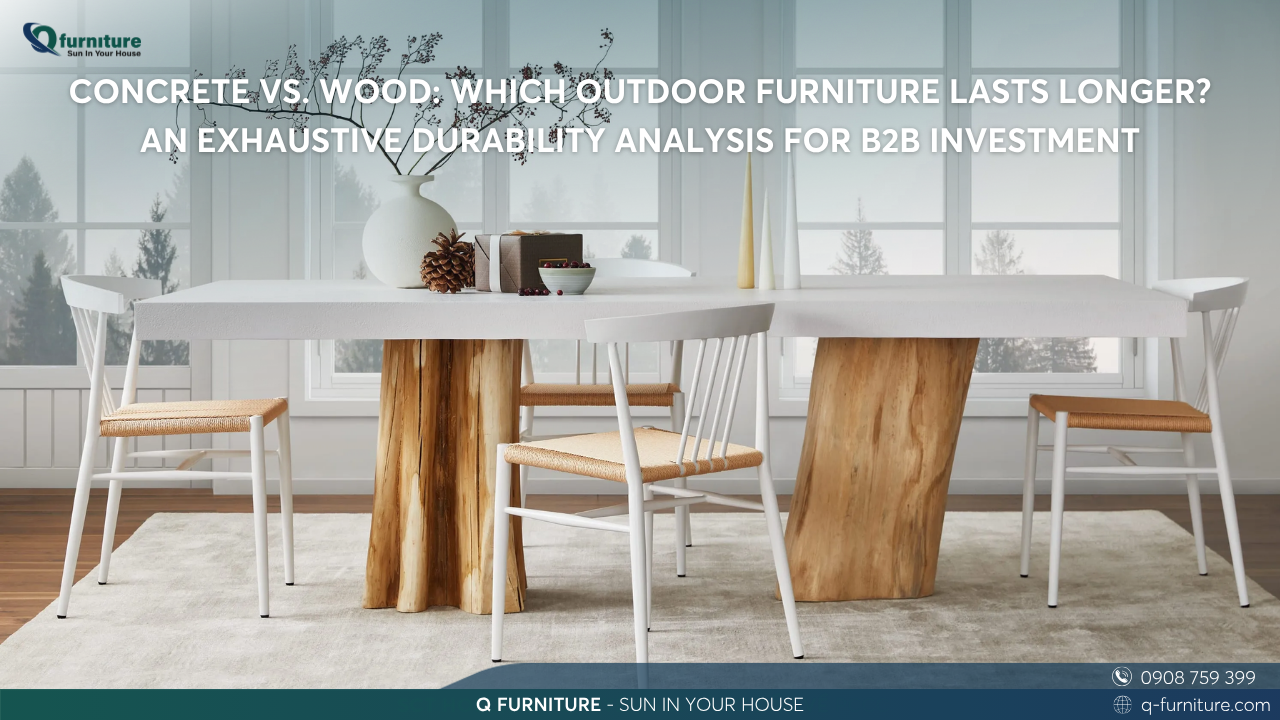
In the realm of high-value commercial design, hospitality, and public space architecture, the fundamental choice between concrete vs. wood outdoor furniture represents a significant long-term investment decision. It is a debate between natural warmth and industrial permanence. For B2B procurement managers and designers, the question extends beyond initial aesthetics; it centers on outdoor furniture durability, maintenance costs, and the material’s total lifecycle performance in adverse conditions.
As an ISO-certified, high-capacity global supplier, Q-Furniture leverages over 15 years of manufacturing expertise in both premium wood and advanced GFRC (Glass Fiber Reinforced Concrete). Drawing upon the rigorous quality standards we apply, similar to the precision seen in specialized B2B services, this expert analysis provides the definitive, data-driven comparison. We will systematically dissect the material science, maintenance requirements, and true longevity of both concrete furniture and quality wood products, ensuring your next large-scale furniture acquisition delivers optimal return on investment (ROI).
For more, read our article “Concrete vs. Wood Outdoor Furniture: Deciding the Definitive Long-Term Investment for Commercial & High-End Projects“
The Science of Longevity: Deconstructing Material Resilience
For commercial project developers and international importers, explore our specialized capabilities as a concrete furniture manufacturer for B2B export.
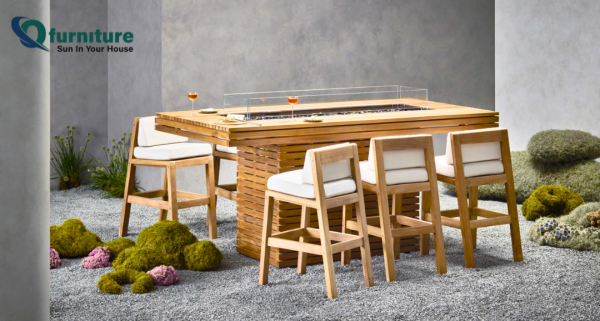
This section will establish the foundation of durability by analyzing the core properties of concrete and wood against key environmental threats.
Resistance to Moisture and Biological Degradation: Concrete’s Impervious Nature
The most significant threat to the longevity of outdoor furniture is moisture, which facilitates biological degradation (rot, mold, and mildew). We must rigorously compare how these materials react to prolonged exposure to rain, humidity, and standing water.
- Wood’s Hydroscopic Nature: Detail how wood fibers absorb water, leading to swelling, warping, and eventually, the ideal environment for fungal and bacterial decay. Highlight the necessity of sealants and drainage design in wood furniture.
- Concrete as a Barrier: Emphasize that quality concrete, particularly GFRC, is non-porous when correctly sealed, making it fundamentally impervious to rot. It does not provide nutrients for mold or mildew. This lack of degradation significantly boosts concrete furniture durability. Mention Q-Furniture’s specific sealing process that ensures maximum water resistance.
- Insect and Pest Immunity: Directly connecting to the high standards of B2B services, it details how concrete is inherently immune to insect damage (termites, beetles), which is a common, costly risk for even the hardest woods. This guarantees structural integrity where wood cannot.
Thermal Stability and UV Resistance: The Threat of Weather Cycling
Outdoor furniture is subjected to extreme temperature fluctuations and intense UV radiation, which cause materials to expand, contract, and fade.
- Wood Movement and Cracking: Discuss the phenomenon of “wood movement” due to thermal cycling. Rapid changes in temperature cause micro-fractures, weakening joints and leading to surface cracking (checking), which compromises the integrity and aesthetic of wood outdoor furniture.
- Concrete’s Thermal Inertia: Explain that concrete possesses high thermal inertia, meaning it heats and cools slowly. This stability minimizes stress from temperature shifts. Furthermore, the mineral composition of concrete makes it inherently resistant to UV degradation and color fading, a significant factor for preserving the look of concrete furniture over a 20-year lifespan.
- GFRC Advantage in Heat: For Q-Furniture’s GFRC, the glass fibers manage stress more effectively than rebar in traditional concrete, preventing surface spalling or cracking under extreme heat, making it ideal for tropical or arid climates. (Internal Link 1: Link to Q-Furniture’s GFRC technology page/article).
Maintenance and Cost of Ownership: Analyzing B2B Lifecycle Value
Discover our latest collection of export-grade commercial concrete dining and outdoor tables engineered with lightweight GFRC.
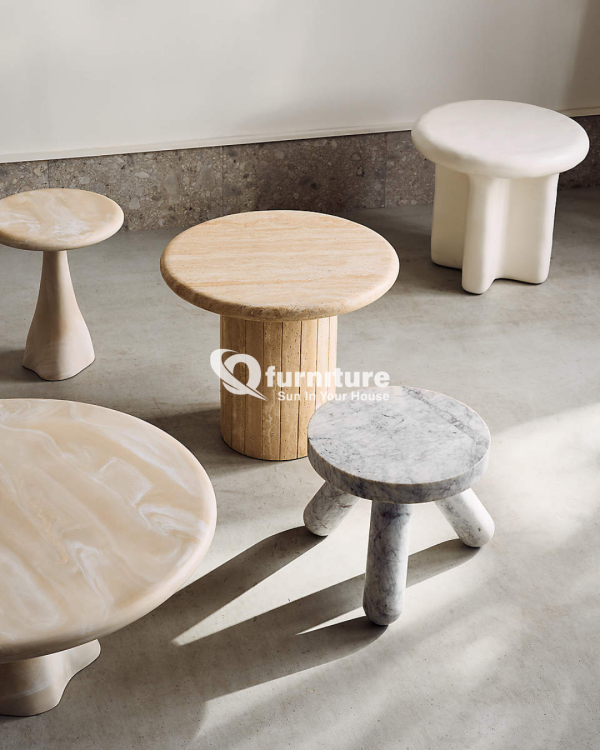
This section directly addresses the B2B client’s main concern: the Total Cost of Ownership (TCO) and operational effort over the furniture’s lifecycle.
The Costly Burden of Wood Maintenance Protocols
Highlight the substantial hidden operational costs associated with maintaining wood to achieve satisfactory outdoor furniture durability.
- Scheduled Refinishing: Detail the necessity of annual or biennial sanding, oiling, or re-sealing required for high-quality woods (like Teak) to prevent graying and cracking. Quantify this as labor and material cost.
- Pest and Repair Management: Discuss the unpredictable but critical costs of dealing with structural damage from pests or major warping/rot, which often requires professional repair or replacement.
- The Aesthetics of Aging: Note that while some users appreciate “natural graying,” B2B clients in hospitality often require a consistently pristine appearance, necessitating costly restorative maintenance to maintain the desired aesthetic.
Zero-Maintenance: The Superior Value Proposition of Concrete Furniture
Position concrete furniture as the Zero-Maintenance solution, a significant draw for large-scale procurement.
- Simplified Cleaning Protocol: The maintenance routine is limited to simple wiping or pressure washing. No specialized chemicals, sanding, or oiling required, dramatically lowering TCO.
- Reduced Labor Overhead: The absence of scheduled refinishing translates directly into massive savings on labor costs for facility management teams over the years.
- The Initial Investment vs. Lifespan Payoff: Argue that while the initial cost of premium, high-quality concrete furniture may be higher than average wood, its 25+ year lifespan without significant maintenance effort makes the long-term TCO far lower.
>> Related post: Top 5 Furniture Manufacturers In Vietnam
Maintenance and Cost of Ownership: Analyzing B2B Lifecycle Value
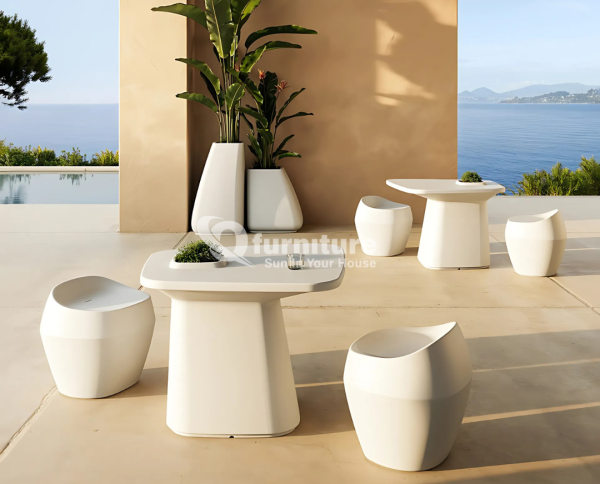
For B2B procurement managers and facility planners, the initial purchase price of furniture is often overshadowed by the Total Cost of Ownership (TCO) over the product’s usable lifespan. This TCO is driven primarily by maintenance requirements, frequency of repairs, and eventual replacement costs. A deep dive into the operational expenditure associated with concrete vs. wood outdoor furniture reveals a critical difference in long-term financial viability.
The Costly Burden of Wood Maintenance Protocols
The natural aesthetic of wood, particularly high-end choices like Teak, Ipe, or Cedar, comes with a demanding maintenance schedule that significantly escalates operational costs. Wood is a dynamic material; its porous nature requires constant human intervention to combat the effects of environmental exposure.
- Routine Refinishing and Oiling: Even the most durable hardwoods must be regularly oiled or sealed-typically annually or biennially replenish natural oils stripped away by UV exposure and rain. In commercial settings (hotels, resorts, public parks), where aesthetic consistency is vital for brand image, this process involves substantial labor: cleaning, sanding, and applying specialized, expensive protective oils. This ongoing labor commitment makes the TCO of wood outdoor furniture highly unfavorable in the long run.
- Warping and Repair Management: Wood’s susceptibility to moisture leads to expansion and contraction. Over time, this movement compromises joints, fasteners, and overall structural integrity. Businesses face unpredictable repair costs associated with fixing loose joints, replacing warped slats, or addressing structural failure caused by rot or internal decay. Unlike the uniform structure of GFRC, wood is prone to unpredictable defects like knots and sapwood, which can hasten decay despite proper initial treatment.
- Pest Mitigation: Connecting with the expertise of pest control services, wood carries an inherent risk of being attacked by termites, carpenter ants, and wood-boring beetles. While treatment can mitigate this, the threat is ever-present, demanding continuous monitoring and potentially costly, disruptive chemical treatments. This vulnerability directly impacts the commercial longevity and integrity of the material, making it a high-risk investment for large-scale developments. The cumulative cost of these labor-intensive protocols far outweighs the maintenance costs of concrete.
Zero-Maintenance: The Superior Value Proposition of Concrete Furniture
The appeal of concrete furniture for B2B applications lies in its minimal maintenance requirements, translating directly into near-zero operational costs post-installation, thereby achieving a substantially lower TCO. This characteristic is a primary strategic advantage for facility managers.
- Simplified Cleaning Protocol: The standard maintenance routine for Q-Furniture’s GFRC products involves nothing more than periodic cleaning with water and a mild detergent. The non-porous nature of sealed concrete prevents dirt, spills, and atmospheric pollutants from penetrating the material. This eliminates the need for specialized chemical treatments, sanding, or protective coatings, streamlining operations significantly.
- Elimination of Specialized Labor: Because GFRC does not rot, rust, or warp due to natural movement, there is no requirement for specialized carpentry or refinishing crews. Maintenance can be handled efficiently by existing staff, freeing up substantial budget resources previously allocated to ongoing wood outdoor furniture longevity preservation efforts. This predictability of maintenance simplifies budget forecasting for years into the future.
- Longevity and Durability Payoff: The core value proposition is the material’s enduring quality. Q-Furniture’s concrete pieces are designed to resist fading from UV rays, resist chemical staining, and withstand physical damage better than wood. The lack of recurring, mandatory maintenance combined with a potential 25+ year lifespan means the higher initial investment for premium concrete is recouped quickly through savings on operational expenses, offering a far superior Return on Investment (ROI) for the B2B client.
Manufacturing Standards and B2B Supply Chain Reliability
Reliability, scale, and adherence to quality protocols are non-negotiable for commercial buyers. This section contrasts the standardized, high-capacity production of GFRC with the inherent variability of wood sourcing and processing.
Q-Furniture’s ISO-Certified Process: Guaranteeing Quality and Volume
Q-Furniture’s operational model is built on the same principle of certified, repeatable quality that underlies successful B2B service providers like Euro Pest Control: a non-negotiable adherence to international standards.
- ISO Certification and Quality Control: Detail how Q-Furniture operates under stringent ISO-certified quality management systems. This guarantees that every stage of GFRC production-from the specific mix ratios of cement, polymers, and glass fibers to the curing and sealing processes meticulously documented and controlled. This level of quality control is essential for mass production, ensuring that all 20 containers produced monthly meet the exact specifications of the master sample.
- Predictability and Scalability: Concrete production, especially GFRC, is a precise, scalable chemical process. This predictability allows Q-Furniture to handle massive orders quickly and consistently, meeting tight construction or project timelines without the delays common in processes dependent on natural materials. This robust supply chain reliability is a primary decision factor for B2B partners.
- Consistency Across Batches: A major advantage for projects requiring large volumes of identical items (e.g., hotel pool decks, large public seating areas) is the perfect consistency of color, finish, and structural strength across thousands of concrete furniture pieces. This eliminates the need for extensive quality checking by the client upon receipt. (Internal Link 3: Link to Q-Furniture’s Factory Tour or Capacity page).
The Precision of GFRC vs. The Variables of Sourced Timber
The inherent differences in material procurement and processing introduce significant variability when comparing GFRC and wood.
- Natural Variability of Wood: Wood is a biological product, meaning density, grain pattern, presence of knots, and reaction to kiln drying vary from board to board, even within the same species. For B2B clients demanding uniform quality, managing this variability is costly and time-consuming. Suppliers must grade, sort, and reject material, which impacts lead times and costs.
- GFRC: Engineered for Zero Defects: GFRC, conversely, is an engineered composite. Its properties are controlled in a laboratory setting. The mixture is optimized for strength, lightness, and moldability. This allows for complex, consistent shapes that wood cannot achieve without highly specialized, costly fabrication. This engineered precision ensures that structural weaknesses found in natural wood (e.g., grain direction, knots) are eliminated in concrete furniture.
- Sourcing and Ethical Complexities: While Q-Furniture maintains high standards for its wood products, the global supply chain for high-end wood involves complex issues of sustainability, illegal logging, and compliance (FSC/PEFC certification). Sourcing and verifying ethical compliance adds layers of complexity that are largely absent in the procurement of concrete raw materials.
Final Thought
The debate between concrete vs. wood outdoor furniture ultimately boils down to a single question for B2B investors: Do you value a lower initial price or lower total lifecycle cost and guaranteed longevity?
For projects demanding structural permanence, zero-maintenance operational predictability, and the highest resistance to environmental and human damage, the choice is definitive. GFRC concrete furniture, when manufactured by a certified, large-scale supplier like Q-Furniture, offers superior financial and structural security. It is the resilient backbone of modern, durable commercial design.
Contact Q-furniture Fanpage to request a strategic consultation, review our portfolio, and assess the unmatched manufacturing capabilities of our ISO-certified facilities. Secure the long-term durability your project deserves.
For complementary supply chain insights, read our evaluation on Ultimate furniture factory audit checklist for importers.
📩 Request a Direct Factory B2B Sourcing Proposal (FOB / CIF)
Are you evaluating furniture manufacturing partners in Vietnam or planning full container load (FCL) orders? Connect directly with Q-Furniture’s export engineering team to discuss CAD design specs, material finishes, and wholesale pricing.








