Blocked Resort Project: What Hospitality Design Must Learn

When a Resort Project Gets Blocked, the Hospitality Industry Should Look Beyond the Environmental Debate
A major beach resort project was blocked in Mexico. At first glance, it may look like a story about Royal Caribbean, local authorities, coastal ecosystems and the familiar tension between tourism development and environmental protection.
But the story is bigger than one cancelled project.
It points to a shift taking place across the hospitality industry: outdoor resort spaces are no longer judged only by scale, amenities or the beauty of their renderings. A project today cannot simply ask, “Is this place attractive enough to bring people in?”
It also has to answer a harder question: “Does this place truly belong to the environment it is built in?”
That question matters not only to developers. It matters to architects, landscape designers, hotel groups, importers, distributors and outdoor furniture suppliers serving the hospitality market.

Resorts Can No Longer Rely on Being Bigger, Louder and More Impressive
For years, resort development has often followed a familiar formula: more pools, more restaurants, more entertainment, more photo-worthy areas and more reasons for guests to stay on site.
There is nothing wrong with creating memorable experiences. Guests still want places that feel special. A resort cannot survive on sustainability claims alone if the actual experience feels weak.
But what is changing is this: spectacle is no longer enough.
When a resort is planned near a coastline, reef, mangrove area or small local community, every design decision can be viewed through a wider lens. People are no longer asking only how many rooms the project will bring, how many guests it will attract or how much revenue it may generate.
They are also asking what the project will leave behind.
That is the new pressure facing hospitality development. And it will increasingly shape how outdoor spaces are designed.
Outdoor Space Is Becoming the Most Sensitive Part of a Resort
In a resort, indoor spaces are usually easier to control. Guest rooms, lobbies, restaurants and spas can be designed within a relatively stable environment.
Outdoor spaces are different.
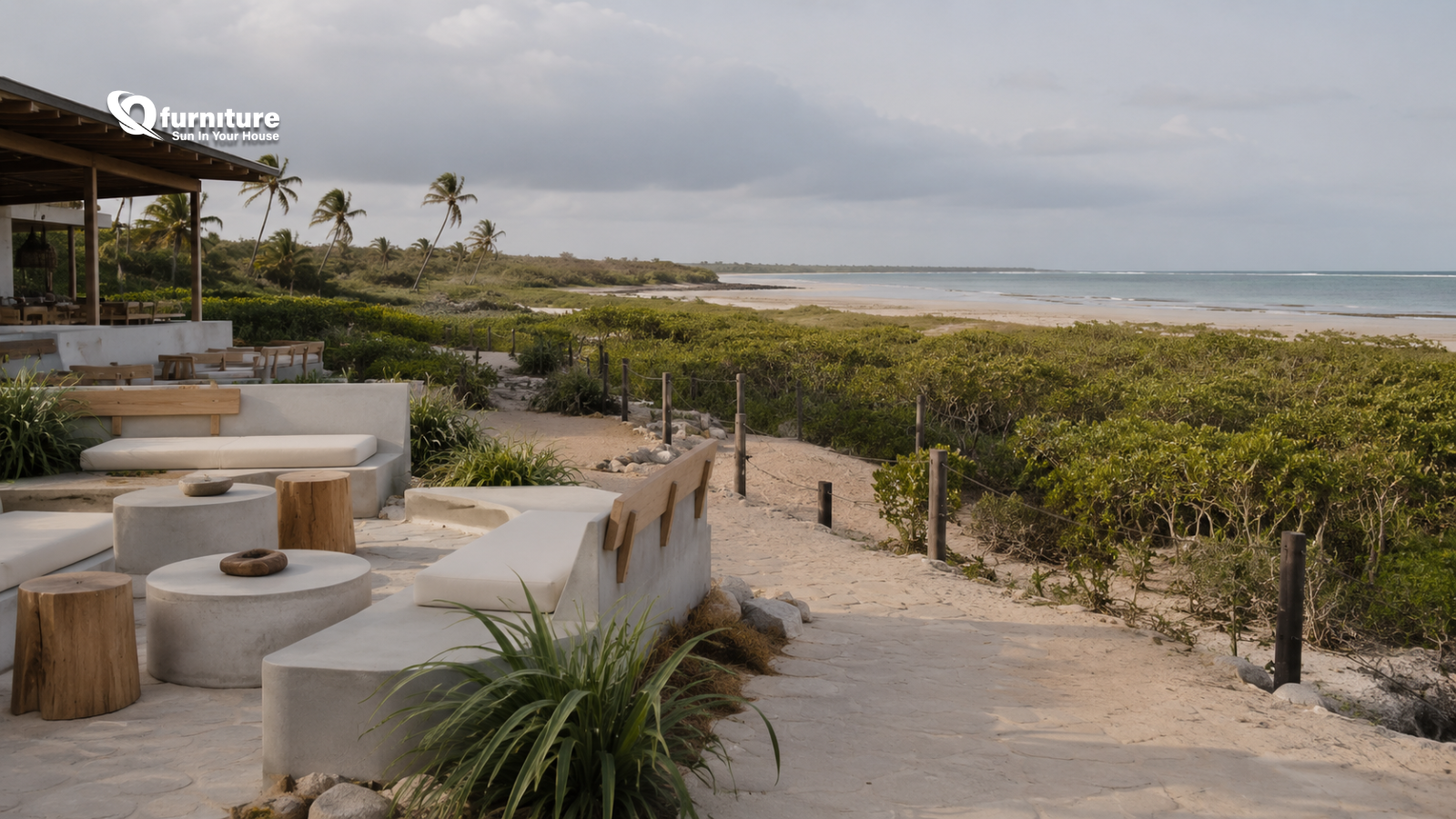
A pool deck faces sun every day. A beach club deals with salt air, sand, humidity, wind and shifting guest traffic. Courtyards, terraces, outdoor dining areas, rooftop bars and walkways all sit at the point where the resort meets the natural environment.
In other words, outdoor space is where a resort comes into direct contact with climate, landscape and daily use.
When it is designed well, guests can feel the place through light, breeze, texture, planting, shade, seating and the way people naturally move through the space. When it is designed poorly, the same space can quickly become a burden: too hot, too empty, hard to maintain, visually disconnected or worn down too soon.
This is why outdoor space should not be treated as a decorative layer added at the end of a project.
It should be part of the resort’s operating strategy. For B2B buyers, this shift also connects with broader premium outdoor furniture trends and sustainable materials shaping how hotels, resorts and commercial outdoor spaces are planned for long-term use.

The Real Issue Is Not Just Whether a Material Is “Green”
When environmental issues enter the conversation, many articles quickly move toward familiar phrases: sustainable materials, eco-friendly design, green tourism.
These ideas matter. But if they remain only as slogans, they do not help much.
The more practical question is this: does the material actually fit the way the space will be used every day?
An outdoor table in a resort is not only there to look good. It has to deal with sunlight, moisture, cleaning, guest movement and repeated use. A bench in a public outdoor area is not just part of the design concept. It needs to be stable, comfortable and durable enough for different guests over a long period of time. A planter is not just decoration. It can define zones, guide movement, soften hard surfaces and make a space feel more complete.
This is where material selection becomes a real business decision.
For hospitality projects, the question should not stop at “Does it look beautiful?”
The better questions are:
Will it last in this climate?
Is it easy to maintain?
Will it still look premium after several seasons of use?
Does it feel connected to the surrounding landscape?
Can it reduce replacement and maintenance pressure over time?
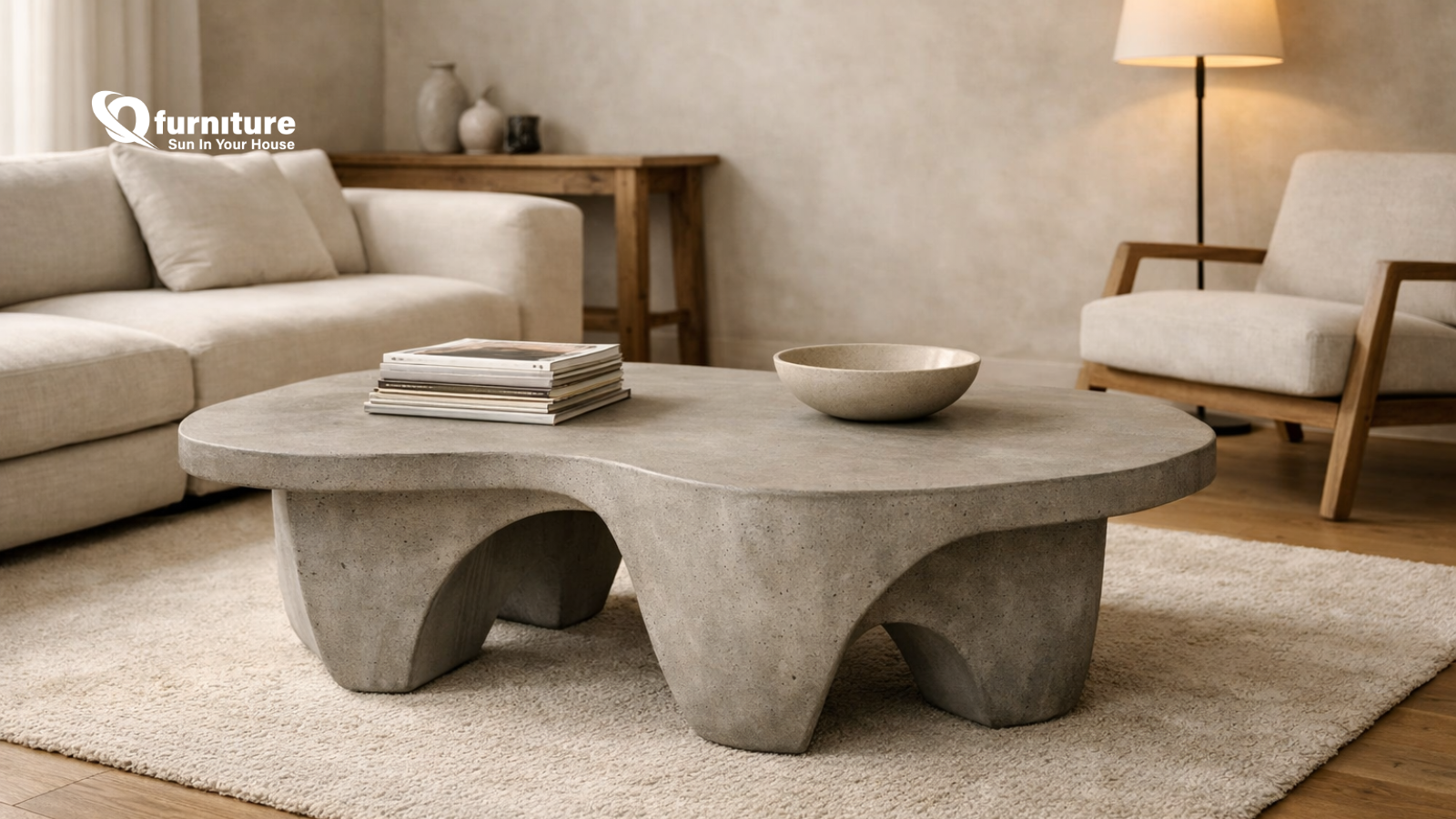
These questions may sound practical, but they are often what determine whether an outdoor space still feels good years after opening day. They are also the reason many project teams review outdoor concrete furniture not only as a visual choice, but as a long-term performance decision.
Why GFRC and Teak Wood Fit This Conversation
In high-end outdoor hospitality projects, GFRC concrete furniture and teak wood should not be seen only as a design style. Their value is deeper than appearance.
GFRC carries the sense of permanence associated with concrete, but it is lighter and more flexible than traditional concrete. It gives outdoor spaces a feeling of stability and long-term presence, which is especially useful for resort courtyards, pool decks, rooftops, public plazas and outdoor lounges.
When finished well, GFRC can feel refined, minimal and architectural without becoming too heavy.
Teak wood adds warmth. It brings a natural, human touch that softens the strength of concrete. Used together, GFRC and teak create a balance that works well in hospitality: solid but not cold, natural but still structured, premium but not overly decorative.
This balance matters because great resort spaces do not always need every detail to shout for attention.
Sometimes what guests remember is simply that the space felt right: the seating was stable, the surfaces felt good, the materials matched the landscape and nothing looked forced.
Good outdoor furniture in this context does not need to announce that it is sustainable. It needs to perform well, age well and help the space feel trustworthy.
What Hospitality Projects Should Take From This
The blocked resort project in Mexico does not mean tourism development should stop. Many coastal communities still need investment, jobs and better infrastructure. Resorts, hotels, beach clubs and tourism destinations will continue to be built.
But they will need to be built with more care.
The future of hospitality outdoor design may be less about building the biggest attraction and more about creating spaces that feel appropriate. Appropriate to the climate. Appropriate to the landscape. Appropriate to how guests actually use the space. Appropriate to the maintenance reality. And appropriate to a market that is paying closer attention to environmental responsibility.
For developers, this means looking beyond the first impression of a rendering.
For architects and landscape designers, it means treating outdoor space as a living system, not just a beautiful image.
For importers, distributors and procurement teams, it means choosing furniture based on durability, customization and manufacturing consistency, long-term value, not only price or appearance.
A table, bench or planter may seem like a small detail in the total budget of a resort project. But once it is placed outdoors, it becomes part of the guest experience every day.
And in hospitality, the details guests use every day often shape the most honest impression of a brand.
Conclusion
The story in Mexico is a useful reminder: resort design can no longer be measured only by how impressive it looks.
In a market that is becoming more sensitive to climate, environment and local communities, the value of a hospitality project lies in its ability to create a desirable experience while still respecting the place it belongs to.
Outdoor space, therefore, needs to be understood differently.
It is not just an area where beautiful furniture is placed. It is where guests meet the climate, the landscape and the spirit of the project. It is where materials are tested every day. It is where small design choices can create a big difference in comfort, maintenance, atmosphere and long-term performance.
For premium hospitality projects, suppliers such as Q-Furniture can support this shift by connecting material selection, production capability and outdoor furniture solutions with the real operating needs of hotels, resorts and commercial outdoor spaces.
The most important question is no longer:
“Is this outdoor space beautiful enough for a photo?”