


Custom & OEM Furniture from Vietnam – Tailored Solutions for Global Buyers
When a buyer comes to Vietnam with a custom furniture request, what they really need is not just a factory that can follow a drawing. They need a manufacturing partner that understands the design intent, can translate technical requirements into a finished product, and can deliver on time without creating unnecessary complications during development and shipment.
Vietnam has improved significantly in this area over the past decade. Not only in mass production capacity, but also in OEM, private label, and custom development based on buyer specifications. For concrete furniture in particular, that progress matters. This article is for buyers, importers, and sourcing managers considering custom concrete furniture from Vietnam: how to choose the right factory, what the production process actually looks like, and the practical challenges that usually appear when the goods are ready to ship.
Benefits of Custom Furniture Manufacturing
For commercial project developers and international importers, explore our specialized capabilities as a concrete furniture manufacturer for B2B export.
Design Flexibility and Material Choices
This is where many buyers begin to see the real value of working with factories in Vietnam, especially in established manufacturing zones such as Ho Chi Minh City, Binh Duong, and nearby industrial areas.
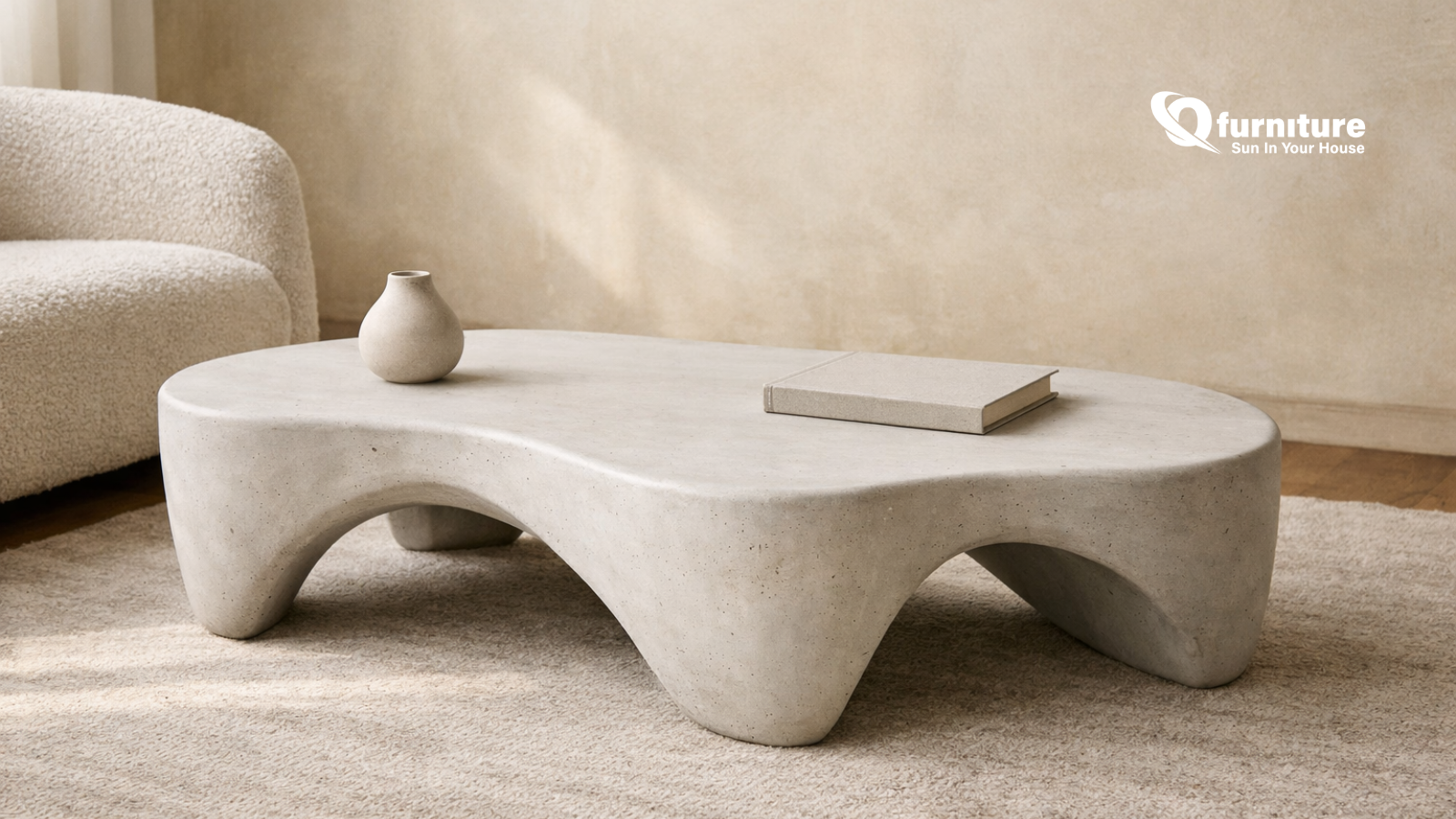
Unlike catalog buying, custom manufacturing gives you control over nearly every important variable: dimensions, structure, surface finish, pigment tone, reinforcement approach, base materials, and even packaging. That level of control matters for brands building their own collections, as well as for hospitality, retail, and commercial projects where every product needs to match a specific design language.
Material flexibility is broader than many buyers expect. Concrete furniture manufacturers in Vietnam can work with cement-based cast bodies, pigmented concrete mixes, metal frames, terrazzo-style compositions, reinforced concrete tops, and hybrid combinations that mix concrete with steel, wood, or upholstered components. Some factories will also source specialized additives, sealers, or custom reinforcement solutions if the project volume justifies it.
One point worth flagging: the more design flexibility you want, the more precise your brief needs to be. A vague concept and a few moodboard images are usually not enough. With custom concrete furniture, small gaps in the brief can lead to multiple sample revisions, inconsistent finishes, or misunderstandings around weight, tolerances, and surface character. A clear brief leads to fewer revisions, tighter timelines, and less friction on both sides.
If you are still assessing the market before reaching out to suppliers, this overview on importing furniture from Vietnam helps provide the broader sourcing context that makes early factory conversations more productive.
Branding Opportunities
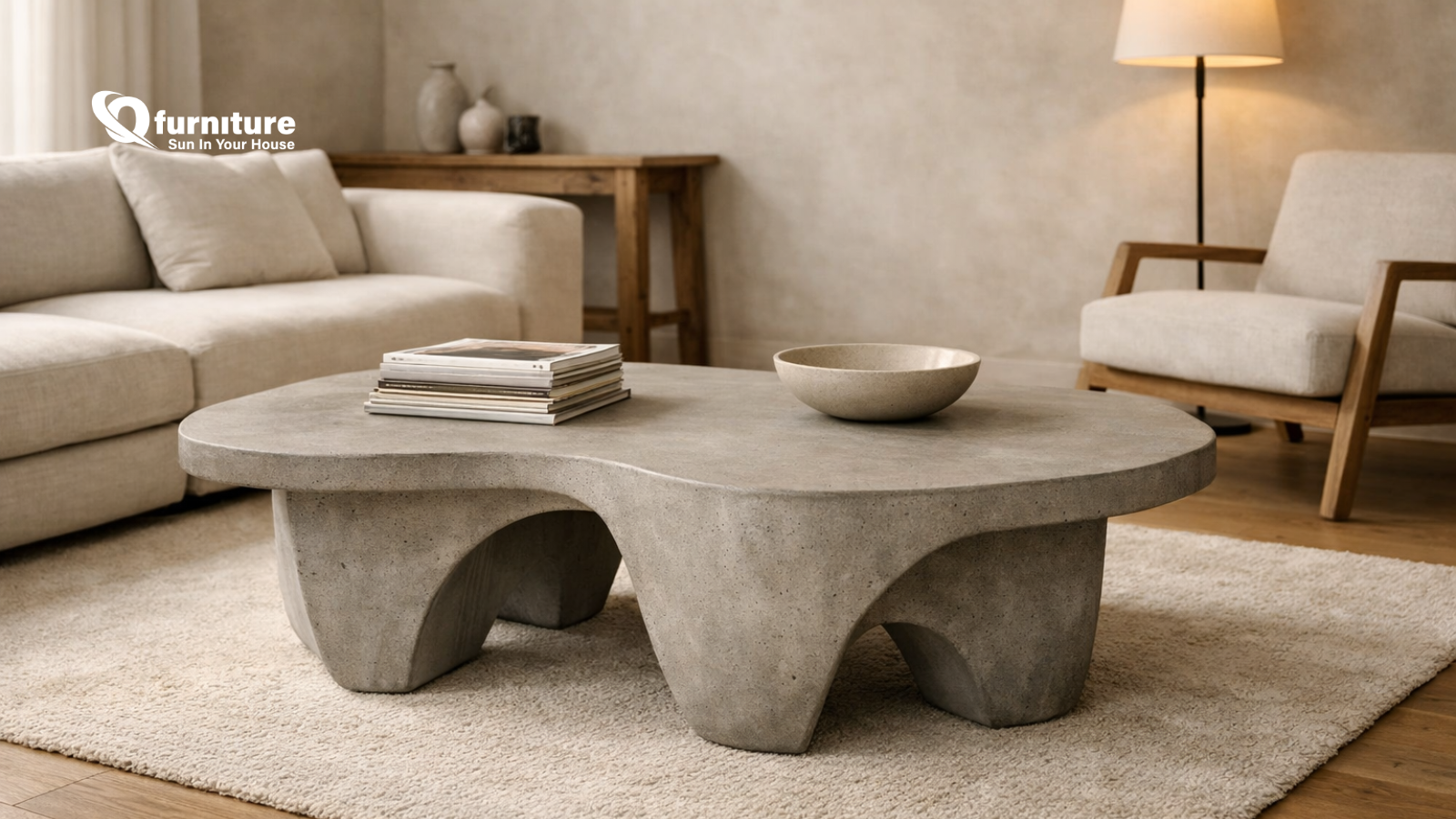
OEM furniture from Vietnam creates real opportunities for importers who want to build their own brand rather than resell standard factory products. That applies to concrete furniture as well. Buyers can customize packaging, apply private-label branding, develop signature finishes, define exclusive mold designs, and create product lines that are not easily copied from catalog sourcing.
Many factories now have years of experience working with buyers from the US, Europe, Australia, and the Middle East. They understand the requirements behind private-label packaging, know how to handle documentation and export coordination, and are generally more comfortable with buyer-specific presentation standards than they were in the past.
For concrete furniture, branding often goes beyond labels. It can also include proprietary shapes, distinctive surface textures, color control, custom base construction, or finish systems tailored to a brand’s design direction. That is where a capable OEM partner becomes far more valuable than a supplier that only produces standard models.
Selecting an OEM Supplier in Vietnam
Discover our latest collection of export-grade commercial concrete dining and outdoor tables engineered with lightweight GFRC.
Factory Capabilities and Specializations
Not every factory in Vietnam can handle genuine custom OEM work. That is something many buyers only realize after they have already paid a deposit.
There is a major difference between a factory that runs catalog products at volume and one that has real development capability, sample-making discipline, and engineering experience. When evaluating suppliers for custom concrete furniture, look at:
Sample capability – Do they produce samples in-house? How long does a first prototype take? Can they revise finishes, molds, or structural details efficiently? Is the sample cost deducted from the production order later?
Relevant experience – Do not rely only on catalog photos. Ask directly whether they have produced similar concrete tables, benches, side tables, consoles, or outdoor items before. Ask to see real project references, not just digitally rendered concepts.
Technical capacity – For concrete furniture, this means more than general manufacturing skill. Confirm whether they can handle mold development, reinforcement placement, curing control, dimensional consistency, edge finishing, sealing, and final packing in-house. If some of those stages are outsourced, understand how that affects quality control and lead time.
For a more structured way to evaluate and shortlist suppliers, this guide on Vietnam furniture manufacturers covers the main criteria buyers should review before committing to a factory.
Quality Assurance for Custom Orders
This is the area many buyers treat too lightly at the beginning, and it usually costs them later.
With catalog products, QC is relatively straightforward because the standard already exists. With custom OEM concrete furniture, the quality benchmark must be defined before production begins. If it is not, both sides end up judging the result differently.
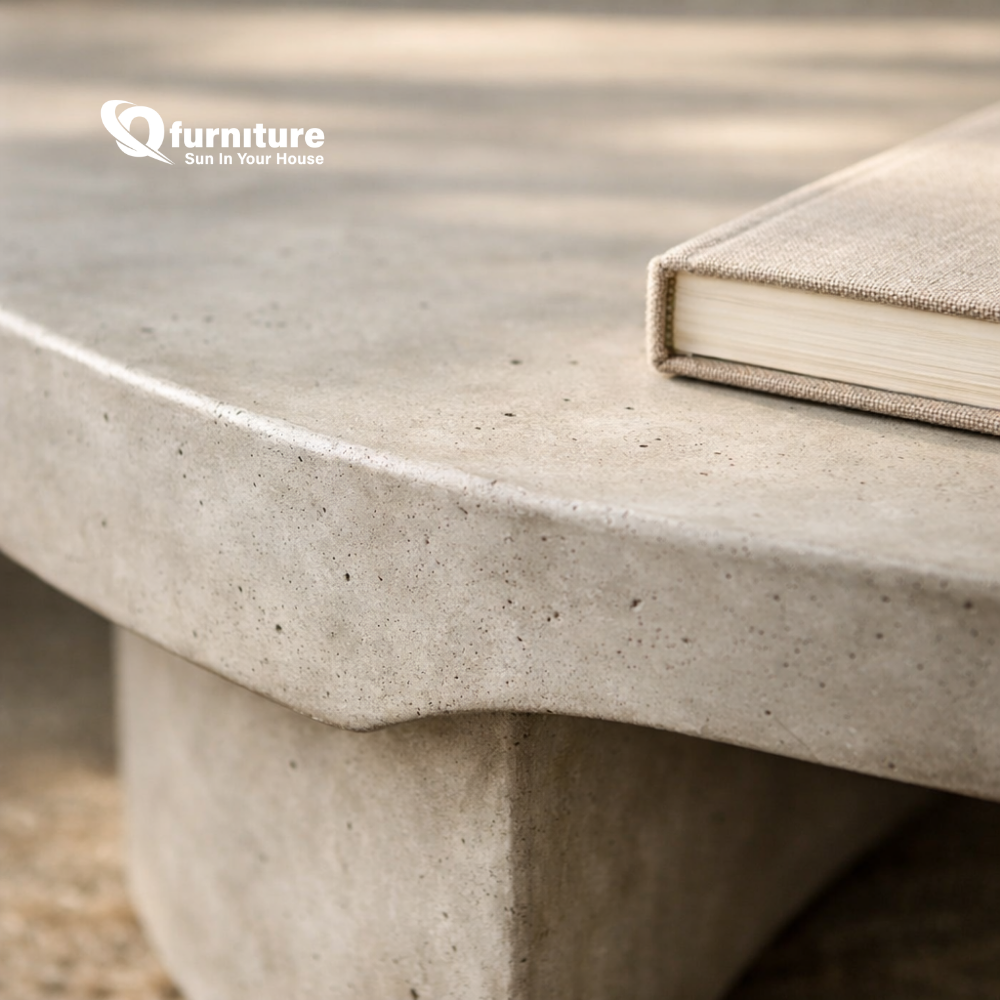
The main checkpoints should include: golden sample approval, finish approval, in-line QC during production, and a pre-shipment inspection for larger orders. For concrete products, these controls are especially important because issues often show up in dimensional accuracy, tone variation, pinholes, edge finishing, sealing consistency, and crack resistance rather than in basic assembly alone.
If you cannot visit Vietnam yourself, using a third-party inspection company is worth the cost. A professional inspection before shipment is far cheaper than dealing with a full container of defective concrete furniture after it reaches your warehouse.
Production Process for Tailored Furniture
Lead Times for Custom Orders
This is the question buyers ask most often, and the answer is rarely as short as they hope.
Custom furniture does not follow a fixed timeline, and that is even more true for concrete furniture because the process includes mold preparation, casting, curing, surface finishing, sealing, and packaging for heavy items.
A realistic breakdown often looks like this:
- sample or prototype: 2–4 weeks depending on complexity
- sample review and revisions: 1–3 weeks
- full production after approval and deposit: 6–12 weeks
- QC, inspection, and packing: 1–2 weeks
- ocean freight: depending on destination and shipping mode
From first brief to goods arriving at your warehouse, a first custom concrete furniture order can easily take several months. Repeat orders usually move faster because molds, samples, and finish expectations have already been approved.
The most common mistake is planning without enough buffer. Buyers assume the first sample will be approved immediately, or that production will run without revisions. In reality, even a minor change in finish, mold detail, or sealing result can push the schedule back. Building margin into the timeline from the beginning is much safer than trying to solve delays later with expensive last-minute decisions.
MOQ and Pricing Considerations
MOQ for custom furniture works differently from catalog products. Many Vietnamese factories will accept lower quantities if the buyer accepts a higher unit cost. That trade-off is normal, and it is better to discuss it openly.
A few pricing realities matter here:
Sample pricing is often higher than production cost because it covers development work, mold adjustments, testing, and labor. Unit cost usually becomes more reasonable once volume increases.
Material and finishing choices influence cost more than many buyers expect. Concrete mix formulation, pigment control, reinforcement method, terrazzo effect, high-grade sealers, polished surfaces, hand-finishing, and mixed-material construction can all raise the cost significantly. It is much easier for a factory to guide you toward workable alternatives if your target budget is clear early on.
If you are benchmarking pricing logic across suppliers, looking at how wholesale furniture manufacturers in Vietnam typically structure cost and volume can help make those quotes easier to interpret.
Exporting Custom Furniture
Packaging and Shipping Solutions
Custom furniture often comes with non-standard dimensions and forms, which makes packaging a technical issue rather than a final-step formality.
That is especially true for concrete furniture. These products are heavy, prone to chipped edges if packed badly, and often need packaging designed around both weight distribution and surface protection. A capable factory should be able to develop packing methods suited to the product: reinforced cartons, foam-protected crating, shrink-wrapped pallets, custom wooden support structures, or other solutions based on fragility and shipping mode.
Do not leave packaging decisions until the end of production. A lot of damage blamed on shipping is actually caused by weak or rushed packaging preparation at the factory level. Confirm the packaging specification before production is completed, not after the goods are already waiting for shipment.
On the logistics side, custom furniture from Vietnam usually moves via LCL or FCL depending on order size. For concrete furniture, buyers also need to think about loading weight, pallet efficiency, handling at destination, and whether the packaging method is suitable for repeated warehouse movement.
Working with International Buyers
Vietnam’s export industry has broad experience working with international buyers, but that does not mean every factory handles export documentation equally well.
For custom OEM orders, make sure the supplier can prepare the necessary documents correctly, including the commercial invoice, packing list, certificate of origin where needed, and any product-specific declarations required by your destination market. A factory that already has export experience will usually be more reliable not only in paperwork, but across the entire transaction.
With concrete furniture, experienced export handling also matters because shipment issues are often tied to incorrect packing data, unclear product descriptions, inaccurate carton weights, or missing supporting information. Factories that understand international requirements tend to manage these details more carefully.
If this is your first time importing from Vietnam and you want the full process laid out clearly before moving ahead, this step-by-step import guide for international buyers is the right next read.
For complementary supply chain insights, read our evaluation on Vietnam vs China furniture sourcing for importers.
📩 Request a Direct Factory B2B Sourcing Proposal (FOB / CIF)
Are you evaluating furniture manufacturing partners in Vietnam or planning full container load (FCL) orders? Connect directly with Q-Furniture’s export engineering team to discuss CAD design specs, material finishes, and wholesale pricing.








