Experience-Led Hospitality Furniture Design
Luxury used to be easier to identify. It could be read through the object: the watch, the bag, the suite, the marble lobby, the imported chair, the recognizable brand name. Ownership was the signal. The more exclusive the object, the stronger the statement.
That logic has not disappeared, but it is no longer enough.
Across hospitality, travel, wellness, resort development, and high-end residential living, luxury is becoming more experiential. Affluent consumers are not only spending to own better things. They are spending to feel better, travel better, disconnect more deeply, gather more meaningfully, and live inside spaces that feel curated, calm, sensory, and memorable.
This creates a direct challenge for hospitality developers and design buyers. A luxury hotel, resort, villa, or beach club can no longer rely only on premium finishes and recognizable materials. The space must create emotional memory. It must make guests feel grounded, restored, private, inspired, and connected to place.
That shift changes the role of furniture.
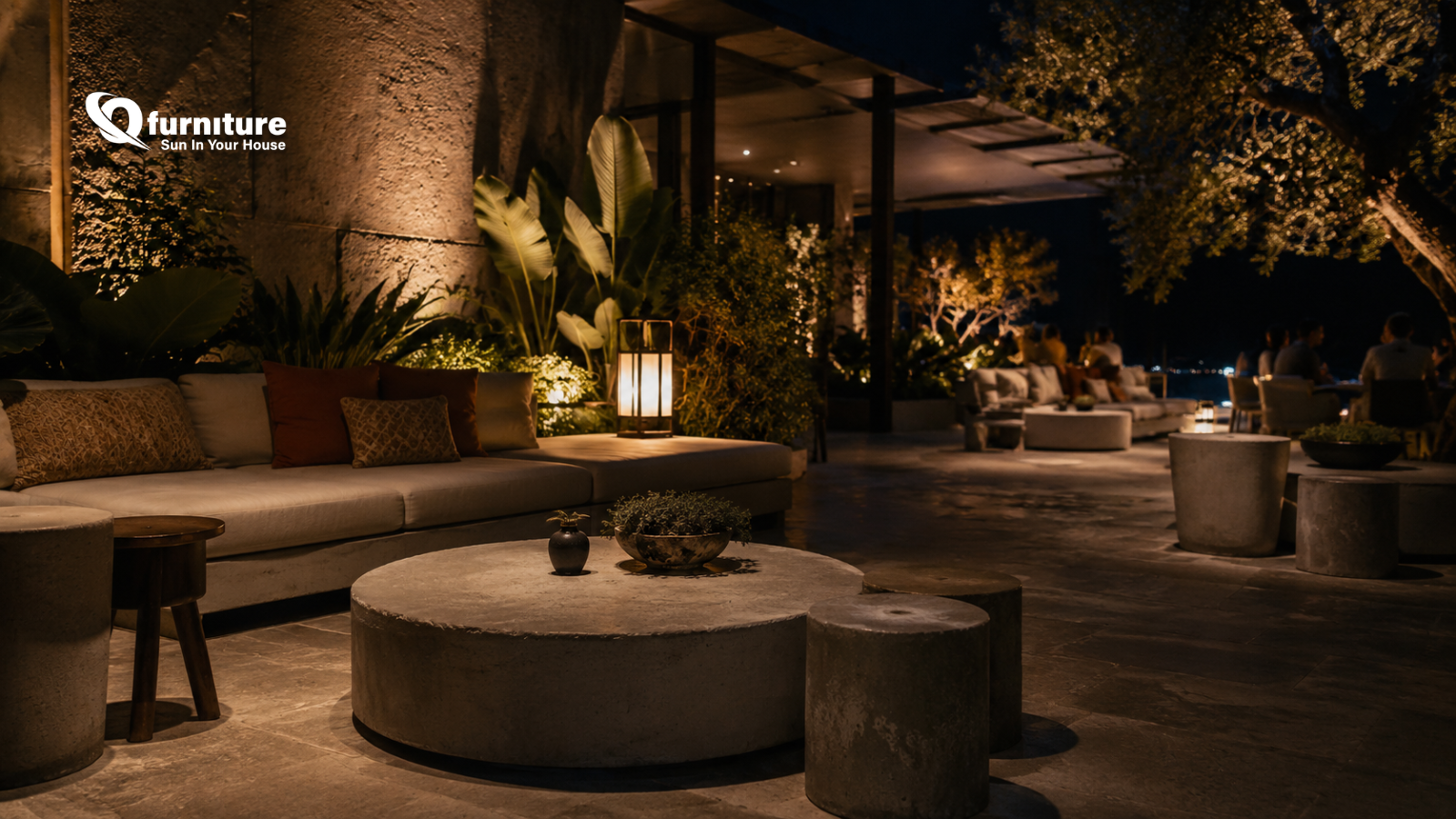
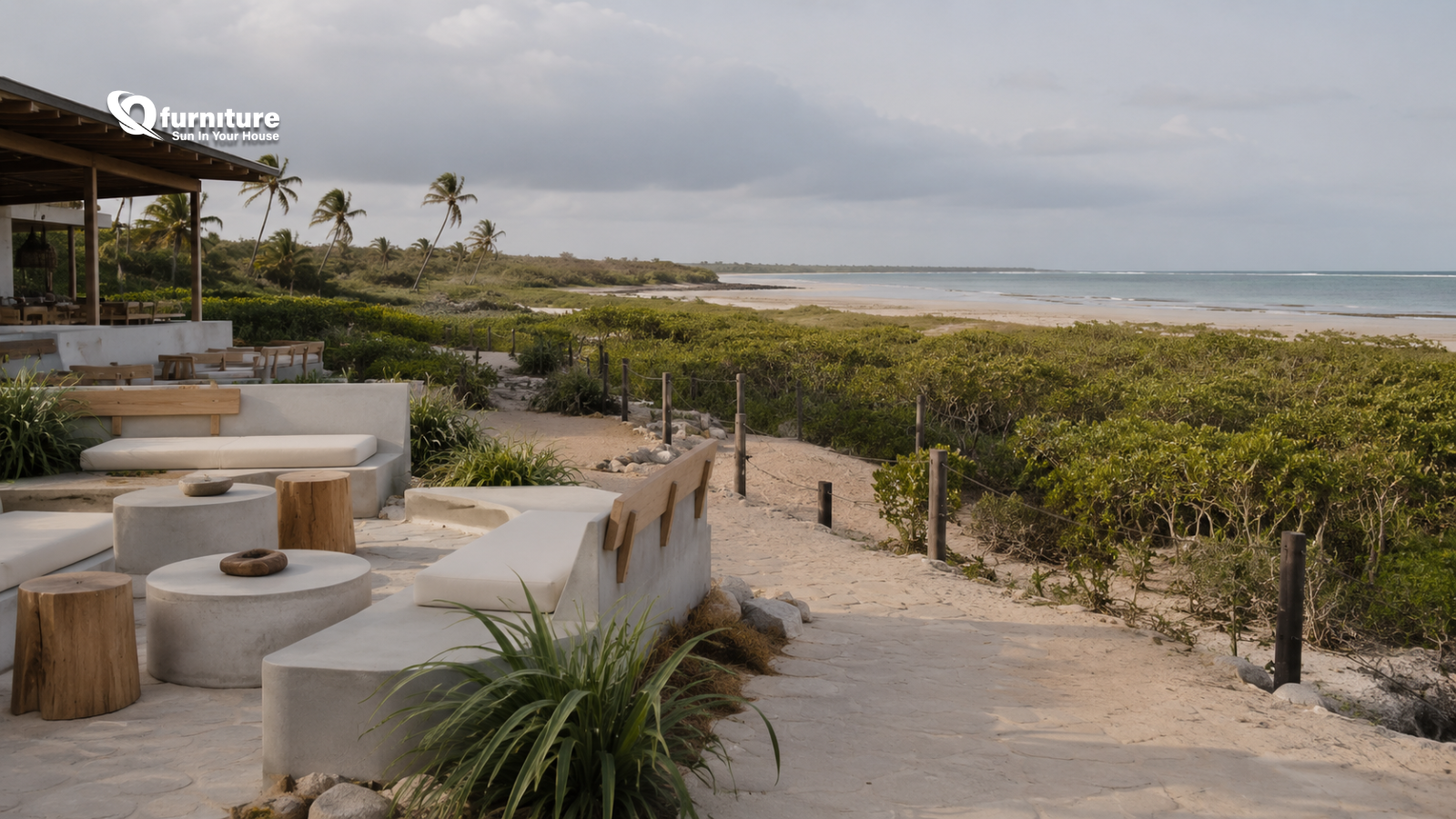
Furniture is no longer simply a functional purchase. In experience-led luxury, furniture becomes part of the atmosphere. It shapes the way guests sit, dine, gather, photograph, rest, and remember a destination. The table on a villa terrace, the sculptural bench in a resort courtyard, the low lounge element beside a pool, or the concrete dining table facing the sea can become part of the story guests take home.
This is where architectural concrete furniture becomes especially relevant. Concrete carries visual weight, natural texture, sculptural form, and a grounded sense of permanence. Used well, it can support quiet luxury, outdoor living, wellness hospitality, and long-lasting commercial design without feeling overly decorative or trend-dependent.
For luxury hospitality buyers, resort developers, villa developers, beach club owners, interior designers, landscape architects, furniture importers, and procurement managers, the strategic question is no longer only: “What product should we buy?”
The better question is: “What kind of experience should this space create?”

Luxury Is No Longer Just Something People Own
The modern luxury consumer is moving from possession toward participation. Luxury is increasingly experienced through travel, food, wellness, private retreats, cultural access, nature, design, and moments that feel personally meaningful.
This does not mean products no longer matter. It means products must now work harder. They must become part of a wider lifestyle system. A piece of furniture is valuable not only because it is premium, but because it helps create an environment people want to inhabit, photograph, return to, and talk about.
In hospitality, this shift is especially visible. Guests are not simply booking a room. They are booking a mood. They want the feeling of waking up slowly in a villa, sitting in silence beside a pool, eating outdoors under warm light, walking barefoot across natural textures, or gathering with friends in a setting that feels both designed and effortless.
Personalization also plays a larger role. High-end guests expect spaces to feel considered rather than generic. A luxury resort cannot look like a copy of every other resort. A beach club cannot rely only on umbrellas, loungers, and imported chairs. A private villa cannot feel like a catalogue assembled quickly from unrelated pieces.
The more luxury moves toward experience, the more important spatial identity becomes.
For developers and buyers, this changes the purchasing brief. Furniture must support atmosphere, durability, visual distinction, comfort, and brand story at the same time. A product that looks acceptable in a showroom may not be enough if it fails to create a memorable guest experience on site.
That is why hospitality furniture trends are increasingly connected to material authenticity, sensory design, outdoor living, and long-term emotional value.
Why High-End Consumers Care About How Spaces Make Them Feel
Luxury guests are becoming more sensitive to atmosphere. They notice silence, proportion, temperature, light, shadow, material contrast, and texture. They may not always describe these qualities in technical language, but they feel them immediately.
A space can feel rushed, flat, temporary, and commercial.
Or it can feel calm, grounded, intentional, and memorable.
This emotional difference is often created through sensory design. The sound of water in a courtyard, the texture of a concrete table, the softness of linen, the warmth of timber, the weight of stone, the movement of plants, and the openness of an outdoor dining area all contribute to how a space is experienced.
Texture matters because it creates intimacy. Smooth surfaces can feel polished, but too much smoothness can feel sterile. Natural textures give the eye somewhere to rest. They make a space feel slower and more human.
Silence also matters. Luxury is no longer always loud, glossy, or excessive. In many high-end hospitality environments, quiet luxury is more desirable than visual spectacle. Guests want spaces that feel composed rather than crowded. They want design that signals confidence without shouting.
This is why material choices have become strategic. Furniture made from plastic-looking surfaces, lightweight temporary materials, or overly decorative finishes may weaken the emotional quality of a luxury space. By contrast, natural textures, mineral tones, sculptural forms, and long-lasting furniture can reinforce calm, permanence, and trust.
Hospitality is now a lifestyle experience. The best spaces are not simply seen. They are felt.
What This Means For Luxury Hospitality Design
Luxury hospitality design must now move beyond aesthetics. Visual beauty remains important, but it is only one layer. The deeper goal is to create a spatial identity that guests can feel and remember.
For hotels and resorts, this means every zone must have a stronger emotional purpose. The lobby is not just an arrival point. The courtyard is not just leftover space. The pool deck is not just an amenity. The terrace is not just an outdoor seating area. Each space becomes part of the guest journey.
For villa developers, the expectation is even higher. A villa is often sold through privacy, atmosphere, and a sense of belonging. The furniture must support slow living, outdoor dining, family gathering, and visual continuity between interior and exterior zones.
For beach clubs, design must balance lifestyle and performance. The space needs to feel relaxed, social, photogenic, and premium, but the furniture must also survive sun, humidity, salt air, heavy use, and constant movement around service areas.
For resorts, outdoor areas are becoming key experience zones. Poolsides, garden lounges, rooftop terraces, beachfront seating, wellness decks, and open-air restaurants often create the strongest emotional memory of a stay. These are the spaces guests photograph, share, and associate with the brand.
Material choices directly influence brand perception. A resort that uses furniture with strong form, honest texture, and long-term durability communicates seriousness. It tells guests that the experience has been designed from the ground up, not assembled quickly for appearance.
In this environment, resort furniture design must integrate architecture, landscape, furniture, and guest behavior into one coherent experience.
Furniture Is Becoming Part Of The Guest Experience
Furniture has always been functional. It supports sitting, dining, resting, displaying, and gathering. But in modern luxury hospitality, furniture does more than serve a function. It frames behavior.
A dining table shapes the rhythm of a meal. A bench influences how people pause in a courtyard. A low concrete table changes the mood of a lounge area. A sculptural stool can become a visual marker within a villa terrace. A basin can contribute to the tactile experience of a bathroom or spa environment.
Furniture also shapes memory. Guests may forget the exact floor finish or wall color, but they often remember where they sat for breakfast, where they had a drink at sunset, where they took a photo, or where they felt completely still.
This is why statement furniture matters. A strong furniture piece can give a space identity without relying on excessive decoration. It can become the anchor that makes a terrace, courtyard, pool area, or garden lounge feel designed.
For hospitality buyers, durability is part of the experience. Furniture that fades, cracks, feels unstable, or needs frequent replacement damages brand consistency. Guests may not know the procurement decision behind the product, but they feel the consequences of that decision.
Long-lasting furniture protects the atmosphere of the property. It keeps the design language consistent across seasons. It reduces the risk that replacement products will slowly dilute the original concept.
In experience-led luxury, the guest experience is built through hundreds of details. Furniture is one of the most visible and physically intimate among them.
Why Architectural Concrete Furniture Fits Experience-Led Luxury
Architectural concrete furniture fits this shift because it carries qualities that align naturally with experience-led hospitality: calm, permanence, texture, sculpture, and material honesty.
Concrete has a grounded aesthetic. It does not feel temporary. It gives a space visual stability, which is especially valuable in outdoor hospitality environments where many elements are light, movable, or seasonal. A concrete table, bench, stool, basin, planter, or fire table can anchor the design and make the space feel more architectural.
Its sculptural presence also supports identity. Concrete can be formed into clean, minimal, rounded, geometric, or custom shapes. This allows designers and developers to use furniture as part of the architectural language rather than as a separate decorative layer.
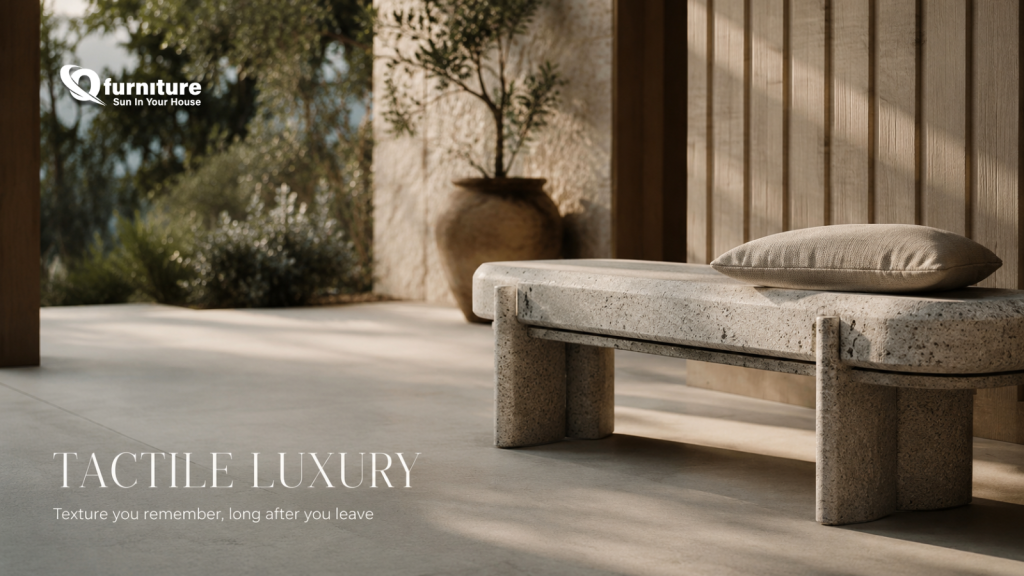
Texture is another advantage. Concrete surfaces can show subtle variation, mineral depth, and natural imperfection. These qualities support tactile luxury because they invite closer attention. Instead of looking mass-produced, designer concrete furniture can feel crafted, material-led, and connected to place.
Durability also matters. In luxury hospitality furniture, beauty without performance is not enough. Outdoor furniture must handle weather exposure, repeated use, maintenance cycles, and operational pressure. When properly specified, finished, sealed, packaged, and installed, outdoor concrete furniture can offer the combination of visual presence and commercial relevance that many hospitality projects require.
For buyers evaluating architectural concrete furniture, Q-Furniture’s B2B export manufacturer page is a useful starting point for understanding concrete furniture categories, outdoor applications, and sourcing considerations: concrete furniture manufacturer for B2B export.
The Role Of Outdoor Spaces In Modern Luxury Hospitality
Outdoor spaces have become some of the most important areas in modern luxury hospitality. They are where guests slow down, socialize, disconnect, dine, and experience the climate and landscape of a destination.
Pool areas are no longer just about sun loungers. They are lifestyle stages. Guests move between swimming, dining, reading, resting, and taking photos. The furniture must support this fluid behavior while maintaining a premium atmosphere.
Courtyards create moments of calm between more active spaces. A well-placed concrete bench, side table, planter, or dining element can turn a transitional area into a memorable experience zone.
Garden lounges support wellness hospitality. They invite guests to spend time outdoors, breathe, pause, and reconnect with natural surroundings. In these settings, architectural outdoor furniture should feel stable, calm, and integrated with landscape design.
Rooftop terraces require a careful balance between visual impact and practical performance. Furniture must look refined while also meeting logistical considerations around weight, placement, exposure, and maintenance.
Beachfront seating and outdoor dining areas face some of the most demanding conditions. Salt air, humidity, sunlight, food service, guest traffic, and daily cleaning routines can quickly expose weak material choices. Luxury outdoor furniture in these environments must combine beauty and durability.
This is why commercial outdoor furniture should be selected through both a design lens and an operational lens. The right furniture must support the brand image while also performing under real hospitality conditions.
For buyers assessing outdoor applications, this Q-Furniture category hub explains how outdoor concrete furniture fits commercial projects: outdoor concrete furniture for commercial projects.
From Visual Luxury To Tactile Luxury
Luxury is becoming quieter and more material-led. Instead of relying only on shine, polish, and recognizable symbols, high-end spaces increasingly communicate value through touch, proportion, craftsmanship, and atmosphere.

This is the movement from visual luxury to tactile luxury.
Visual luxury is about what guests see first. Tactile luxury is about what they continue to feel after they have spent time in the space. It is the coolness of a concrete surface, the subtle irregularity of a finish, the visual weight of a sculptural table, and the way natural textures respond to light throughout the day.
Natural imperfections matter because they make materials feel real. In hospitality interiors and outdoor spaces, too much perfection can feel artificial. Concrete, when used thoughtfully, brings a controlled imperfection that adds depth. It does not need to imitate stone, wood, or marble. Its value comes from being itself.
This is important for design storytelling. A resort or villa that uses material authenticity can tell a stronger story than one that depends only on decorative styling. Concrete can communicate calm, permanence, craftsmanship, and modernity without requiring excessive explanation.
For interior designers and landscape architects, this creates an opportunity. Architectural concrete furniture can be used to create rhythm between indoor and outdoor spaces. A concrete coffee table in a lounge, a concrete dining table on a terrace, and concrete basins in a villa bathroom can create continuity across the guest journey.
For product inspiration and category exploration, buyers can review Q-Furniture’s product page here: concrete furniture products.
Why Resort Developers And Buyers Should Think In Lifecycle Value
Hospitality furniture is not purchased for a photo shoot. It is purchased for years of use.
This is why resort developers, procurement managers, and furniture importers should evaluate lifecycle value rather than only initial unit cost. A product that looks affordable at purchase may become expensive if it requires frequent replacement, creates maintenance problems, or weakens the guest experience after one or two seasons.
In hospitality, replacement cycles are not only financial problems. They are brand problems. When furniture wears unevenly, breaks down, or gets replaced with mismatched alternatives, the property gradually loses design consistency.
This is especially damaging for luxury hospitality. Guests expect the brand experience to feel controlled and intentional. A resort cannot communicate quiet luxury if its outdoor furniture looks temporary, inconsistent, or poorly maintained.
Long-lasting furniture also supports sustainable furniture design. The most responsible product is not always the one with the loudest sustainability claim. Often, it is the product that remains useful, beautiful, repairable, and relevant for a longer period of time.
Concrete furniture can support lifecycle value when it is correctly specified for the project. Buyers should evaluate finish direction, sealing, edge details, weight, installation conditions, packaging, cleaning requirements, and whether the product suits the intended use. Concrete is not the right answer for every layout, especially where furniture must be moved constantly. But for spaces that need visual permanence, outdoor durability, and architectural presence, it can be highly strategic.
For deeper sourcing considerations, Q-Furniture’s article on commercial and custom concrete outdoor furniture gives B2B buyers a useful framework: commercial and custom concrete outdoor furniture.
How Furniture Importers Can Position Architectural Concrete Furniture
For furniture importers, the shift toward experience-led luxury creates a strong positioning opportunity. Architectural concrete furniture is not just another outdoor category. It can be presented as a design-led, material-led solution for hospitality, outdoor living, and premium commercial projects.
The first positioning advantage is perceived value. Concrete furniture has weight, texture, and sculptural presence. It looks different from mass-produced outdoor furniture and can help importers build a more distinctive collection.
The second advantage is differentiation. Many markets are crowded with similar outdoor furniture formats: aluminum frames, woven seating, teak tables, plastic composites, and generic lounge sets. These categories have value, but they are often easy to compare and price-shop. Architectural concrete furniture creates a different conversation around form, atmosphere, and project identity.
The third advantage is hospitality relevance. Resorts, villas, restaurants, beach clubs, and commercial outdoor spaces often need furniture that does not look disposable. Concrete furniture can help importers speak to developers and designers who are building long-term branded environments.
The fourth advantage is compatibility with premium outdoor living. High-end residential and hospitality buyers increasingly want outdoor spaces that feel as designed as interiors. Concrete coffee tables, dining tables, stools, benches, planters, basins, and custom pieces can help create that indoor-outdoor continuity.
For B2B sales, the best approach is not to sell concrete furniture as a novelty. It should be positioned through project value: material authenticity, modern concrete furniture design, durability, outdoor performance, customization, and emotional atmosphere.
Importers should also be clear about fit. Concrete furniture is ideal for projects that need grounded presence and long-term placement. It may be less suitable for spaces that require very lightweight furniture or daily reconfiguration. This honesty builds trust with hospitality buyers and design professionals.’
Why Q-Furniture Is Positioned For Experience-Led Hospitality Design
Q-Furniture is relevant to this conversation because its website presents the company as a concrete furniture manufacturer focused on global wholesale buyers. The site highlights OEM and ODM capability, concrete tables, stools, and basins, and supply to importers, retailers, and interior brands in markets including Australia, the USA, the UK, and Europe.
This matters for experience-led hospitality design because the buyers behind resorts, villas, beach clubs, and commercial outdoor spaces often need more than standard catalogue products. They need furniture that can fit a specific concept, project scale, finish direction, and brand atmosphere.
Q-Furniture’s website also presents concrete coffee tables, stools, and basins as core collection categories, with OEM customization for finishes, dimensions, and branding. These are relevant product paths for hospitality spaces because they appear across lounges, terraces, bathrooms, courtyards, pool areas, and resort landscapes.
The site also positions outdoor concrete furniture as a key category for commercial projects, including terraces, patios, poolsides, gardens, and resort landscapes. This connects naturally to the current hospitality shift toward outdoor living experience, wellness spaces, and guest environments that extend beyond the room.
For procurement managers and furniture importers, the confirmed B2B details are important. The website communicates MOQ, OEM/ODM service, FOB pricing, sampling, export documentation, and production planning. These are not design claims; they are sourcing signals. They help international buyers evaluate whether a supplier can support commercial furniture buying decisions rather than only individual decorative purchases.
For projects that require customized design execution, Q-Furniture’s OEM/ODM article provides a practical reference for understanding custom design capability and manufacturing models: OEM vs ODM for wood-concrete furniture.
In experience-led hospitality, the strongest furniture suppliers are not only product sellers. They help buyers translate a spatial idea into durable, repeatable, project-ready furniture. Based on the information available on its website, Q-Furniture can be positioned as a concrete furniture partner for B2B buyers who need architectural presence, outdoor capability, customization, and export-oriented supply.
Conclusion
Luxury is shifting from ownership to experience. This is not a soft lifestyle trend. It is changing how hospitality spaces are designed, specified, purchased, and remembered.
High-end consumers are no longer satisfied with spaces that simply look expensive. They want spaces that feel intentional, calm, sensory, personal, and memorable. They want travel, wellness, outdoor living, and hospitality environments that support how they want to live, gather, disconnect, and return to themselves.
For resorts, villas, beach clubs, hotels, and outdoor commercial destinations, this raises the importance of furniture. Furniture is part of the guest experience. It shapes atmosphere, behavior, photography, memory, and long-term brand consistency.
Architectural concrete furniture fits this new luxury language because it is material-led rather than trend-led. It offers grounded presence, sculptural form, natural texture, tactile depth, and long-lasting outdoor relevance. It can support quiet luxury, wellness hospitality, resort furniture design, and modern outdoor living without relying on excessive decoration.
For developers and buyers, the opportunity is clear: choose furniture not only for what it is, but for what it helps the space become.
Explore Q-Furniture’s architectural concrete furniture collections to discover how material-led design can help create memorable luxury hospitality experiences.
FAQ Section
1. What is experience-led luxury in hospitality design?
Experience-led luxury is a design approach that focuses on how a space makes guests feel, not only what it displays. It values atmosphere, wellness, personalization, sensory design, material authenticity, and memorable guest experience.
2. Why is furniture important in luxury hospitality design?
Furniture shapes how guests gather, dine, rest, photaograph, and remember a space. In hotels, resorts, villas, and beach clubs, furniture is part of the emotional and functional experience, not just a decorative item.
3. Why is architectural concrete furniture suitable for resorts and villas?
Architectural concrete furniture works well in resorts and villas because it offers sculptural presence, natural texture, visual calm, durability, and a strong connection between indoor and outdoor environments.
4. Is outdoor concrete furniture suitable for commercial hospitality projects?
Outdoor concrete furniture can be suitable for commercial hospitality projects when the design, finish, sealing, placement, maintenance, packaging, and use conditions are properly considered. It is especially relevant for spaces that need durability and architectural presence.
5. How can furniture importers position architectural concrete furniture?
Furniture importers can position architectural concrete furniture as a premium, design-led category for hospitality, outdoor living, resorts, villas, beach clubs, and commercial outdoor projects. The strongest sales angle is material authenticity, differentiation, customization, and lifecycle value.