


Outdoor concrete furniture remains a strong choice for commercial, hospitality and landscape projects where stability, architectural character and long-term placement matter. Its solid form, tactile surface and ability to integrate with modern outdoor architecture make it suitable for hotels, resorts, villas, gardens, restaurants and selected public spaces.
For B2B buyers, importers, distributors, architects and project contractors, selecting concrete outdoor furniture should go beyond appearance. Product weight, installation access, freight efficiency, floor loading, climate exposure, surface finish, maintenance expectations and replacement strategy should all be reviewed before an order is confirmed.
This guide explains when outdoor concrete furniture is a practical choice, when another material may perform better, and how GFRC furniture, lightweight concrete furniture, hollow structures and modular construction can improve usability for real commercial projects.

Why Outdoor Concrete Furniture Works Well in Commercial Projects
Concrete has a strong visual identity. It feels permanent, stable and connected to architecture and landscape design. Unlike lightweight loose furniture, concrete pieces can become part of the outdoor environment rather than just temporary decoration.
For many B2B projects, concrete outdoor furniture works well because it offers a solid architectural presence, outdoor stability, natural surface character and a sense of permanence in large spaces.
A solid and durable appearance, A modern architectural look, Good stability in outdoor placement, Natural material texture, Strong presence in large spaces, Lower risk of being moved or stolen in public areas, and Compatibility with gardens, patios, resorts and hospitality spaces.
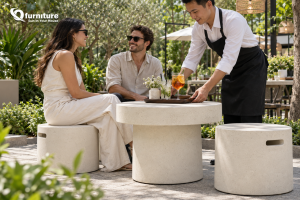
For hotel and resort projects, concrete furniture works especially well in entrance areas, poolside lounges, courtyards, outdoor restaurants and landscape zones where pieces are expected to remain in place. Buyers comparing broader applications can explore our modern concrete outdoor furniture guide for more project-oriented ideas.
When Outdoor Concrete Furniture Is a Good Choice
1. Projects That Need a Permanent Furniture Solution
Concrete is particularly suitable when furniture is intended to remain in one location for long periods. If the layout is fixed and the furniture forms part of the landscape or architectural concept, its weight becomes an advantage rather than an operational problem. Typical applications include hotel terraces, resort gardens, villa patios, public seating areas, commercial lounges and landscape-integrated furniture zones.
2. Outdoor Areas Exposed to Wind
In windy environments, furniture stability becomes an important operational consideration. Concrete performs well in coastal resorts, open hotel terraces, approved rooftop gardens, public outdoor spaces and large commercial patios because its weight reduces unwanted movement. Elevated locations still require structural review, so product weight and floor loading should be confirmed before installation.
3. Minimalist, Architectural or Biophilic Design Concepts
Concrete works naturally with modern architecture, neutral palettes, tropical landscaping and minimalist outdoor design. It can be developed in different forms, textures, finishes and proportions, allowing designers to create a consistent concrete language across tables, benches, stools, side tables and planters without introducing unrelated material directions.
4. Commercial Spaces That Need Stable Outdoor Furniture
For restaurants, hotels, resorts and public spaces, concrete furniture can help maintain a stable layout in areas where pieces are intended to remain in fixed positions. This is particularly useful for outdoor dining areas, public seating zones, hotel courtyards, garden pathways and commercial waiting areas where layout consistency and a permanent architectural appearance are priorities.

When Outdoor Concrete Furniture May Not Be the Best Choice
Concrete has many advantages, but buyers should understand the project conditions that can make it less practical. Most limitations are related to weight, access, structural loading and logistics rather than the visual character of the material itself.
1. Projects That Require Frequent Movement
If furniture must be moved daily, stacked, rearranged or stored after use, traditional concrete may be difficult to operate. In projects that still require a concrete appearance, lightweight concrete furniture or GFRC furniture can be evaluated to reduce handling weight while maintaining the intended design direction.
2. Rooftop Areas With Strict Weight Limits
Rooftops require careful structural review. Even when using lightweight concrete furniture or GFRC furniture, buyers should confirm floor-load capacity, product weight, quantity, placement, installation access, drainage and waterproofing requirements. Concrete can work successfully on rooftops, but the structural conditions should be verified before an order is finalized.
3. Small Balconies or Areas With Limited Floor Capacity
Small balconies and areas with strict floor-load limits may not be suitable for heavy concrete products unless the structure has been reviewed in advance. Smaller pieces, hollow concrete structures, lightweight concrete and GFRC can reduce overall weight while maintaining a consistent concrete design language.
4. Projects With Limited Installation Access
Concrete is also widely used for fixed seating in hospitality, landscape and public-space projects, where permanence and stability are important. For a more specific application, buyers can review our guide to patio concrete benches for hospitality and public spaces, which covers sizing, weight, finish, placement, freight and installation considerations for commercial projects.
5. Projects With Tight Freight Targets
Concrete furniture is heavy and often requires reinforced packaging, careful pallet planning and efficient container loading. These requirements can increase logistics costs, especially for large pieces or long-distance export shipments. Product engineering, hollow construction and optimized dimensions can improve shipping efficiency while keeping the product fully focused on concrete.
Key Limitations of Outdoor Concrete Furniture Buyers Should Understand
Weight and Handling
Weight is one of the most important practical considerations for concrete furniture. Even lightweight concrete furniture and GFRC furniture require a clear plan for unloading, moving and installation, particularly on projects with narrow access routes, stairs, elevators or elevated areas.
Shipping, Packaging and Freight Impact
Large concrete pieces can reduce container-loading efficiency and increase freight costs. For export projects, product dimensions, weight and packaging should be reviewed together so the furniture can be transported efficiently while receiving adequate protection. Packaging should protect exposed edges, corners and finished surfaces from chipping, cracking and cosmetic damage during handling and international transport.
Outdoor Concrete Furniture Surface Finish Requirements
Outdoor concrete furniture requires a surface finish suited to its intended environment. A suitable protective coating can reduce moisture absorption and staining while making routine cleaning easier. The finish should be selected according to climate, placement, expected use and maintenance requirements. For hospitality and commercial projects, appearance standards should be agreed before production so approved samples and mass production follow the same expectations.
Natural Surface Variation
Concrete can show small differences in color, texture, pores and surface marks. These variations are part of its material character, but B2B buyers should define an acceptable range before production, especially for large repeated orders. Approved samples, finish references and clear quality criteria can reduce misunderstandings during inspection.
Drainage, Leveling and Installation
For outdoor use, drainage and leveling matter. Tables, benches, stools and planters should be placed on suitable surfaces to avoid water pooling, instability or uneven contact with the floor. Installation instructions should also consider product weight, final position and the equipment required to move each piece safely.
How Better Design Makes Concrete Outdoor Furniture More Practical
Good product design can reduce many of the practical challenges associated with concrete while preserving its architectural appearance.
Use Lightweight Concrete or GFRC Furniture
GFRC furniture and lightweight concrete furniture can reduce handling weight while maintaining a concrete-focused appearance. These options are useful for hotels, resorts, commercial projects and export programs where installation and logistics matter. Buyers can review available forms and finishes in the concrete furniture collection.
Apply Hollow Structure Design
A hollow structure can reduce product weight without significantly changing the external appearance. This approach is especially useful for large tables, benches, stools and planters where a fully solid construction would create unnecessary handling and freight challenges.
Use Rounded Edges
Rounded or softened edges can reduce the risk of edge damage during handling, shipping and daily use. Edge design should be considered together with the overall form, intended placement and finish so the product remains visually consistent.
Choose Modular Construction for Easier Installation
Modular construction makes large concrete furniture easier to ship, move and install. It is particularly useful for projects with restricted access because separate components can be transported to the final location and assembled on site according to the approved installation plan.
Add an Outdoor Protective Coating
Outdoor protective finishes can improve resistance to staining and moisture and make maintenance more manageable. Coating selection should be tested against the intended climate and finish appearance rather than treated as a universal solution for every concrete product.
B2B Checklist Before Ordering Outdoor Concrete Furniture
Before ordering outdoor concrete furniture, buyers should review the intended placement, floor capacity, frequency of movement, climate exposure, installation access, shipping and unloading plan, concrete type, product weight, surface protection, acceptable surface variation and whether a hollow or modular structure would improve practicality. Confirming these points before production helps prevent avoidable changes after manufacturing has started.
How Q Furniture Supports B2B Concrete Furniture Projects
As a B2B outdoor furniture supplier, Q-furniture supports buyers by reviewing material choice, structure, sizing, finish and logistics rather than treating concrete as a one-solution-fits-all material.
For concrete outdoor furniture projects, support may include material consultation, custom product development, lightweight concrete or GFRC options, weight and structure review, custom sizing, packaging planning and advice for hotel, resort and commercial applications.
Material consultation, Custom concrete furniture development, Lightweight concrete and GFRC options, Product weight and structure review, Custom sizing, Packaging planning, Outdoor suitability advice, and Support for hotel, resort and commercial projects.
The goal is to match the furniture solution to placement, logistics, design intent and long-term use. For project-specific questions about size, finish, packaging or customization, buyers can contact Q-furniture before finalizing specifications.
FAQ
Is outdoor concrete furniture suitable for hotels and resorts?
Yes, especially for fixed terraces, courtyards, poolside zones, gardens and other areas where stability and architectural appearance are priorities. Site access, floor loading and maintenance still need to be checked.
Is GFRC furniture the same as traditional solid concrete furniture?
No. GFRC uses glass-fiber reinforcement and is commonly designed with thinner sections or hollow forms, which can reduce weight while retaining a concrete-like appearance. Exact construction and weight vary by product and manufacturer.
What should importers check before ordering concrete outdoor furniture?
Confirm dimensions, unit weight, packaging, container loading, unloading method, installation access, finish samples, acceptable surface variation, climate exposure and after-sales expectations before mass production.
Can concrete outdoor furniture be customized for commercial projects?
Yes. Custom concrete furniture can be developed in different sizes, forms, finishes and mixed-material combinations. For large orders, prototypes or approved samples help align expectations before production.








