Modern Concrete Outdoor Furniture for Commercial Spaces | Q-Furniture
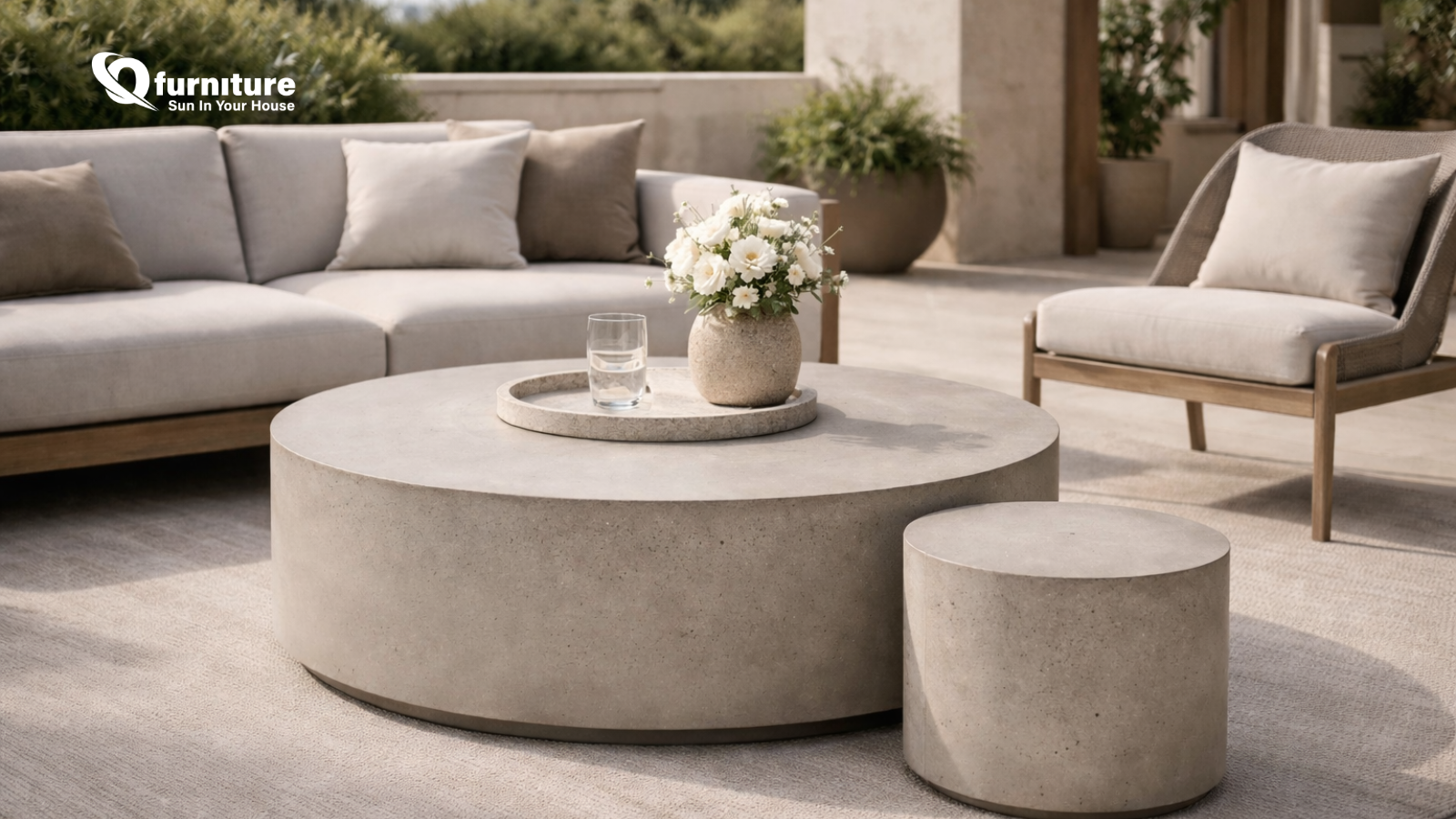
Modern concrete outdoor furniture is increasingly used in commercial environments where durability, clean design, and long-term visual consistency matter. From hotel patios and rooftop lounges to public plazas, office courtyards, and mixed-use developments, concrete offers a strong architectural presence without feeling overly decorative.
For B2B buyers, the value of concrete outdoor furniture is not only about appearance. It is also about how well the furniture fits the project setting, how consistently it can be produced, how it performs outdoors, and whether the supplier can support commercial-scale orders. This page explains the main product types, applications, design considerations, and sourcing factors buyers should review before planning a project.
What Is Modern Concrete Outdoor Furniture?
Browse our complete collection of commercial outdoor concrete tables and lightweight GFRC patio furniture.
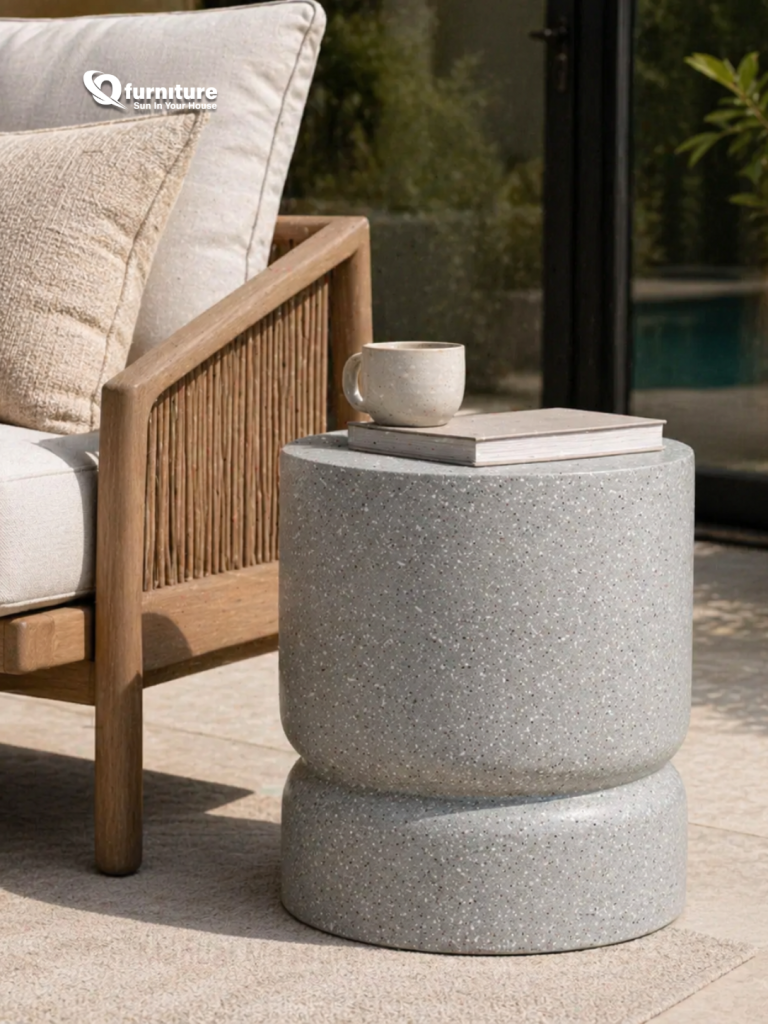
Modern concrete outdoor furniture refers to outdoor tables, benches, seating, planters, and decorative elements made with concrete or concrete-based materials in contemporary forms. These products often feature minimalist silhouettes, neutral colors, smooth or textured finishes, and architectural proportions.

Unlike traditional outdoor furniture that may focus mainly on mobility or decorative detail, modern concrete outdoor furniture is often selected for its grounded appearance, structural feel, and ability to blend with contemporary architecture. It works especially well in commercial spaces where furniture needs to feel permanent, intentional, and visually connected to the surrounding design.
Concrete outdoor furniture can be used as a functional furnishing solution, a design feature, or both. A concrete dining table may define a hospitality terrace, while concrete benches and planters can help organize public seating areas or outdoor walkways.
Why Concrete Outdoor Furniture Matters in Commercial Spaces
Commercial outdoor spaces are exposed to frequent use, changing weather, and constant visual inspection by guests, tenants, or visitors. Furniture in these areas needs to support both function and brand presentation.
Concrete outdoor furniture is often chosen because it can create a strong, stable, and contemporary look. Its weight and presence make it suitable for spaces where lightweight furniture may feel temporary or out of place. For architects and project planners, concrete also pairs well with materials commonly used in commercial design, such as stone, wood, metal, glass, and greenery.
For importers, wholesalers, and hospitality buyers, concrete furniture can also support a more distinctive outdoor product range. Instead of offering only standard patio furniture, buyers can source products that feel more architectural and project-oriented.
Common Commercial Applications for Modern Concrete Outdoor Furniture
Modern concrete outdoor furniture can be used across many commercial settings. The best application depends on traffic level, layout, design direction, and how the furniture will be used daily.
Hospitality Outdoor Areas
Hotels, resorts, restaurants, cafés, and rooftop bars often use concrete outdoor furniture to create a refined and durable outdoor atmosphere. Concrete tables, side tables, benches, and planters can help define seating zones while maintaining a calm, premium look.
In hospitality projects, buyers should consider guest comfort, table height, seating arrangement, finish consistency, and how the furniture coordinates with cushions, umbrellas, lighting, and landscape elements. For larger projects, consistent color and surface finish across multiple pieces can be especially important.
Public and Urban Spaces
Public plazas, parks, pedestrian areas, transport zones, and urban landscapes often require furniture that feels stable, practical, and visually integrated with the built environment. Concrete benches, block seating, planters, and modular pieces can help shape public areas without relying on overly decorative forms.
For these applications, project planners usually need to consider placement, circulation, cleaning access, and long-term exposure. The furniture should support everyday use while contributing to the overall spatial design.
Office, Retail, and Mixed-Use Projects
Modern commercial buildings often include outdoor areas for tenants, visitors, employees, and shoppers. Concrete outdoor furniture can be used in office courtyards, retail walkways, apartment common areas, and mixed-use terraces.
In these settings, concrete pieces can help create a more permanent and considered outdoor experience. Benches, planters, and tables can be arranged to support casual meetings, waiting areas, break zones, or decorative landscape features.
Key Product Categories in Concrete Outdoor Furniture
Concrete outdoor furniture covers several product types, each with different commercial uses and sourcing considerations.
Concrete Tables and Dining Sets
Concrete tables are commonly used in hospitality patios, outdoor dining areas, rooftop lounges, and commercial terraces. They may be designed as dining tables, coffee tables, side tables, or communal tables depending on the project.

B2B buyers should review size, tabletop thickness, base design, finish, packaging, and order consistency. For dining applications, it is also important to consider how the table works with seating height, guest movement, and the overall service layout.
Concrete Benches and Seating
Concrete benches and seating pieces are widely used in public spaces, hospitality projects, and commercial landscapes. Their simple forms can create practical seating while contributing to the visual structure of the space.
Buyers should consider comfort, edge design, surface finish, placement, and whether cushions or other accessories are needed. For public or high-traffic areas, the design should support daily use without feeling visually heavy or difficult to maintain.
Concrete Planters and Decorative Elements
Concrete planters are often used to organize outdoor zones, add greenery, guide circulation, or create privacy between seating areas. Decorative concrete elements can also help complete a modern outdoor design scheme.
For commercial projects, planters should be reviewed for size, drainage considerations, finish direction, and compatibility with landscape planning. When used together with tables or benches, concrete planters can help create a cohesive outdoor furniture collection.
Material, Finish, and Design Considerations
The appearance and performance of concrete outdoor furniture depend heavily on material selection, production quality, finish direction, and project planning. Buyers should look beyond the product image and evaluate whether the furniture can meet commercial requirements in real use.
Modern Forms and Minimalist Profiles
Modern concrete outdoor furniture often uses clean lines, geometric shapes, rounded edges, block forms, or sculptural profiles. These designs work well in contemporary spaces because they are visually simple but still substantial.
Minimalist profiles also make concrete furniture easier to pair with different architectural styles. A simple concrete table or bench can fit into a hotel courtyard, a public plaza, or a retail terrace without competing with the surrounding design.
Surface Finishes and Color Direction
Concrete outdoor furniture may come in different tones and surface treatments, from light neutral shades to darker architectural colors. The finish can be smooth, textured, matte, or naturally varied depending on the design and production method.
For B2B buyers, finish consistency is an important sourcing point. Concrete can have natural variation, so buyers should clarify acceptable color range, sample approval, and finish expectations before placing larger orders. This helps reduce misunderstandings during commercial procurement.
Weight, Placement, and Handling Awareness
Concrete furniture is usually heavier than many other outdoor furniture materials. This can be useful in commercial settings because the furniture feels stable and grounded, but it also requires planning.
Before sourcing, buyers should review placement access, floor loading considerations, shipping method, installation process, and whether the furniture will need to be moved regularly. For projects with rooftop areas, narrow entrances, or multi-level installation, handling requirements should be discussed early.
How B2B Buyers Should Evaluate Modern Concrete Outdoor Furniture
Sourcing modern concrete outdoor furniture for commercial use requires more than selecting a design. Buyers need to evaluate how the product fits the project, how it will be produced, and whether the supplier can support delivery expectations.

Commercial Durability and Outdoor Performance
Concrete outdoor furniture should be assessed based on the intended environment and level of use. A hotel terrace, public walkway, and private office courtyard may all require different product choices.
Buyers should ask about outdoor suitability, surface protection, cleaning recommendations, and expected maintenance. It is also useful to understand how the furniture responds to normal outdoor exposure over time, especially in projects where appearance consistency matters.
Project Specification and Order Planning
Commercial buyers often need products in specific sizes, finishes, quantities, and delivery schedules. Clear specification helps avoid production delays and mismatched expectations.
Before confirming an order, buyers should review product dimensions, finish samples, packaging details, lead time, minimum order quantities, and installation needs. For larger projects, phased delivery and replacement planning may also be relevant.
Supplier Capability and Export Readiness
For importers, wholesalers, distributors, and project buyers, supplier capability is a key factor. A suitable supplier should understand commercial orders, export documentation, packaging requirements, and quality control expectations.
Q Furniture, as a B2B concrete furniture supplier, can be considered in this context when buyers are looking for concrete furniture designed for commercial and export-oriented projects. The focus should remain on whether the supplier can support the required product range, finish consistency, communication, and order planning.
Maintenance and Lifecycle Expectations
Concrete outdoor furniture is often chosen for its long-term presence, but it still benefits from proper care. Maintenance expectations should be clear before products are installed in commercial spaces.
General care may include regular cleaning, avoiding harsh treatment, checking surface condition, and following supplier guidance for finish protection. In hospitality or public settings, maintenance routines should be practical for staff and suitable for the expected use level.
Lifecycle planning is also important. Buyers should consider whether additional pieces may be needed later, whether the same finish can be repeated, and how the furniture will age within the overall project design. This is especially relevant for hotels, restaurants, and developments that may expand or refresh outdoor areas over time.
How This Pillar Supports Better Sourcing Decisions
This guide helps B2B buyers understand how modern concrete outdoor furniture fits into commercial outdoor planning. Instead of viewing concrete furniture only as a design choice, buyers can evaluate it through application, product category, finish direction, handling, supplier capability, and lifecycle expectations.
For importers and project buyers, this approach supports better product selection and more confident sourcing discussions. For architects and outdoor planners, it helps connect furniture choices with the practical needs of contemporary commercial spaces.
Concrete outdoor furniture can be a strong option when the project calls for modern form, durable presence, and a cohesive architectural look. With clear specifications and the right supplier discussions, it can support both design quality and commercial usability.
FAQ
What is modern concrete outdoor furniture?
Modern concrete outdoor furniture includes outdoor tables, benches, seating, planters, and decorative pieces made with concrete or concrete-based materials in contemporary designs. It is often used in commercial spaces that need a clean, architectural, and durable outdoor look.
Is concrete outdoor furniture suitable for commercial spaces?
Yes. Concrete outdoor furniture can be suitable for hotels, restaurants, public areas, office courtyards, retail spaces, and mixed-use projects. Buyers should evaluate the product design, finish, placement, maintenance needs, and supplier capability before sourcing.
What should B2B buyers consider before sourcing concrete outdoor furniture?
B2B buyers should review product dimensions, finish consistency, outdoor suitability, order quantity, packaging, lead time, installation access, export readiness, and long-term maintenance expectations.
Does concrete outdoor furniture require maintenance?
Yes, concrete outdoor furniture should be maintained according to supplier guidance. Regular cleaning, careful handling, and proper surface care can help preserve its appearance and support longer use in commercial outdoor environments.
📚 In-Depth Guides in This Silo 2 Pillar:
For extreme climate and public space seating, see our guide on patio concrete benches for commercial landscapes.
📩 Request a Commercial B2B Project Catalog & Price List (FOB / CIF)
Partner directly with Q-Furniture Vietnam for your hospitality, commercial landscape, and export wholesale container orders. Custom CAD drawings, material testing reports, and volume tiered discounts available.