


For commercial outdoor projects, seating decisions are rarely based on appearance alone. Buyers also need to assess whether a product fits the operational reality of the site, the level of public use, the expected maintenance routine, and the practical requirements of freight, handling, and installation.
A patio concrete bench often enters the shortlist when a project needs visual permanence, material weight, and a more architectural outdoor presence. That can make it relevant for hospitality, landscape, and public space settings, but relevance depends on more than style. Before moving toward RFQ, approval, or vendor comparison, buyers need to understand where this product fits best, what specifications matter most, and what project-side factors can affect long-term suitability. In many cases, that evaluation also sits within a broader modern concrete outdoor furniture strategy for commercial outdoor environments.
Where a Patio Concrete Bench Fits Best in Commercial Projects
Discover our full range of heavy-duty concrete public park benches and outdoor seating built to withstand high traffic.
A patio concrete bench is generally most suitable in commercial outdoor settings where stability, permanence, and a modern visual profile matter as much as seating function.
In hospitality projects, it can work well in outdoor lounges, entry areas, terraces, courtyard zones, or amenity spaces where the seating plan benefits from a grounded, durable piece rather than something lightweight or frequently repositioned. In these cases, the bench supports both seating use and the overall design language of the environment.
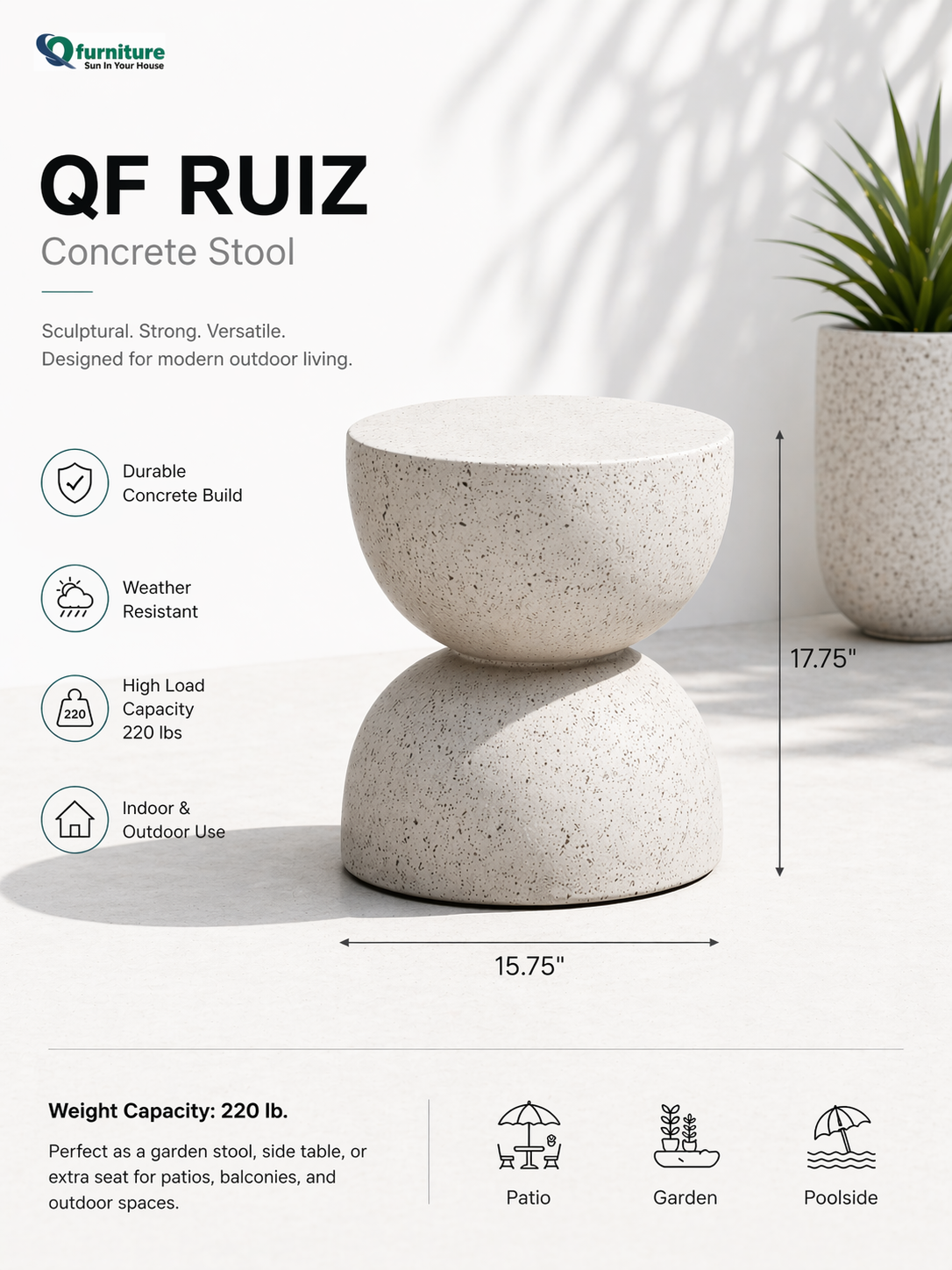
In landscape projects, it often fits spaces that need a stronger architectural expression, such as garden paths, plaza edges, outdoor rest points, or curated open-air gathering areas. Buyers may see value in the way the product contributes visual weight while also serving a practical seating role.
In public space projects, it can be appropriate where durability and resistance to casual movement are important considerations. The product may be shortlisted for areas with repeat daily use, open circulation, and less controlled user behavior, especially where the project prefers a fixed-feel seating solution rather than a movable furniture approach.
This type of product can also make sense when the wider setting follows a modern concrete outdoor furniture direction. In that context, the bench is not treated as a standalone item only, but as part of a coordinated outdoor environment.
That said, it is not automatically the right choice for every commercial site. It may be less suitable where projects require frequent layout changes, limited handling access, reduced structural load on certain placement surfaces, or a softer and more casual furniture expression. For B2B buyers, the right question is not whether the product looks appropriate in isolation, but whether it matches the operational and site conditions of the project.
Key Specifications Buyers Should Review Before Approval
For any patio concrete bench, specification review should happen before aesthetic approval becomes final. A product can appear aligned with the design brief yet still create issues later if critical dimensions, weight, finish, or placement conditions are not reviewed early.

Size, Seat Height, and User Capacity
The first buyer check is overall size. Length, depth, and seat height affect more than product appearance; they influence circulation, comfort, and the number of users the bench can realistically support.
For hospitality projects, these dimensions should match how the bench will actually be used. A seating area intended for short pauses may call for different proportions than one designed for longer dwell time in a terrace or courtyard setting. For public or landscape use, seat height and usable seating length should also be evaluated against expected turnover, user diversity, and the available space around the bench.
Capacity should not be treated as a rough visual estimate. Buyers should confirm how many users the bench is intended to serve in normal use and whether that aligns with layout density planning. In commercial settings, even a small mismatch in dimensions can affect comfort, accessibility, and the way the seating zone functions overall.
Weight, Stability, and Placement Constraints
One reason buyers consider a patio concrete bench is the material’s inherent sense of stability. In many outdoor commercial settings, weight is an advantage because it supports permanence and reduces unwanted movement.
However, weight also creates planning implications. Buyers should review not only product weight itself, but also how that weight affects handling, delivery access, on-site movement, and final placement. A bench that performs well once installed may still be difficult to execute if the access route is narrow, the site requires manual handling over distance, or the substrate needs confirmation before placement.
Placement constraints should be discussed early. This includes how the bench will arrive on site, what equipment may be needed for positioning, whether the installation area is fully prepared, and whether the intended location introduces any structural or operational limitations. In B2B sourcing, these issues are best resolved before approval rather than during final delivery coordination.
Finish, Texture, and Weather Exposure
Finish and texture influence both appearance and practicality. A patio concrete bench may fit the design intent visually, but buyers still need to assess whether the chosen surface is appropriate for real outdoor exposure and day-to-day use.
Texture affects tactile experience, visible wear, and the overall reading of the product in the space. A smoother finish may support a cleaner and more refined look, while a more textured surface may align better with certain landscape or public settings. The correct choice depends on the project environment, not just the render or sample impression.
Exposure also matters. Buyers should review how the bench will perform in the specific weather conditions of the project, including sun, rain, moisture cycles, and general outdoor exposure. The goal is not to expect a patio concrete bench to behave like an untouched indoor object, but to confirm that the finish and surface characteristics are appropriate for the site and the buyer’s appearance expectations over time.
If finish consistency is part of the approval process, buyers may also review broader concrete furniture finish considerations when comparing surface direction across an outdoor project.
Project-Side Considerations for Hospitality, Landscape, and Public Space Use
A bench can be acceptable on paper and still prove mismatched in actual project use. That is why buyers should move beyond basic product review and assess the operating conditions of the site itself.

Traffic Level and User Behavior
Traffic level changes the evaluation criteria. In high-traffic spaces, buyers should think about how frequently the bench will be used, how long users are likely to remain seated, and what type of interaction the public environment encourages.
In hospitality settings, user behavior may be relatively controlled, but turnover and repeated daily use are still important. In public space applications, the bench may face more informal patterns of use, less predictable behavior, and a higher chance of visible wear or misuse over time.
This is where product suitability becomes more than a design question. Buyers should consider whether the patio concrete bench is appropriate for the level of contact, exposure, and user interaction expected on site. They should also evaluate whether the product’s visual character still works if signs of use become part of the long-term reality of the environment.
Maintenance Planning and Lifecycle Expectations
This article is not a full maintenance guide, but buyers should still set realistic expectations before sourcing.
A patio concrete bench may be selected partly because it supports a durable commercial outdoor specification, yet that does not remove the need for routine cleaning, appearance monitoring, and practical upkeep. Buyers should assess whether the site team can support the required cleaning routine and whether the expected level of appearance change over time is acceptable for the project.
This is particularly important in hospitality environments, where surface presentation often matters more to operators, and in public settings, where maintenance schedules may be less frequent but user contact is more variable. The right evaluation standard is long-term practicality: can the product remain operationally acceptable and visually aligned with the project over its intended use cycle?
Freight, Installation, and Site Coordination
Freight and installation planning should be addressed early in the sourcing process. For a patio concrete bench, site coordination is often a meaningful part of project readiness.
Buyers should confirm how the product will be packed, transported, unloaded, moved into final position, and coordinated with site access conditions. They should also review whether installation timing matches the broader project schedule, especially when outdoor works, landscaping, hardscape completion, or other site activities can affect final placement.
Supplier discussions should cover the points that most often create friction later: handling requirements, site preparedness, access limitations, installation sequence, and any product-specific coordination needed before delivery. These are not secondary details. In many commercial projects, they are part of the product’s real suitability.
How It Complements a Modern Concrete Outdoor Furniture Program
A patio concrete bench can play a useful role inside a modern concrete outdoor furniture program when buyers are planning a coordinated commercial outdoor environment rather than selecting isolated pieces one by one.
In that context, the bench helps establish material consistency, visual structure, and a more intentional outdoor language across the site. It may support entry sequences, gathering points, rest areas, or transition spaces while remaining aligned with the broader program direction.
For B2B buyers, this matters because product selection often happens at two levels. One level is individual product fit: does this bench work in this exact location? The second level is program fit: does it align with the wider outdoor assortment, visual standard, and specification logic of the project?
A patio concrete bench can contribute well when the project needs a seating element with more permanence and architectural presence inside a modern concrete outdoor furniture strategy. At the same time, buyers should avoid treating the entire program around this one item. The bench should support the wider environment, not define an overly broad category decision by itself.
Buyer Checklist Before Sourcing
Before moving a patio concrete bench into RFQ, vendor shortlist, sample review, or approval discussion, buyers should confirm the following points:
- Is the bench intended for hospitality, landscape, or public space use, and does that use case match its dimensions, weight, and seating function?
- Do the overall size, seat height, and user capacity fit the actual layout and circulation plan?
- Has the project team reviewed weight implications for access, substrate, handling, and final placement?
- Is the finish appropriate for the site’s weather exposure and appearance expectations?
- Are traffic level and likely user behavior consistent with the product’s suitability?
- Does the maintenance team have a realistic plan for cleaning and appearance upkeep?
- Have freight, installation, and site coordination requirements been clarified early enough to avoid execution issues?
- If the project is part of a broader modern concrete outdoor furniture program, does the bench align with that wider material and visual direction?
- Has the buyer prepared the key questions needed for supplier discussion, including finish options, handling considerations, and sourcing readiness?
For buyers comparing this product against broader commercial outdoor concrete furniture requirements, it helps to confirm how the bench fits the project’s sourcing, specification, and installation priorities.
FAQ
Is a Patio Concrete Bench Right for High-Traffic Outdoor Hospitality Areas?
It can be, provided the product’s size, finish, maintenance expectations, and placement conditions align with how the hospitality area actually operates. High traffic alone does not make the product unsuitable, but buyers should confirm that the bench fits the expected user turnover, appearance standard, and site management routine.
What Should Buyers Confirm Before Specifying It for Public Spaces?
Buyers should confirm the patio concrete bench dimensions, weight, placement conditions, traffic exposure, likely user behavior, cleaning expectations, and installation coordination. Public space specification should focus on real operating conditions, not only visual fit.
When Should Buyers Include It in a Modern Concrete Outdoor Furniture Collection?
Buyers should include a patio concrete bench in a modern concrete outdoor furniture collection when the project needs a coordinated outdoor seating element with visual permanence, material consistency, and clear commercial relevance within the broader site program.
A patio concrete bench is most effective when it is evaluated as a commercial project component rather than a standalone decorative item. For B2B buyers, the strongest sourcing decisions come from matching the product to actual site use, specification priorities, and execution realities from the beginning.
📚 In-Depth Guides in This Silo 4 Pillar:
Compare material performance with our modern concrete outdoor furniture technical guide.
📩 Request a Commercial B2B Project Catalog & Price List (FOB / CIF)
Partner directly with Q-Furniture Vietnam for your hospitality, commercial landscape, and export wholesale container orders. Custom CAD drawings, material testing reports, and volume tiered discounts available.








