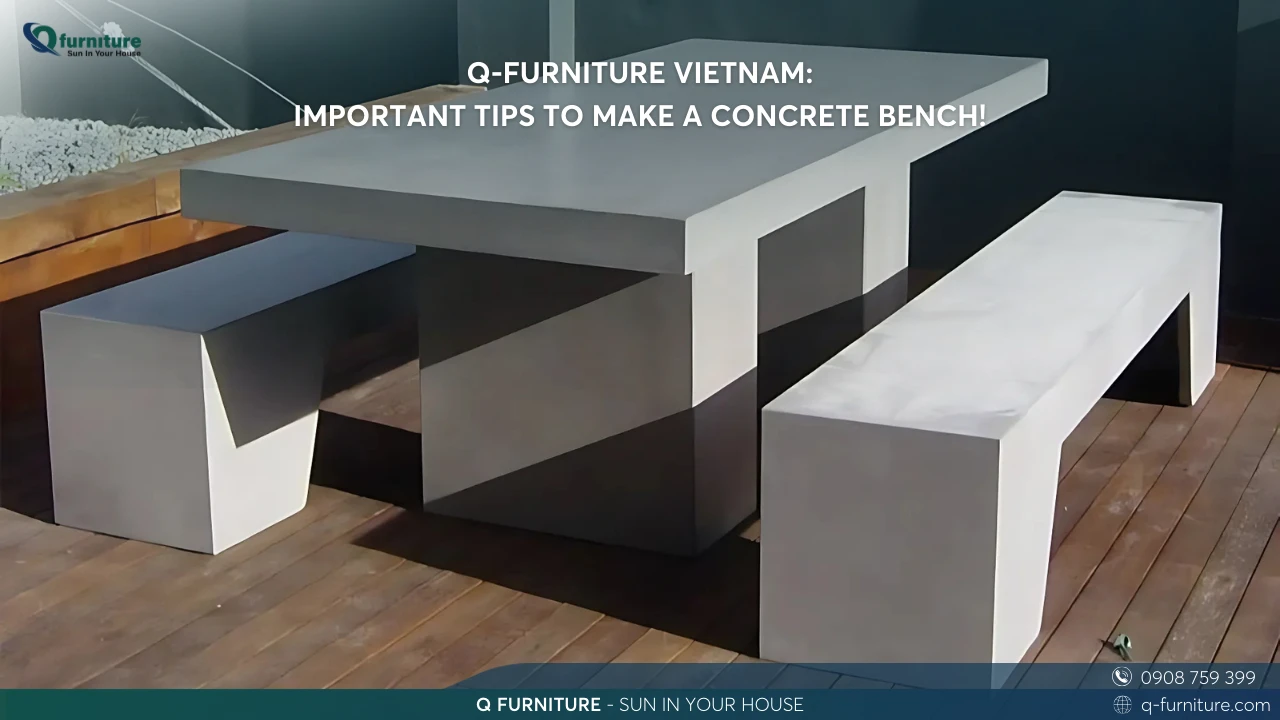
Outdoor Concrete Benches for Commercial Outdoor Projects

A bench looks simple until it has to work every day in a hotel courtyard, restaurant terrace, public garden, resort walkway, or commercial landscape. Outdoor concrete benches are not only places to sit. They can frame a path, slow down movement, give weight to an open area, and make an exterior space feel finished rather than temporary.
For B2B buyers, the question is rarely just whether a bench looks good in one photo. The stronger question is whether the bench fits the project logic: how people move through the space, how long they stay, how much exposure the furniture receives, and whether the supplier can support repeated commercial use. Buyers sourcing from Q-Furniture can treat concrete benches as part of a wider exterior furniture decision, not a loose final accessory.

Why Concrete Benches Work Differently Outdoors
Outdoor seating has to do more than fill a blank area. It has to stay visually calm under sunlight, moisture, wind, heavy traffic, cleaning routines, and changing guest behavior. Concrete is useful here because it carries a sense of permanence. A concrete bench can stay grounded in a way that lightweight furniture often cannot.
That permanence is also the reason buyers should be careful. A bench that is too large, too heavy, too sharp in form, or poorly placed can dominate the space. Good specification is not about choosing the heaviest option. It is about choosing a form, finish, and placement that make the outdoor area easier to use.
From Seat to Spatial Anchor
In commercial projects, outdoor concrete benches often work as spatial anchors. They can define where people wait, where guests pause, where circulation softens, or where a landscape edge becomes usable. This makes the bench part of the site experience rather than a product placed after design decisions are already finished.
This is why benches should be reviewed together with planters, tables, stools, lounge pieces, and adjacent outdoor seating. For broader planning, buyers can compare modern concrete outdoor furniture to understand how concrete pieces can support one consistent exterior language.
Where Outdoor Concrete Benches Make the Most Sense
Concrete benches are strongest in projects where the seating is expected to feel integrated with the architecture or landscape. They are less about flexible rearrangement and more about creating dependable points of use. That makes them useful in hospitality, landscape, and public-facing commercial environments.
Hospitality Courtyards, Terraces and Entry Areas
In hospitality settings, a bench can support the mood of the property before a guest reaches the main interior. Courtyards, arrival areas, poolside paths, garden terraces, and outdoor waiting zones all benefit from seating that feels intentional. Concrete can help these areas look composed even when the layout is minimal.
For hotels and restaurants, the key is balance. The bench should add visual strength without making the space feel cold or uncomfortable. Rounded edges, warmer concrete tones, suitable seat depth, and careful placement near greenery or textured flooring can make the piece feel welcoming rather than severe.
Landscape and Public Space Projects
In landscape projects, concrete benches are often selected because they can sit naturally beside stone, planting, water features, paved paths, and architectural walls. They help the furniture feel connected to the site instead of brought in as a separate object.
For public or semi-public areas, durability and placement become more important. Buyers should think about how often the seating will be used, whether it needs to discourage constant movement, how easy the surface is to clean, and whether the form remains comfortable enough for the intended dwell time.
A narrower patio-focused project may need a slightly different angle. In that case, a guide to patio concrete bench for hospitality projects can help buyers compare how the same material behaves in smaller, guest-facing outdoor zones.

Design Checks Before Choosing a Model
A good bench choice starts before model selection. Buyers should first understand what the space needs the bench to do. Is it mainly for waiting, resting, dividing an area, framing a view, supporting a planter, or giving weight to a large paved zone? The answer changes the right size, shape, and finish.
Scale, Placement and Comfort
Scale is one of the easiest details to misread online. A bench that looks clean in a product image may feel too heavy in a narrow walkway, while a small bench may disappear in a large public courtyard. Buyers should review dimensions against real circulation paths, not only against product photography.
Comfort also depends on context. A short waiting bench does not need the same comfort profile as seating for a restaurant terrace or resort garden. Seat height, depth, edge softness, surrounding shade, and nearby tables all affect how users experience the piece.
Common Mistakes in Bench Planning
One common mistake is treating the bench as a decorative object first and a site element second. A beautiful concrete bench can still fail the project if it blocks a walking route, sits too far from shade, faces the wrong direction, or feels disconnected from the way people naturally use the space.
Another mistake is choosing one large bench when several smaller seating points would work better. In hotels, public gardens, and restaurant terraces, people often prefer seating that gives them a sense of choice. A single oversized piece may look impressive, but it can limit how the area is used during busy periods.
Finish, Surface and Maintenance
Concrete has natural variation, which can be part of its appeal. Still, commercial buyers should ask how consistent the finish will be across a multi-piece order. Tone, texture, surface protection, drainage, and cleaning guidance all matter when the bench will sit outdoors for long periods.
Maintenance should be treated as a practical planning topic, not as an afterthought. A well-specified concrete bench can reduce replacement pressure, but it still needs the right finish, placement, and care instructions. Buyers should confirm whether the supplier can explain how the surface should be cleaned and protected for the project environment.
When Concrete May Not Be the Best Bench Material
Concrete is strong, but it is not the right answer for every outdoor seating plan. If a project needs furniture that changes position every day, moves indoors and outdoors often, or sits on a strict load-limited deck, buyers should review lighter options before committing to concrete.
The material works best when the project benefits from stability, visual weight, and long-term placement. It is weaker as a choice when the space needs constant flexibility. This distinction helps buyers use concrete where it creates value instead of forcing it into areas where another material would perform better.
How to Source Outdoor Concrete Benches for B2B Projects
Sourcing outdoor concrete benches should not stop at asking for price and size. Because these pieces are heavier and more permanent than many outdoor furniture options, buyers should check whether the supplier can support production consistency, packaging, export handling, lead time, and project communication.
The best sourcing conversations are specific but not overcomplicated. Buyers can start with the project type, expected quantity, preferred finish direction, placement environment, approximate dimensions, and target delivery plan. From there, the supplier can advise whether a standard model, adjusted dimension, or custom form makes more sense.
Supplier Questions That Matter
Before shortlisting, buyers should ask whether the supplier produces concrete furniture directly, whether samples or finish references are available, how packaging is handled, and what information is needed for customization. These questions reveal whether the supplier is ready for commercial work, not just single-item interest.
Buyers comparing product formats can also review the concrete furniture collection to see how benches relate to tables, stools, planters, and other concrete pieces within a broader sourcing plan.
Project Inquiry for Concrete Bench Sourcing
For hospitality, landscape, and public-space projects that need durable outdoor concrete seating, buyers can contact Q-Furniture to discuss dimensions, finish direction, weight, packaging, customization, and export support for commercial orders.
FAQ
What is the best keyword for this article?
The recommended primary keyword is outdoor concrete benches. It is broad enough for category-level B2B research and specific enough to match the article’s focus on concrete seating for exterior commercial projects.
Are outdoor concrete benches suitable for hospitality projects?
Yes. They can suit hotels, restaurants, resorts, courtyards, terraces, and entry areas when the design, size, finish, and placement match the intended guest experience.
Can concrete benches work in public spaces?
Yes. Concrete benches can work well in public or semi-public spaces because they offer stability, durability, and visual consistency. Buyers should still review comfort, safety, maintenance, and site context before final selection.
What should buyers check before ordering concrete benches?
Buyers should check dimensions, finish consistency, surface protection, weight, packaging, lead time, customization options, and supplier experience with commercial projects.
Do concrete benches need maintenance?
Yes. Concrete benches are durable, but outdoor use still requires appropriate cleaning, surface care, and placement planning. Maintenance needs depend on the finish, exposure level, and project environment.