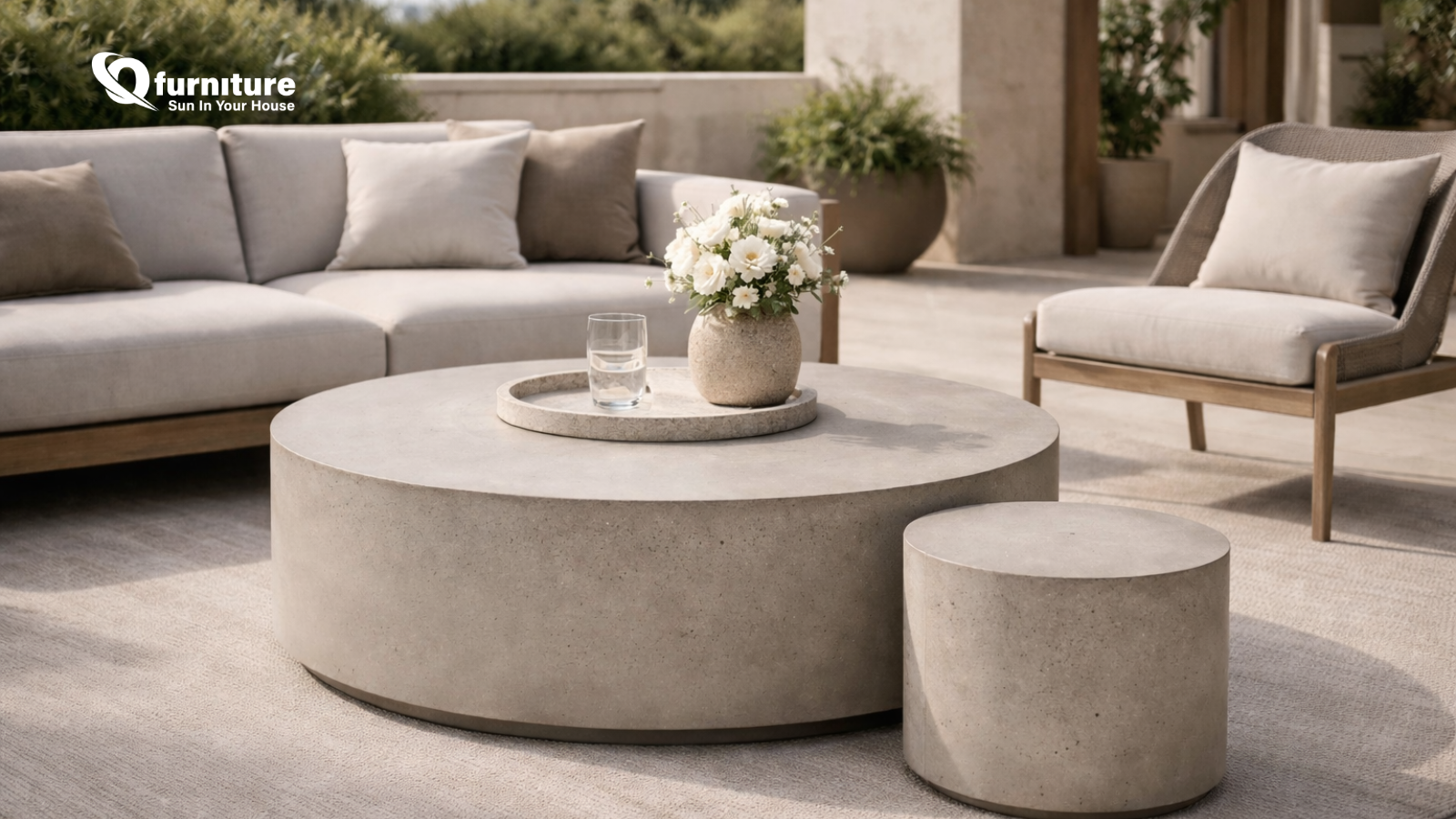
Lightweight Concrete Outdoor Furniture: B2B Buyer Guide
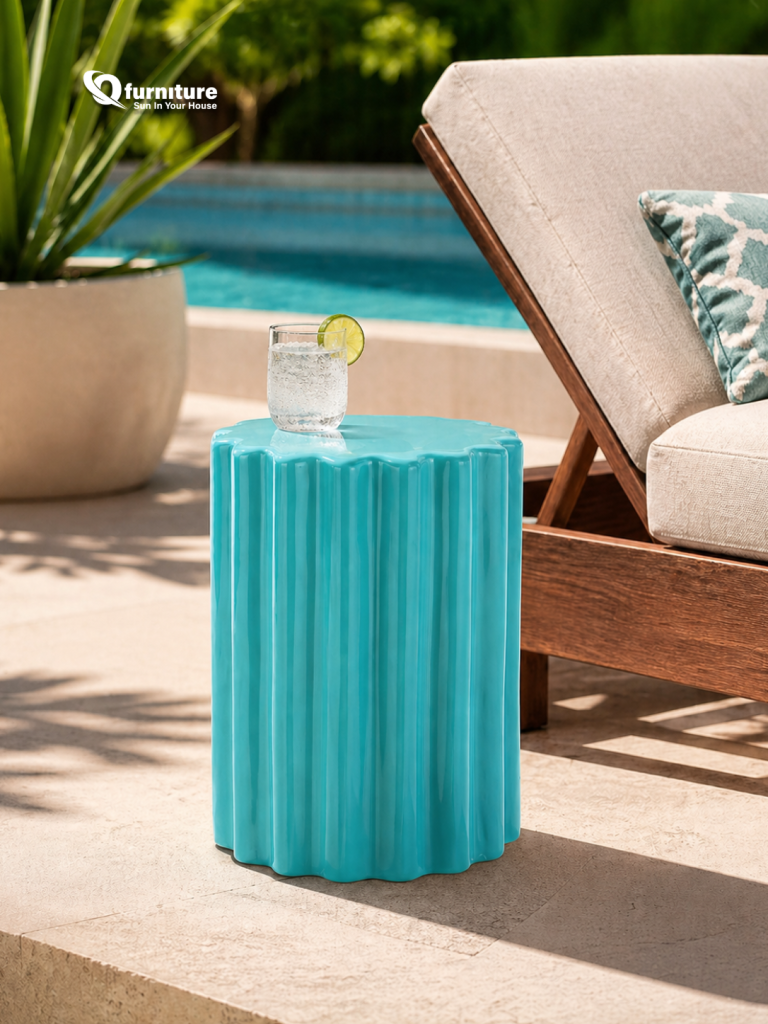
For commercial buyers, concrete outdoor furniture is more than a design choice. Product weight, production method, surface finish, handling requirements and maintenance can all influence whether a piece works well in a hotel, resort, restaurant, retail environment or other outdoor project. Lightweight concrete outdoor furniture can make handling and installation more practical, while cast construction supports repeatable forms and polished surfaces can create a cleaner, more refined appearance.
These characteristics are not separate categories in every case. A single product can use lightweight construction, be produced in a mold and receive a smoother polished finish. The important question is how each characteristic supports the intended use, installation conditions and long-term performance of the project.

Why Lightweight Concrete Outdoor Furniture Matters
Weight affects freight planning, site access, handling and final placement. Traditional concrete furniture is valued for its stable and architectural presence, but excessive weight can become difficult when products need to be moved through narrow corridors, elevators, stairs or rooftop access points. It can also complicate installation when a project requires many units rather than a single statement piece.
Lightweight concrete outdoor furniture can reduce some of those challenges while maintaining the visual character buyers expect from concrete. This can be useful for rooftop terraces, balconies, poolside areas, courtyards and hospitality spaces where site access needs to be considered early. Lower weight may also make on-site positioning easier when layouts need minor adjustments during installation.
However, lighter construction should never be treated as the only target. A product still needs enough stability for regular outdoor use, suitable wall and edge construction, and a structure that can tolerate expected handling and service conditions. The right balance depends on product size, placement, traffic level and how often the furniture will be moved.
What Buyers Should Review Before Approval
Stability is the first consideration. Furniture used in hotels, restaurants, resorts and public-facing areas may face repeated use, cleaning and changing weather. A lighter product should still feel secure in its intended environment. Buyers should also review edge thickness, internal construction and reinforcement where relevant.
For lightweight concrete outdoor furniture orders, consistency matters across multiple units. Dimensions, proportions, finishes and packing should remain controlled. Lower weight offers little benefit if pieces vary significantly or arrive damaged because packaging does not suit the product form.
Cast Concrete Outdoor Furniture and Production Consistency
Cast concrete outdoor furniture is formed by placing concrete material into molds or forms. For project buyers, the production method matters because it influences shape, dimensions, surface appearance and repeatability. When an order requires several matching pieces, a controlled casting process can help maintain a consistent visual language across the collection.
Form, Dimensions and Repeatability
Dimensional accuracy affects layout planning, packing, installation and coordination with other furniture. Minor variation may be acceptable on one side table, but larger differences become visible when several pieces are installed together in a restaurant terrace, hotel lounge or retail display.
Before mass production, buyers should confirm key dimensions against approved samples or drawings. Where tighter control is required, acceptable tolerances can be agreed with the supplier to reduce mismatch between sample approval and final shipment.

Surface Quality in Lightweight Concrete Outdoor Furniture
Surface quality is an important part of evaluating lightweight concrete outdoor furniture. Concrete naturally shows tonal and textural variation, which can be part of the material’s appeal. Buyers should still distinguish intentional variation from defects. Air holes, damaged edges, unexpected cracks, inconsistent textures or large color differences may be more noticeable in hospitality and retail environments.
The acceptable standard depends on the design direction. A raw architectural project may allow more surface character, while a luxury resort or branded space may need tighter control. Defining the expected finish during sample approval is more practical than resolving it at final inspection.
Polished Concrete Outdoor Furniture for Refined Commercial Spaces
Polished concrete outdoor furniture is often selected when the project requires a smoother and more finished appearance. It can work well on hotel terraces, restaurant patios, resort lounges, retail exterior areas and other design-led spaces where visible surfaces contribute directly to the overall atmosphere.
When lightweight concrete outdoor furniture uses a polished or smoother finish, it can coordinate well with timber, metal, upholstery, stone and surrounding architectural materials. The decision should still be based on real operating conditions, not only on how the product looks in a photograph or showroom sample.
For buyers considering how lightweight construction and refined finishes fit wider hospitality and design directions, our guide to 2026 architectural concrete furniture trends shows how lightweight GFRC and polished finishes are being applied across rooftop, poolside and dining environments.

When a Polished Finish Is the Right Choice
A polished or refined surface provides the most value when it is visible and frequently experienced by users. A restaurant tabletop, for example, receives more attention and direct contact than a less visible underside, so finish quality can contribute more clearly to perceived quality.
Buyers should consider the project standard, contact with food and drinks, exposure to dust and water, cleaning frequency and expected appearance over time. In casual, industrial or intentionally raw environments, a highly polished finish may offer limited practical value.
Maintenance Expectations for Outdoor Concrete Finishes
No outdoor finish is maintenance-free. Concrete furniture may face sunlight, rain, dust, food, beverages and regular cleaning, so long-term appearance depends on both the finish and how the product is used after installation.
Hotels, restaurants and property operators should receive clear care guidance so cleaning teams understand appropriate methods and products. This matters most for visible tabletops and other high-contact surfaces, especially in busy dining environments.
The objective is to choose a finish that matches actual operating conditions, not simply the most refined option. Maintenance expectations should be agreed before ordering so the end user can realistically preserve the intended appearance.
How Lightweight, Cast and Polished Concrete Differ
Lightweight, cast and polished describe different aspects of a product. Lightweight refers mainly to construction and handling, cast to the production method, and polished to surface treatment and appearance. Because they address different requirements, they can be combined in one design.
A rooftop hospitality project, for example, may benefit from lower weight because access is difficult, cast production because several matching tables are required, and a refined surface because the furniture is part of a premium guest area. These characteristics should also be considered within the broader context of modern concrete outdoor furniture, where construction, form, finish and commercial application are evaluated together. The sourcing decision is therefore not about choosing one label over another. It is about identifying the combination that supports logistics, design, durability and maintenance.
Commercial Sourcing Considerations Before Ordering
When sourcing lightweight concrete outdoor furniture, buyers should define the application, dimensions, quantity, finish, installation conditions and delivery requirements. A restaurant patio, rooftop lounge, resort pool area and public outdoor space can have very different operating demands.
Product weight should be reviewed with access routes and handling equipment. Finish approval should use a physical sample or clear reference where possible, while packaging should protect exposed edges and visible surfaces during export. For repeat orders, buyers should also confirm how dimensions, color direction and finish expectations will be controlled.
Lead time should include more than manufacturing. Sample approval, production, quality checks, packing and shipment preparation can all affect the final schedule. Sourcing teams that begin with product selection can browse the concrete furniture collection to compare available tables, stools and other concrete product forms before discussing project-specific requirements.
Working With a Concrete Furniture Manufacturer
Supplier capability matters when a project involves export requirements, custom dimensions, repeat production or specific finishes. Buyers should expect clear communication around drawings, dimensions, sample procedures, packing, production timing and inspection standards.
Q-Furniture manufactures indoor and outdoor furniture in concrete and wood and works with project and export requirements. When developing a concrete furniture order, buyers can share drawings, reference images, dimensions, finish directions, expected quantities and installation conditions so the supplier can review feasibility before quotation and production.
For B2B orders, the decision extends beyond the appearance of a single item. Freight efficiency, repeatability, site access, maintenance and communication can be as important as the final design.
Planning Your Order
When a project requires lightweight construction, controlled casting, a specific surface finish or a combination of these features, the most useful next step is to confirm the application and specifications before production. Buyers can contact Q-furniture to discuss drawings, dimensions, finish direction, quantity, samples and project requirements.
FAQ
Is lightweight concrete outdoor furniture suitable for commercial use?
It can be suitable when the product is designed around the intended application. Buyers should consider stability, construction, expected traffic, outdoor exposure and handling requirements rather than judging suitability only by product weight.
Is cast concrete a good choice for larger orders?
Cast production can support repeatable shapes and dimensions, which is useful when several matching units are required. Buyers should still confirm samples, important measurements, surface standards and the acceptable level of natural variation before production.
Does polished concrete require special maintenance?
A polished or smoother surface may need clearer care guidance, particularly in hospitality and dining areas where furniture comes into contact with food, drinks, water and cleaning products. The finish should be selected according to both appearance expectations and the maintenance routine available on site.