


The right time to buy concrete furniture is not always the day with the biggest discount. For commercial projects, the better answer is more practical: buy early enough to protect the project schedule, review samples properly, confirm dimensions and finishes, and avoid rushed decisions for heavy outdoor pieces.
This matters for hotels, restaurants, resorts, offices, public spaces, and landscape projects because concrete furniture is tied to opening dates, guest experience, placement planning, maintenance routines, and budget control. Buyers sourcing from Q-Furniture should think about timing as part of the sourcing strategy, not only as a way to catch a lower price.

Why Timing Matters More in Concrete Furniture Buying
Commercial concrete furniture buying is different from buying one loose item for a private room. A project may need matching finishes, multiple units, custom dimensions, export packing, container planning, and coordination with construction or installation schedules. If the buyer waits too long, the available options become narrower and the risk of compromise becomes higher.
Late buying can also make the buyer focus only on what is available immediately. That may solve a short-term deadline, but it can create long-term problems if the concrete pieces do not fit the site, do not match the design direction, or need replacement sooner than expected.
The best time depends on the buying situation
For simple replacement pieces, the right time may be when stock is available and pricing is favorable. For a new hotel terrace, public seating zone, or outdoor dining area, the right time is usually much earlier. The buyer needs time to compare concrete mix, finish, scale, quantity, packaging, and delivery requirements.
This is especially true for outdoor furniture. Buyers planning exterior areas can review modern concrete outdoor furniture early in the process to understand which products should be treated as permanent design elements and which pieces can remain more flexible.
Best Times to Buy Concrete Furniture by Project Stage
A useful way to answer the timing question is to look at the project stage. The same buyer may make different decisions when planning a new space, replacing worn concrete furniture, preparing for high season, or ordering customized pieces.
During early project planning
The strongest time to start concrete furniture research is during early planning, before the layout feels locked. At this point, furniture can still influence circulation, capacity, guest comfort, and the overall visual direction of the space. Buyers can compare categories, request references, and avoid forcing the furniture plan into leftover areas.
This stage is also useful for budgeting. A buyer can separate must-have pieces from nice-to-have pieces, compare standard and custom concrete options, and decide which items need longer lead times. Early planning does not mean placing the order immediately. It means removing uncertainty before the project becomes urgent.
Before peak season or reopening dates
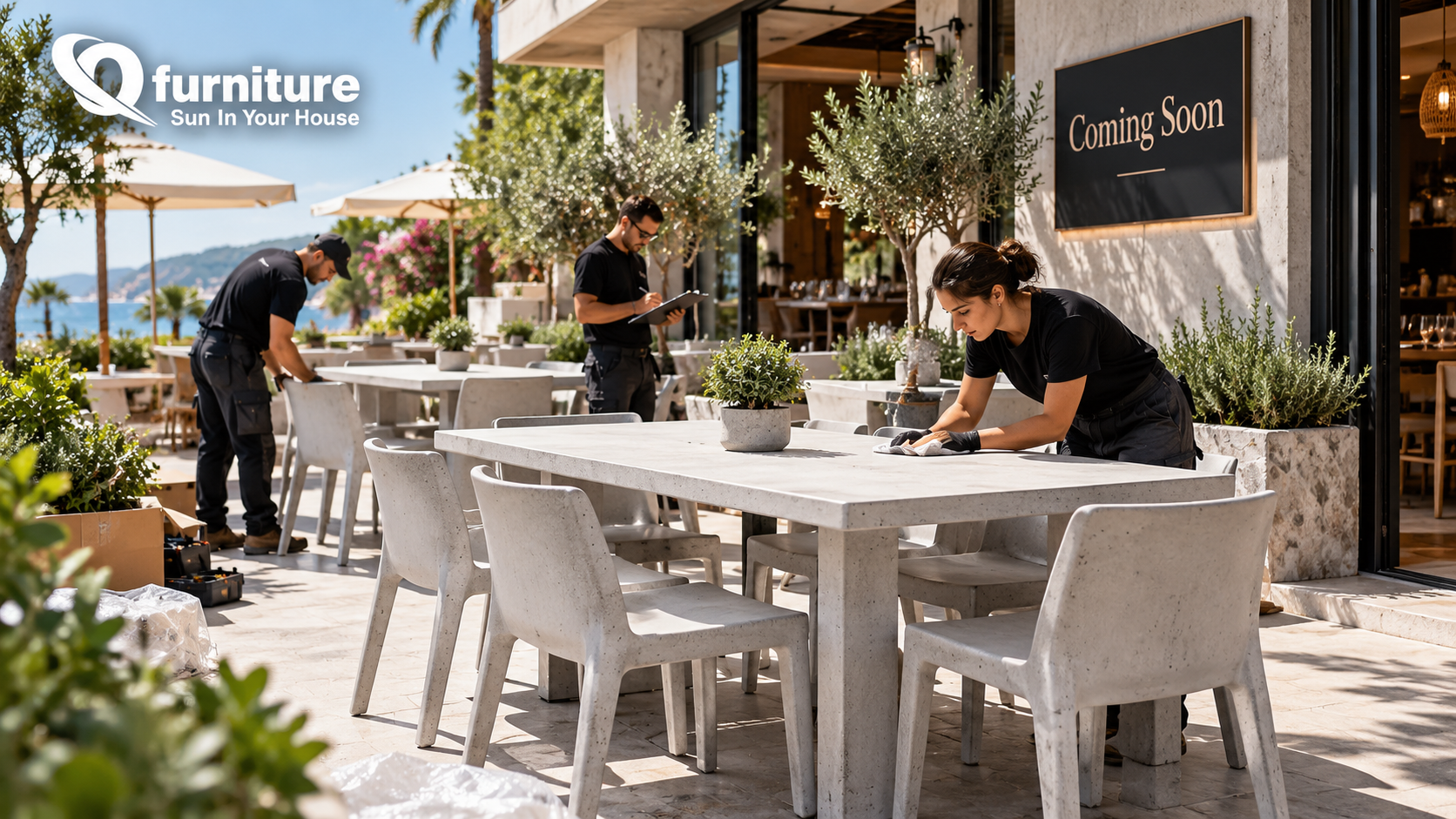
For hospitality and food service projects, concrete furniture should be reviewed before the busiest season begins. Resorts, hotels, cafes, and restaurants often need outdoor areas to look finished before guest traffic rises. Buying too close to peak season can make buyers accept whatever is available, even if the design or quality is not ideal.
A practical timeline is to begin sourcing several months before the furniture needs to be used. This gives enough room for quotation, sample review, confirmation, production, packing, shipping, and installation. The exact timing depends on quantity, customization, export requirements, and supplier capacity.
When existing concrete furniture starts creating hidden costs
Another smart time to buy is before old concrete furniture becomes a daily operational problem. If benches, dining tables, stools, planters, or lounge pieces are moving out of place, staining, cracking, or requiring constant repair, replacement planning should start before failure becomes visible to guests.
This is why buyers should compare durable commercial outdoor concrete furniture. The best buying time is sometimes not a sale period. It is the point when the cost of keeping weak furniture becomes higher than the cost of planning a better concrete replacement.
Best Time to Buy Outdoor Concrete Furniture
The best time to buy concrete furniture for outdoor projects is usually before weather exposure, guest demand, and operational deadlines put pressure on the decision. Outdoor concrete furniture needs more planning because it has to handle sun, moisture, cleaning routines, movement, weight, drainage, and long-term appearance.
Retail buyers may wait for end-of-summer clearance. Commercial buyers should be more careful with that approach. Clearance timing can be useful for small, flexible purchases, but it may not work for concrete projects that need consistent quantities, specific dimensions, matching finishes, or export-ready packaging.
For concrete furniture and permanent outdoor areas
Concrete furniture often works best when it is planned as part of the space rather than added at the last minute. Benches, dining tables, stools, planters, and lounge pieces may affect layout, movement, and visual weight. These products should be discussed early enough for the buyer to confirm size, weight, placement, and handling requirements.
Buyers comparing product formats can review the concrete furniture collection to decide which pieces belong in the project and which items should stay flexible. This is a better approach than buying scattered items only because they are available quickly.

When Not to Buy Concrete Furniture Too Early
Buying early is useful, but buying too early can create problems if the project details are still unstable. If dimensions, layout, material direction, quantity, or installation schedule may change, buyers should avoid locking in final concrete furniture too soon. The goal is to start research early, not freeze every decision before the project is ready.
The best approach is to separate research timing from order timing. Buyers can explore suppliers, request catalogs, compare concrete finishes, estimate budgets, and discuss lead times early. Final confirmation should happen when the project has enough clarity to avoid expensive changes.
A Simple Concrete Furniture Buying Timeline
A practical concrete furniture timeline starts with category research, then moves into supplier review, quotation, sample or finish confirmation, order approval, production, shipping, and installation. Each step protects the buyer from a different kind of risk. Skipping steps may feel faster, but it often creates more work later.
For standard products, buyers may need a shorter timeline. For customized furniture, mixed-container orders, large quantities, or outdoor concrete pieces, the timeline should be longer. The more the project depends on consistency, the earlier the buyer should begin the sourcing conversation.
Questions to Ask Before Deciding When to Buy
Before choosing a buying date, buyers should ask whether the concrete furniture must match other pieces, whether the project needs custom dimensions, whether outdoor exposure is high, whether samples are needed, whether packaging must support export, and whether installation has a fixed deadline.
These questions turn timing from guesswork into planning. If the answers are simple, the buying window can be shorter. If the answers involve customization, heavy concrete products, commercial use, or strict opening dates, the buyer should begin earlier and leave enough time for review.
How Budget Timing Affects the Buying Decision
Budget timing can also shape when to buy concrete furniture. Some buyers wait until the project budget is fully approved, while others begin supplier research earlier so they can build a more realistic cost plan. The second approach is usually stronger for commercial projects because it reduces surprise costs later.
Concrete furniture cost is not only the unit price. Buyers may also need to consider packing, freight, installation handling, replacement risk, maintenance, and the cost of delaying a project opening. When these costs are included, the cheapest buying moment is not always the lowest quoted price. It is the moment when the buyer can make a clear, informed decision without rushing the project.
Project Inquiry for Concrete Furniture Sourcing
For commercial projects that need outdoor concrete furniture or project-based sourcing support, buyers can contact Q-Furniture to discuss project timing, product categories, dimensions, finish direction, packaging, customization, and export support.
FAQ
What is the best time to buy concrete furniture?
The best time is when pricing, availability, project schedule, and product fit align. For commercial concrete furniture, this is usually earlier than a normal retail sale period because buyers need time for planning, production, and delivery.
What is the best month to buy concrete furniture?
Retail buyers often look for seasonal sales or clearance periods. Commercial buyers should focus less on one month and more on the project timeline, concrete production lead time, and required delivery date.
Should commercial buyers wait for concrete furniture sales?
Sales can help with small flexible purchases, but they may not be the best option for commercial concrete orders that need matching quantities, durable materials, customization, or reliable delivery.
When should buyers order outdoor concrete furniture?
Outdoor concrete furniture should be reviewed several months before it needs to be used, especially for hotels, restaurants, resorts, public areas, and commercial landscapes with fixed opening or peak-season deadlines.
Why does lead time matter when buying concrete furniture?
Lead time affects production, sample approval, packaging, shipping, and installation. If buyers ignore lead time, they may have fewer product options and higher risk of rushed decisions.








