


When it comes to flooring options, deciding between terrazzo or polished concrete can be a daunting task. Will Terrazzo or Polished Concrete Make Your Style Shine delves into the key factors to help you make an informed decision. From the timeless elegance of terrazzo to the modern sophistication of polished concrete, each option offers unique aesthetics and practical benefits.
By considering factors such as durability, design versatility, and budget, you can choose the perfect flooring option to complement your style and elevate the look of your space with terrazzo or polished concrete. Whether you’re drawn to the intricate patterns of terrazzo or the sleek finish of polished concrete, this article provides valuable insights to guide your decision-making process.
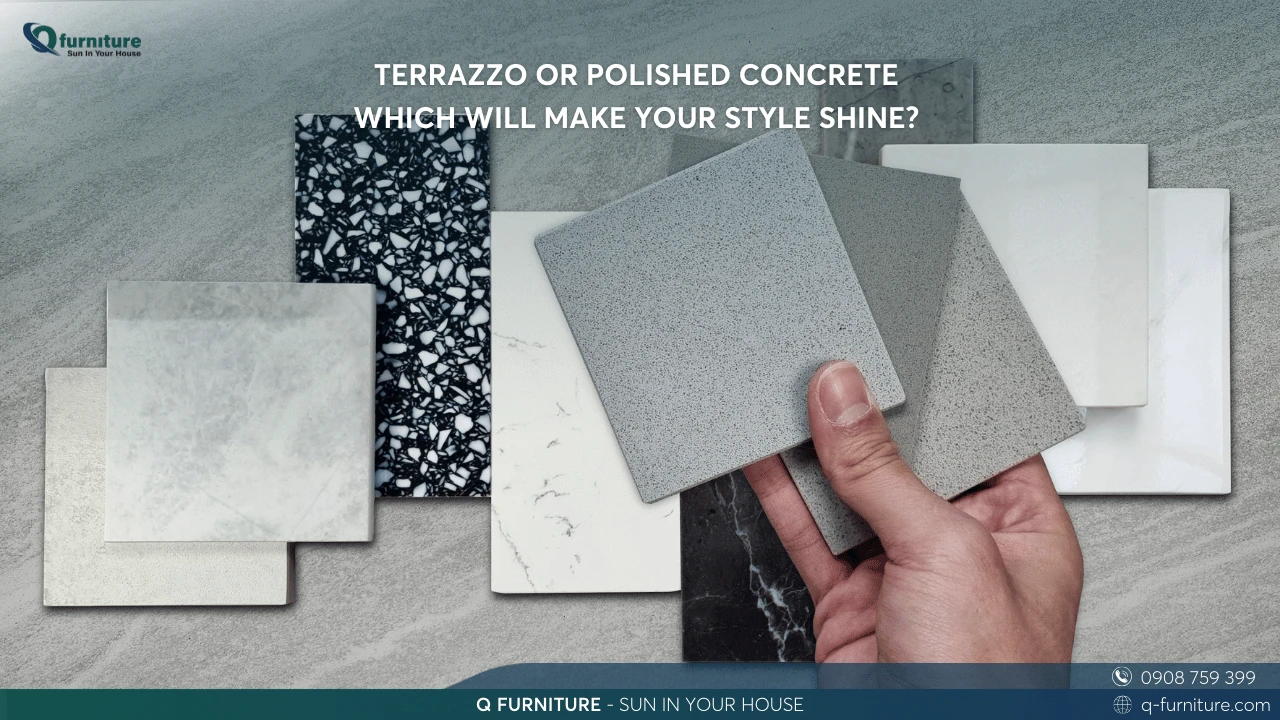
What is terrazzo flooring?

Terrazzo flooring is a unique surface that showcases a distinctive appearance by integrating various aggregate pieces within a cement or epoxy base. The aggregate materials can vary widely, commonly featuring glass, stone, or marble chips. This flooring option can be applied through pouring like cement or as a thinset coating of an epoxy/aggregate mixture, which is then meticulously ground and polished to achieve a smooth and glossy finish.
Terrazzo offers unparalleled design flexibility, allowing for customization in color choices and the incorporation of intricate patterns or logos. Additionally, pre-cast terrazzo floor tiles are available, providing further versatility. Renowned for their durability, terrazzo or polished concrete flooring is suitable for both indoor residential and commercial settings, as well as outdoor surfaces.
>> Related post: Top 5 Stunning Concrete Furniture Pieces to Elevate Your Home Décor!
What is polished concrete?
Polished concrete is a specialized process that involves mechanically grinding an existing concrete floor to eliminate its top surface layer, revealing the aggregate beneath, resulting in a terrazzo-like appearance. Utilizing diamond technology grinders and polishers ranging from coarse to very fine grits, this method produces a denser and harder surface compared to conventional concrete, all without the need for coatings or sealers.
In instances where the concrete is in poor condition, densifiers can enhance its hardness, while resurfacing concrete overlays can conceal underlying imperfections before the polishing process to achieve a striking luster.
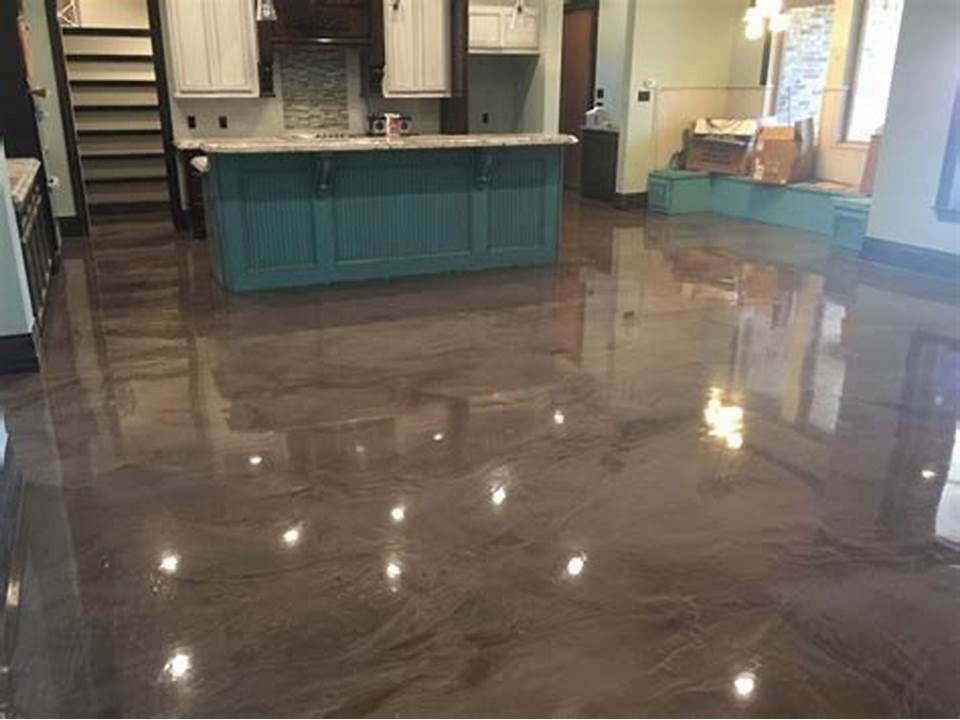
Moreover, the integration of concrete stain colors during polishing offers the opportunity to create captivating designs and patterns suitable for indoor or outdoor flooring applications, polished concrete or terrazzo serve both residential and commercial environments.
What are the key distinctions between polished concrete and terrazzo flooring?
Despite their similar aesthetics, several differences could sway a decision towards one type of flooring over the other. The first differentiator is cost.

Cost Comparison
Terrazzo flooring is often considered one of the most expensive options due to various factors influencing costs, such as the type of aggregate used (some materials like mother of pearl or porcelain can be particularly pricey), site preparation requirements, and the complexity of the desired design or pattern. In contrast, polished concrete is known for being a more budget-friendly option, with potential cost fluctuations primarily related to staining, dyeing, or intricate patterns.
Q-Furniture.com provides a comparative breakdown of the price ranges for terrazzo or polished concrete per square foot.
Aggregate Content
A significant contrast lies in the ratio of cement to aggregate. While a standard concrete slab typically consists of around 70 percent cement mix and 30 percent coarse aggregate like gravel or crushed stone, terrazzo incorporates a higher proportion of coarse aggregate, typically comprising 70 percent aggregate and 30 percent cement. This results in a more “stone-filled” appearance and a consistent distribution of aggregates.
Installation Process
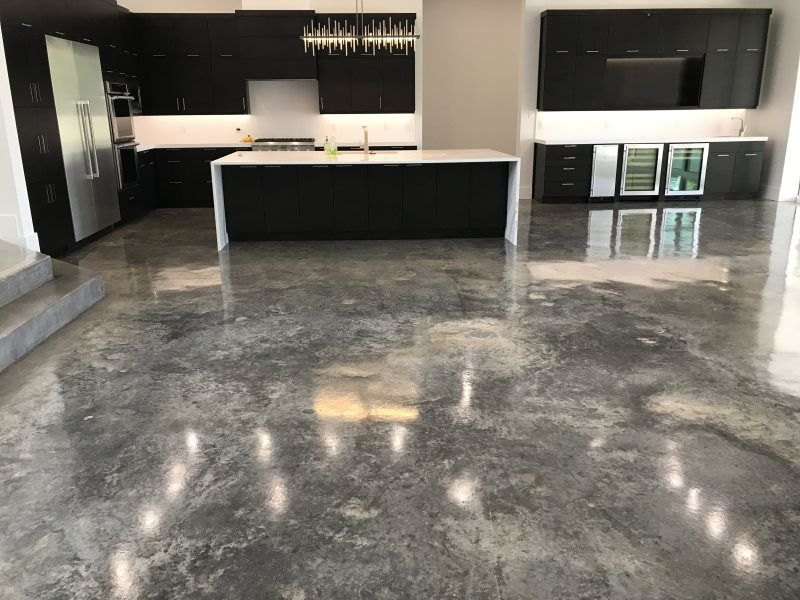
Polished concrete involves polishing the existing concrete slab itself, whereas terrazzo requires covering the concrete slab with a mix of either concrete or epoxy containing aggregate, followed by grinding and polishing to achieve the desired finish.
Slip-Resistance
Terrazzo floors may become slippery due to the sealers and waxes used to enhance their shine, whereas polished concrete inherently offers excellent slip resistance. However, terrazzo floors can be treated with slip-resistant sealers to mitigate this issue.
Ongoing Maintenance
Polished concrete is celebrated for its low-maintenance properties, requiring regular dry dust mopping and occasional wet mopping with a neutral-pH cleaner to maintain its shine. In contrast, terrazzo floors demand additional maintenance, including buffing, resealing, and waxing, to preserve their original appearance and luster over time.
>>Related post: What Is Terrazzo? Exploring Stylish Durable Material
Shared benefits of polished concrete and terrazzo flooring
Both terrazzo or polished concrete offer numerous shared benefits, making them excellent choices for residential or commercial spaces. Here are some key advantages of both options:

Exceptional Durability
Exceptional durability is one of the standout features of both polished concrete and terrazzo flooring. These flooring options are renowned for their ability to withstand heavy foot traffic, impact, and wear over time. With proper maintenance, they can maintain their pristine appearance for decades, making them a cost-effective choice for commercial and residential spaces alike.
Polished concrete is known for its resilience and strength, as it is created by grinding down the surface of a concrete slab to expose the aggregate beneath. This process not only strengthens the concrete but also creates a smooth and durable surface that resists scratches, stains, and moisture damage. Terrazzo, on the other hand, consists of a mix of marble, granite, quartz, or other aggregates embedded in a cementitious or epoxy binder. Once cured and polished, terrazzo forms a solid and resilient surface that can last a lifetime with proper care.
Customization Options
Both polished concrete and terrazzo offer endless possibilities. With polished concrete, various stains, dyes, and aggregates can be added to the mix to achieve different colors and patterns. Intricate designs, logos, or graphics can also be incorporated into the surface through techniques like stenciling or engraving. Terrazzo takes customization to another level with its ability to incorporate a wide array of aggregates in different sizes, shapes, and colors. This allows for the creation of intricate patterns, borders, and even custom artwork within the flooring.
Unique Aesthetic Appeal
The unique aesthetic appeal of polished concrete and terrazzo flooring sets them apart from other options. Each installation is a reflection of the materials used and the craftsmanship involved, resulting in a floor that is truly one-of-a-kind. Whether it’s the industrial chic of polished concrete or the timeless elegance of terrazzo, these flooring options add character and sophistication to any space.
Environmental Friendliness
Terrazzo or polished concrete are both eco-friendly options, low or no VOCs (volatile organic compounds) content and are often green-rated under LEED standards, making them Sustainable choice for homeowners. Consumers care about the environment.
Wrapping up
When deciding between terrazzo or polished concrete for your flooring needs, it ultimately comes down to personal style preferences and practical considerations. Both options offer their own unique charm and advantages, whether you’re drawn to the timeless elegance of terrazzo or the sleek sophistication of polished concrete. By carefully evaluating factors such as durability, maintenance requirements, design versatility, and budget constraints, you can make an informed decision that aligns with your aesthetic preferences and lifestyle. Whether you choose the intricate patterns and refined finishes of terrazzo or polished concrete, rest assured that either choice will enhance the beauty and functionality of your space for years to come.
Check Out These Additional Resources
With any luck, these concepts will empower you to address the question: Can furniture be spray painted? and you found our article beneficial.
You can refer to unique and stylish concrete interior models at QF – Factory Direct Furniture, if you are interested.
At our Q-Furniture Fanpage, we are willing to help you find and buy the most unique and quality furniture models.








