


Concrete furniture styling can define a space without relying on excessive decoration. The solid form, architectural character and distinctive surface of modern concrete furniture make it especially effective in hotels, resorts, restaurants, courtyards, patios and landscape projects where furniture is expected to contribute to the overall design rather than simply fill an empty area.
For B2B buyers, designers and project contractors, effective concrete furniture styling starts with proportion, placement, finish, spacing and the relationship between individual pieces. A strong commercial concrete furniture scheme can build a consistent visual language around concrete tables, benches, stools, side tables and planters without relying on unrelated furniture materials.
This guide focuses entirely on concrete furniture styling and explains how to create balanced modern spaces while keeping circulation, surface variation, outdoor exposure, maintenance and installation in mind. The same principles can guide architectural concrete furniture in hospitality, landscape and other commercial applications.
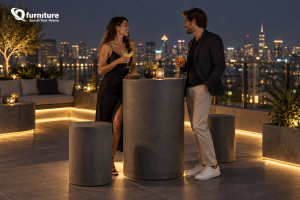
Concrete Furniture Styling Starts With an Architectural Anchor
A successful modern concrete furniture layout usually begins with one dominant piece. A large concrete dining table, coffee table, bench or central table can establish the main function of the space and provide a visual reference for the remaining pieces. In concrete furniture styling, this anchor creates hierarchy without requiring complicated decoration.
Scale is important. In a large resort courtyard, a small concrete table may feel disconnected from the architecture, while an oversized piece can restrict circulation. The dimensions of the furniture should respond to the available floor area, expected number of users and surrounding architectural lines. Long tables can follow linear façades, while round concrete tables work well where circulation needs to flow around the furniture.
For a broader view of concrete applications across outdoor projects, see modern concrete outdoor furniture and use the project context to determine which forms and dimensions are most appropriate.
Create a Consistent Concrete Furniture Language
Use Repetition Without Making the Space Feel Identical
Consistency in concrete furniture styling does not mean every piece must have the same shape. A project can repeat the same finish, edge treatment or base profile across several product types while varying height and function. For example, a dining table, stools and side tables can share a similar surface tone and rounded geometry, creating continuity across a commercial concrete furniture collection.
For commercial projects, repetition also helps large spaces feel intentional. Instead of placing unrelated furniture forms in different zones, designers can establish a family of custom concrete furniture that connects dining, waiting and landscape areas through a recognizable design language.
Control the Number of Concrete Forms
Too many competing shapes can make even a concrete-only scheme feel busy. A practical approach is to select one dominant geometry and one supporting geometry. Rounded concrete tables can be paired with cylindrical stools, while rectangular tables can be supported by benches with similarly clean linear proportions. Keeping the form vocabulary controlled allows the concrete texture and craftsmanship to remain visible.
Use Negative Space to Make Concrete Furniture Feel Lighter
Modern concrete furniture is visually substantial, so negative space around each piece becomes part of the styling strategy. Crowding multiple tables, benches and stools can make a patio or courtyard feel heavy. Clear circulation allows architectural concrete furniture to read as a deliberate part of the space while keeping commercial areas easier to operate.
In hospitality projects, spacing should also reflect real service conditions. Staff need practical routes around dining tables, guests need comfortable access to seating, and fixed benches should not block primary circulation. Styling therefore needs to balance visual composition with how people actually move through the space.
Modern Concrete Furniture: Styling Through Surface, Finish and Color
Let the Concrete Finish Provide the Visual Detail
Concrete furniture styling can create visual interest through the material itself. Smooth, lightly textured, matte, polished or subtly porous finishes give modern concrete furniture different expressions, while fluted surfaces, rounded edges and controlled casting details add depth without moving away from a concrete-focused design.
For B2B orders, finish expectations should be defined before mass production. Concrete can naturally show slight differences in tone, pores and texture, so approved samples are useful for establishing an acceptable appearance range. This is particularly important when many pieces will be installed together in the same visible area.
Build a Controlled Concrete Color Palette
A concrete-only project can still use tonal variation as part of its concrete furniture styling. Warm off-white, light grey, natural cement grey and deeper charcoal finishes can create hierarchy. Lighter tones can make large modern concrete furniture pieces appear less visually dense, while deeper tones can establish stronger focal points in spacious commercial settings.
The key is restraint. Using one primary concrete tone with a closely related secondary tone usually produces a cleaner result than assigning a different finish to every product. The final palette should also be reviewed under the actual daylight conditions of the project because concrete color can appear different in direct sun, shade and evening lighting.
Use Lighting to Emphasize Concrete Texture and Form
Lighting can significantly change how architectural concrete furniture is perceived. During the day, directional natural light reveals edges, pores and subtle surface variation. In the evening, carefully positioned lighting creates shadows that emphasize table bases, bench profiles and fluted concrete surfaces, making lighting an important part of concrete furniture styling.
For outdoor commercial projects, lighting should support the furniture rather than overwhelm it. Soft illumination around the placement area can preserve the natural concrete tone, while focused light can highlight a key statement piece. The goal is to make the material legible after sunset without turning the furniture into a decorative display disconnected from the wider space.
Style Concrete Furniture by Commercial Application
Concrete Dining Areas
In restaurant and resort dining zones, commercial concrete furniture should establish a clear rhythm. Repeating concrete dining tables at consistent intervals creates order and makes the space easier to understand. Product dimensions should allow adequate seating clearance and service access, while the base design should provide enough legroom for daily commercial use.
Concrete Benches for Hospitality and Public Spaces
Concrete benches are especially effective where seating is intended to remain in a fixed position. Their visual stability suits hotel gardens, landscape paths, courtyards and public-facing projects. Placement should consider sightlines, circulation and the relationship between the bench length and surrounding open space.
For additional design context, buyers and specifiers can explore 2026 architectural concrete furniture trends to see how contemporary forms, finishes and architectural directions can inform concrete furniture selection for modern hospitality and commercial projects.

Concrete Coffee Tables, Side Tables and Stools
Smaller concrete pieces can support a larger anchor without competing with it. Coffee tables, side tables and stools work best when their proportions relate clearly to the primary table or seating zone. Repeating a finish or edge profile across these pieces creates cohesion, while different heights prevent the arrangement from appearing flat.
Outdoor Concrete Furniture Styling for Real Project Conditions
Outdoor concrete furniture styling must respond to real environmental conditions. A visually strong layout can still fail operationally if water collects around the furniture, the floor is uneven or pieces cannot be moved into position during installation. Drainage, leveling, access and product weight should therefore be reviewed before the final layout is approved.
Surface protection is equally important. The appropriate coating depends on placement, climate, expected use and maintenance routine. In restaurants and hospitality spaces, tables may be exposed to food, beverages and frequent cleaning, while poolside or coastal locations may experience higher moisture exposure. The finish specification should match these conditions rather than being selected only for appearance.
Buyers comparing available forms and finishes can browse the concrete furniture collection to identify concrete product types that fit the intended application.
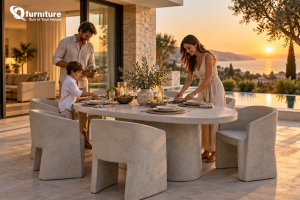
Plan Concrete Furniture for Long-Term Visual Consistency
Timeless concrete furniture styling depends less on short-lived decoration and more on proportion, material consistency and maintainable finishes. Architectural concrete furniture is well suited to this approach because its visual character does not rely on rapidly changing trends. A simple form with a controlled finish can remain relevant across multiple project updates.
For commercial buyers, long-term consistency also means considering future replacement or expansion. If a hotel adds another outdoor zone later, clear finish references, dimensions and product specifications make it easier to develop additional concrete furniture that remains compatible with the original project. Documenting approved samples and finish standards therefore supports both quality control and future procurement.
How Q-Furniture Supports Concrete Furniture Projects
For B2B projects, Q-furniture can support the development of concrete-focused product programs based on project dimensions, intended placement, finish direction and logistics requirements.
Project discussions can cover custom concrete furniture, GFRC furniture, lightweight concrete options, product dimensions, hollow construction, surface finish, packaging and installation considerations. The objective is to translate a concrete furniture styling direction into products that remain practical for manufacturing, shipping and long-term commercial use.
For project-specific questions, custom sizing or concrete finish development, buyers can contact Q-furniture before finalizing specifications.
FAQ
How does concrete furniture styling create a modern look without other furniture materials?
The design can rely on concrete form, proportion, surface texture, edge details, tonal variation and spacing. Repeating selected concrete finishes and geometries across tables, benches, stools and side tables creates depth while keeping the furniture direction entirely concrete-focused.
Which finish works best for modern concrete furniture in commercial spaces?
There is no single finish for every project. The choice depends on indoor or outdoor placement, climate exposure, cleaning frequency, expected staining risk and the desired appearance. B2B buyers should approve physical finish samples before production whenever visual consistency is important.
Can GFRC furniture be used in a concrete-only design concept?
Yes. GFRC furniture retains a concrete appearance while allowing thinner sections and hollow construction in many designs. It can therefore support a concrete-only visual concept while helping address weight, handling or installation requirements.
What should be checked before placing concrete furniture outdoors?
The project team should review floor capacity, drainage, leveling, installation access, product weight, surface protection, circulation and maintenance requirements. These practical factors should be resolved together with the visual layout before the order is confirmed.








