


Concrete furniture has moved beyond its traditional industrial image. Today, its strong forms, natural texture and range of finishes allow it to work across contemporary interiors and outdoor spaces.
Rather than relying on decorative details, concrete furniture often creates visual impact through its material itself. The shape, surface, color and proportions of each piece can influence how it looks and interacts with the surrounding space.
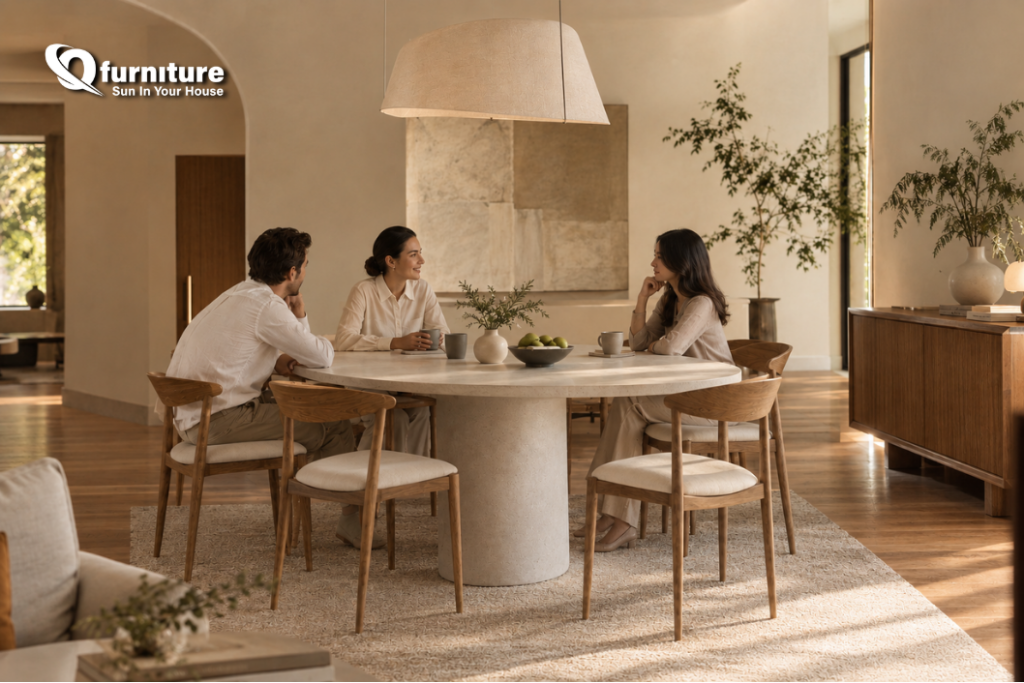
Concrete Brings a Strong Visual Presence
One of the defining characteristics of concrete furniture is its visual weight.
Clean lines and solid forms can make a furniture piece stand out without requiring elaborate decoration. A concrete dining table can become the focal point of a dining area, while a coffee table can give a lounge space a more grounded appearance.
The effect depends on the design of the piece. Simple geometric forms can create a minimalist look, while curved or sculptural shapes can add more visual interest.
For modern spaces, this makes concrete furniture more than a functional element. It can also contribute to the architectural character of the room or outdoor setting.
Texture Makes Every Piece Feel Different
The surface of concrete is another important part of its design character.
A smooth finish can create a cleaner and more refined appearance, while a more visible texture can emphasize the natural character of the material. Subtle variations across the surface can also give a piece a less uniform, more tactile appearance.
These differences become particularly noticeable when concrete furniture is placed in a simple space. Instead of adding more decorative elements, designers can allow the material itself to provide visual interest.
The choice of finish should therefore be considered alongside the shape and intended setting of the furniture.
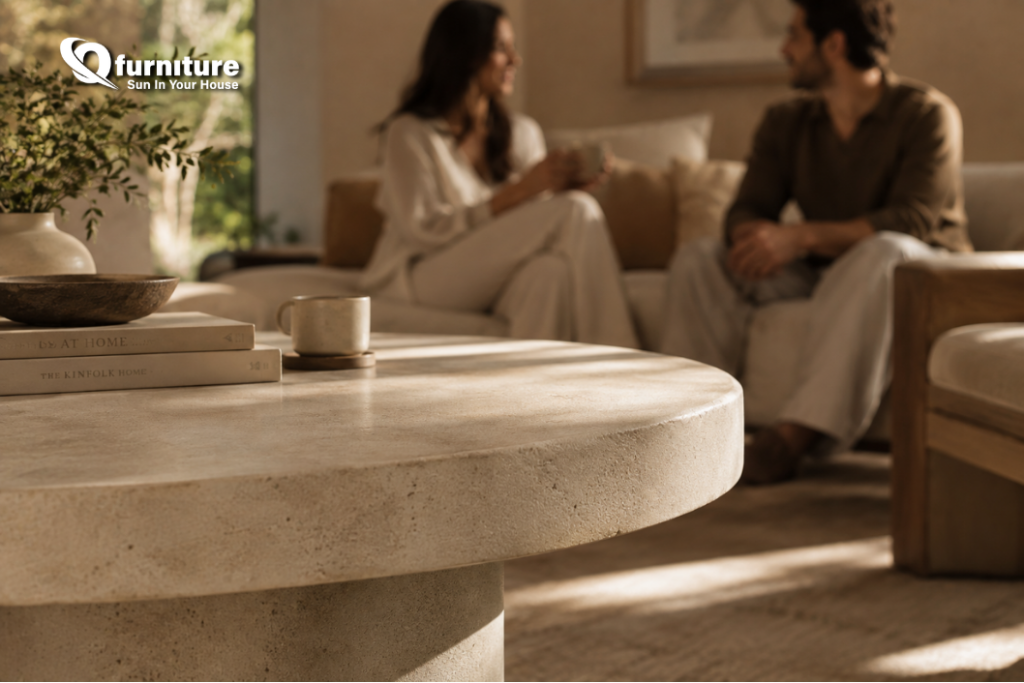
Color Can Change the Character of Concrete
Concrete furniture does not have to be limited to its natural gray appearance.
Depending on the design and finish, concrete pieces can work with warmer neutral tones, earthy shades or other custom colors. The choice of color can influence whether a piece feels more understated, contemporary or distinctive within the surrounding space.
A warm-toned concrete table, for example, can create a softer atmosphere when paired with wood and natural materials. A darker finish may create stronger contrast in a minimalist setting.
For outdoor projects, color can also be considered alongside paving, walls, landscaping and other furniture. If you are considering concrete for an outdoor setting, our guide on when outdoor concrete furniture is the right choice provides more factors to consider before selecting the material.
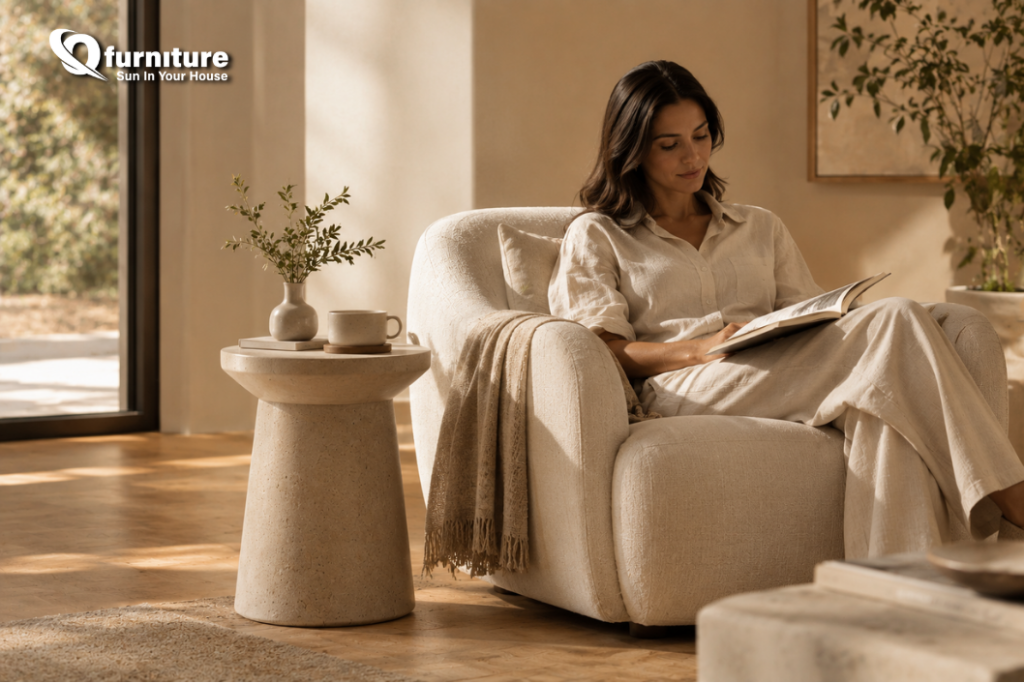
Concrete Works Beyond the Industrial Look
Concrete is often associated with industrial interiors, but its appearance can change significantly depending on how it is designed and used.
Simple forms and restrained finishes can support minimalist spaces. Warm colors and natural materials can create a softer contemporary look. Sculptural shapes can make concrete furniture feel more expressive, while carefully selected finishes can give it a more refined appearance.
The surrounding materials also influence the result. Concrete can be paired with wood, metal, fabric and greenery to create different visual relationships without losing the character of the material.
This flexibility allows concrete furniture to work across different design directions rather than being limited to one particular style.
From a Furniture Piece to a Design Statement
Concrete furniture can play different visual roles depending on the space.
A dining table can act as the central element of a dining area. A coffee table can become a sculptural focal point in a lounge. A stool can provide a compact accent, while a bench can contribute to the architectural character of an outdoor setting.
For larger projects, several furniture pieces can also be designed as part of a consistent visual language. Using related forms, finishes or colors across different pieces can help create a more cohesive environment.
This approach is particularly relevant to hospitality, restaurant and other commercial projects where furniture needs to support both the function and identity of the space. Explore modern concrete outdoor furniture for commercial spaces to see how concrete furniture can be incorporated into broader commercial environments.
Designing Concrete Furniture for a Specific Space
Choosing concrete furniture is not only about appearance. The design should also respond to the requirements of the space.
Consider:
- Size and proportion: The furniture should fit the available area without making circulation difficult.
- Function: Dining tables, coffee tables, stools and benches serve different purposes and require different dimensions.
- Color and finish: These should work with the surrounding materials and overall design direction.
- Indoor or outdoor use: The intended environment can influence the appropriate finish and maintenance requirements.
- Customization: For projects with specific dimensions, colors or design requirements, custom production can provide more flexibility.
Explore our concrete furniture collection to discover different furniture options for your project, from tables and coffee tables to stools and other pieces.
For custom designs and OEM/ODM projects, learn more about Q Furniture and our concrete furniture manufacturing capabilities.








