


Ultimate Guide to Vietnam Furniture Suppliers: OEM/ODM Manufacturing for Global Buyers (2026)
Vietnam has emerged as the world’s fifth-largest furniture exporter, shipping over $14 billion worth of products annually to markets across North America, Europe, and Australia. For furniture importers, distributors, and procurement managers navigating global sourcing decisions in 2026, Vietnam represents a compelling alternative to traditional manufacturing hubs—but success requires understanding which suppliers can actually deliver on quality, compliance, and scalability.
This guide provides the framework international buyers need to evaluate Vietnam furniture suppliers, from OEM/ODM model selection through compliance verification, factory auditing, and logistics planning. Whether you’re placing your first 500-unit order or scaling to 50,000 units monthly, the insights here draw from real-world sourcing challenges facing B2B buyers today.
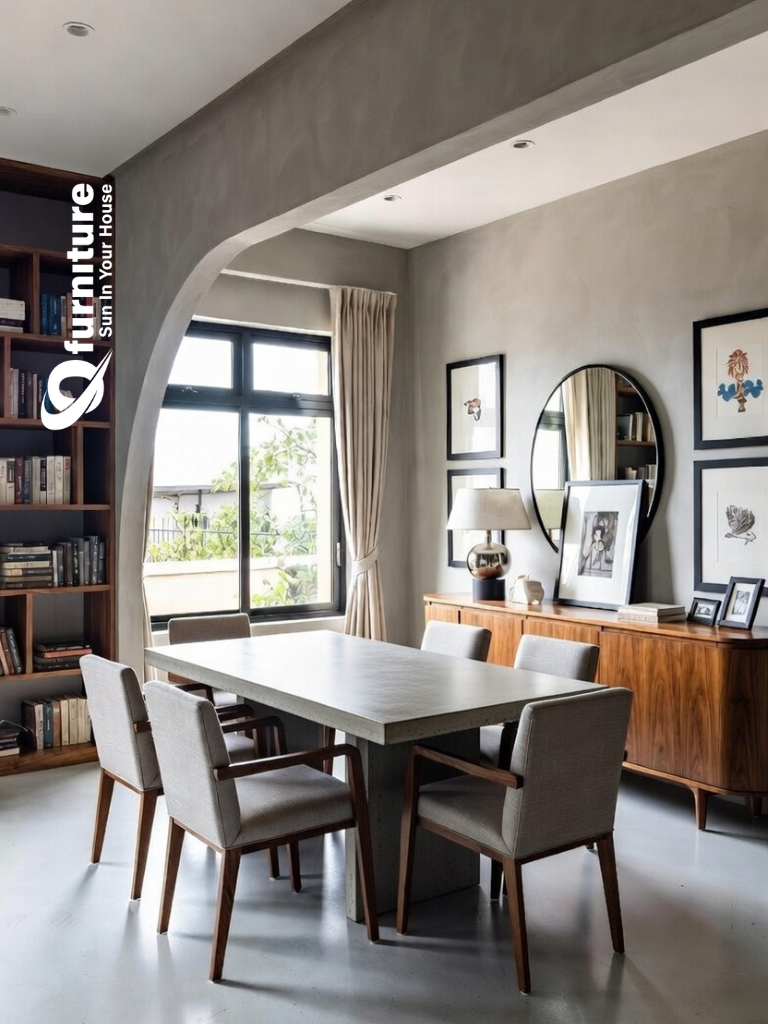
Key Takeaways for Global Buyers (2026)
For commercial project developers and international importers, explore our specialized capabilities as a concrete furniture manufacturer for B2B export.
- Vietnam is best suited for mid–large volume OEM/ODM sourcing
- Compliance maturity varies widely by supplier
- Southern clusters dominate scalable export production
- Wood remains the foundation; specialized suppliers offer wood–concrete capabilities for architectural projects
- ODM → OEM transition is common and practical
- QC systems matter more than price differences
Why Vietnam Furniture Suppliers Matter in 2026
Discover our latest collection of export-grade commercial concrete dining and outdoor tables engineered with lightweight GFRC.
The furniture sourcing landscape has fundamentally shifted. Trade tensions, rising labor costs in China, and supply chain diversification strategies have accelerated Vietnam’s position as a primary manufacturing destination. But beyond geopolitics, Vietnam offers structural advantages that align with what professional buyers actually prioritize: competitive pricing without sacrificing quality, established export infrastructure, and improving compliance capabilities for demanding markets.

What makes Vietnam competitive today:
The country’s furniture manufacturing clusters—concentrated in Binh Duong, Dong Nai, and Hanoi provinces—combine skilled woodworking traditions with modern factory equipment. Unlike newer manufacturing destinations still building capabilities, Vietnam has spent two decades refining export processes specifically for US and EU requirements. This matters when you’re managing compliance documentation, container loading optimization, or pre-shipment inspection coordination across time zones.
For procurement teams evaluating suppliers, Vietnam’s production capacity has matured significantly. Mid-sized factories now routinely handle 20,000-50,000 units monthly with quality control systems that meet international buyer standards. Beyond traditional wood furniture, a subset of specialized manufacturers has developed capabilities in mixed-material production—particularly wood combined with architectural concrete (GFRC/cast concrete)—serving hospitality projects, high-end residential developments, and custom architectural furniture where material durability and design flexibility matter.
The question isn’t whether Vietnam can manufacture furniture at scale—it’s identifying which suppliers have the certification depth, production transparency, material expertise, and communication capabilities your business requires.
Understanding OEM vs ODM Manufacturing Models
Choosing between OEM (Original Equipment Manufacturer) and ODM (Original Design Manufacturer) fundamentally shapes your sourcing relationship, pricing structure, and timeline. Most buyer confusion stems from suppliers using these terms inconsistently, so clarity matters upfront.

OEM Manufacturing: Your Design, Their Production
In true OEM arrangements, you provide complete technical specifications, CAD files, material requirements, and finishing details. The supplier’s role is pure manufacturing execution—translating your designs into physical products at the quality level and volume you specify. This model works when you have established product lines, in-house design capabilities, or brand-specific requirements that can’t be compromised.
OEM buyers typically face higher MOQs (minimum order quantities) because suppliers aren’t offsetting costs across multiple clients using the same design. You’re also responsible for ensuring your specifications are production-feasible—errors in your technical package become your cost burden during sampling or production. For wood–concrete hybrid projects, OEM becomes particularly relevant: architectural specifications often require precise material ratios, structural load requirements, and finish standards that demand exact execution rather than catalog adaptation.
ODM Manufacturing: Supplier-Led Design & Production
ODM suppliers maintain catalogs of existing designs you can customize with your branding, dimensional changes, or material substitutions. Some offer full custom design services where their team develops new products based on your market requirements. This model reduces upfront investment in design resources and typically allows lower MOQs since suppliers can produce similar designs for multiple clients.
The trade-off is design ownership. Even with customization, ODM products may appear in competitors’ catalogs with slight variations. For private label furniture brands or retailers needing differentiated collections, ODM requires careful IP protection agreements and design exclusivity negotiations.
Vietnam’s ODM landscape centers heavily on wood furniture—dining collections, bedroom sets, living room pieces—where design iterations share common production processes. For buyers requiring specialized materials like concrete integration, ODM options narrow significantly; these capabilities exist primarily among suppliers offering custom OEM services with in-house design support for material engineering.
Hybrid Approaches in Practice
Most sophisticated Vietnam suppliers now offer hybrid capabilities—ODM for rapid market entry, then transitioning to OEM as your volumes scale and design investment makes sense. For buyers, this flexibility matters more than rigid model adherence. The practical question: does this supplier have the design talent to develop products that will actually sell in your market, the material expertise to work with your specified components (whether solid wood, engineered wood, or composite materials including concrete), and the production discipline to manufacture them consistently?
The 7-Step Vietnam Furniture Supplier Selection Framework
Professional buyers evaluate dozens of potential suppliers before committing to production partnerships. This framework structures that evaluation around the factors that predict long-term sourcing success.
-
Production Capacity Verification
Don’t accept claimed capacity at face value. Request monthly production records from the past 12 months, broken down by product category. A supplier claiming 30,000 units monthly capacity should show consistent output approaching that level—not sporadic production spikes. Ask about equipment age, workforce size, and how they handle capacity constraints during peak seasons (typically August-November for Western markets).
For suppliers claiming mixed-material capabilities (wood–concrete, wood–metal, wood–glass), verify production records specifically for these categories. Concrete casting, curing, and quality control follow different timelines than wood fabrication—suppliers genuinely experienced in hybrid materials will demonstrate separate production planning and distinct QC protocols for each material system.
Capacity mismatches cause the majority of delivery failures. Suppliers overpromise to win orders, then struggle to fulfill once production begins. Visit factories when possible, but at minimum, require video documentation of production floors, equipment, and quality control stations. For concrete work, this means documented climate-controlled curing areas, material batching systems, and finishing facilities beyond standard wood workshops.
-
Compliance Documentation Depth
For US and EU markets, compliance isn’t optional—it’s the baseline. Verify suppliers maintain current certifications relevant to your target market: FSC or PEFC chain of custody for sustainable wood sourcing, CARB Phase 2 for formaldehyde emissions (US), REACH compliance for chemical restrictions (EU), and CPSIA testing for residential furniture (US).
For suppliers working with concrete or GFRC (glass fiber reinforced concrete), additional material compliance becomes relevant. REACH compliance extends to concrete admixtures, sealers, and surface treatments. Structural testing certifications may be required for load-bearing applications in commercial or hospitality settings. Request documentation showing material testing for compression strength, water absorption, and finish durability—standard quality indicators for architectural concrete work.
Request certificate copies with validity dates and scope details. Legitimate suppliers provide this documentation immediately; hesitation signals problems. Understand that certifications cover specific facilities and processes—a supplier’s FSC certificate for one factory doesn’t automatically extend to their second production site, and wood certifications don’t validate concrete production capabilities.
-
Quality Control System Maturity
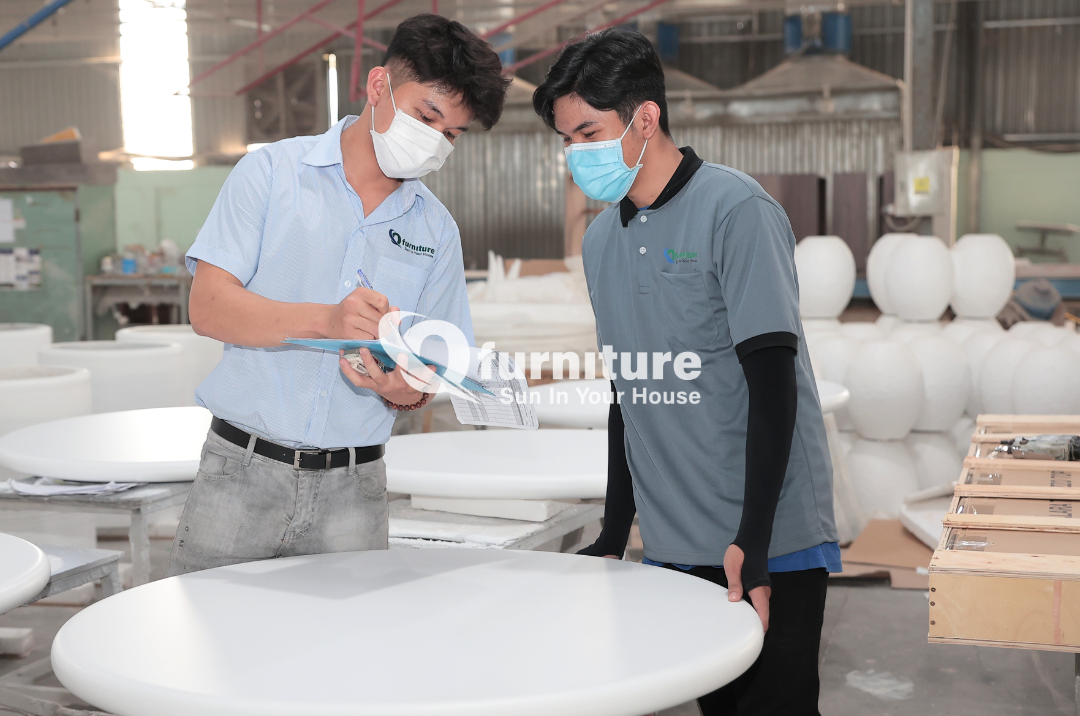
Quality problems reveal themselves through suppliers’ QC processes, not their promises. Ask how they implement AQL (Acceptable Quality Limit) sampling during production, what inspection checkpoints exist before shipping, and whether they use third-party inspection services. Request recent QC inspection reports showing defect rates and corrective actions.
Wood furniture QC focuses on joinery integrity, finish consistency, and dimensional accuracy. Mixed-material products require expanded inspection protocols: concrete surface uniformity, wood-to-concrete adhesion quality, differential movement testing (wood and concrete expand/contract at different rates), and finish compatibility across materials. Suppliers experienced in hybrid production will articulate these material-specific inspection points without prompting.
The best suppliers welcome pre-shipment inspections and have formal processes for managing defects discovered before or after shipping. Red flags include resistance to third-party inspections, vague quality promises without documented procedures, or claims of “zero defect” rates that aren’t credible for any manufacturing operation.
-
MOQ Flexibility & Pricing Structure
Minimum order quantities vary significantly by product complexity and supplier business model. Simple wood designs in standard materials may start at 500 units; complex upholstered pieces or items requiring custom tooling often require 1,000-2,000 unit MOQs. Wood–concrete hybrid products typically face higher MOQs—1,500-3,000 units—reflecting custom mold costs, material batching minimums, and specialized production setup.
More important than the MOQ number is understanding the supplier’s pricing logic. Request detailed quotations breaking out material costs, labor, finishing, packaging, and inland transportation to port. For mixed-material products, pricing transparency becomes particularly important: concrete material costs, mold fabrication (if custom shapes), reinforcement materials, and specialized finishing should appear as separate line items. This transparency helps you evaluate whether pricing is genuinely competitive or relies on hidden costs emerging later.
Ask about volume pricing tiers and payment terms—established exporters typically offer 30% deposit/70% before shipping structures.
-
Communication & Responsiveness
Sourcing relationships fail as often from communication breakdowns as quality issues. During initial supplier evaluation, note response times to inquiries, clarity of technical answers, and whether staff understand your market requirements. Suppliers serving Western buyers successfully typically have English-fluent teams and understand the documentation standards, shipping terminology, and urgency expectations of international trade.
For technical projects involving material specifications beyond standard wood furniture, assess whether supplier teams include engineering or technical staff who can discuss structural requirements, finish systems, or installation considerations. Wood–concrete hybrid production requires cross-disciplinary knowledge; suppliers simply forwarding questions to production managers without technical interpretation often lack genuine expertise.
Test communication under mild stress—request design modifications, ask detailed technical questions, or raise hypothetical problems. How suppliers handle these interactions predicts how they’ll manage real production challenges.
-
Financial Stability Indicators
Supplier financial problems become your operational problems when production stops mid-order or quality suffers from cost-cutting. While detailed financial statements may be unavailable, observe indicators: factory condition and equipment maintenance, worker payment punctuality (ask during factory visits), and how long they’ve maintained relationships with material suppliers.
For suppliers investing in specialized capabilities like concrete production, facility investment signals commitment: climate-controlled production areas, material testing equipment, and dedicated finishing facilities represent substantial capital deployment that casual market entrants avoid. Newer suppliers or those experiencing rapid growth sometimes struggle with cash flow management affecting production reliability. This doesn’t disqualify them, but warrants more cautious engagement—smaller initial orders, letter of credit payment terms, or progress inspection checkpoints.
-
Reference Verification
Request contact information for 3-5 current customers in your target market. Speak directly with their procurement or sourcing managers about experience with quality consistency, communication, problem resolution, and on-time delivery performance. For suppliers claiming specialized capabilities, request references specifically for those product categories—wood–concrete hybrid projects, for example, present different challenges than standard wood furniture production.
Suppliers confident in their capabilities provide references willingly; reluctance suggests problems they’re hoping you won’t discover.
Quality Standards & International Compliance Requirements
Furniture imports to regulated markets require navigating overlapping compliance frameworks. Understanding these requirements early prevents costly delays or rejected shipments.
United States Market Compliance
US furniture imports face several regulatory hurdles beyond standard customs procedures. The Consumer Product Safety Improvement Act (CPSIA) requires third-party testing for residential furniture to verify compliance with flammability standards and lead content limits for painted products. Your supplier should understand these requirements and work with accredited US testing laboratories—typically Intertek, SGS, or Bureau Veritas facilities.
CARB Phase 2 regulations limit formaldehyde emissions from composite wood products. Vietnam suppliers using MDF, particleboard, or plywood must source compliant materials and maintain documentation. The Lacey Act adds complexity by requiring declaration of wood species and harvest country for all timber products, making FSC certification valuable beyond environmental marketing.
For furniture incorporating concrete or GFRC elements, additional considerations include material safety documentation for sealers and surface treatments (particularly for food-contact surfaces in hospitality applications), and structural testing verification for commercial installations where building codes may apply.
European Union Market Requirements
EU furniture imports must comply with REACH regulations restricting thousands of chemical substances in consumer products. Suppliers need documented material safety data sheets (MSDS) for all chemicals used in finishing, adhesives, and treatments. This extends to concrete admixtures, release agents, sealers, and protective coatings for mixed-material products. CE marking may be required depending on product category, particularly for children’s furniture or items with electrical components.
The EU Timber Regulation (EUTR) and FLEGT licensing system require due diligence verification that wood products come from legal sources. Vietnam’s progress toward FLEGT licensing helps, but importers remain responsible for supply chain documentation proving legal timber sourcing.
FSC & Sustainable Forestry Certification
Forest Stewardship Council (FSC) certification has evolved from environmental differentiator to market expectation, particularly for retailers with sustainability commitments. FSC Chain of Custody certification verifies that wood materials move through a documented supply chain from certified forests through manufacturing to final product.
For buyers, FSC certification solves several problems simultaneously: it provides legal harvest verification (helping with Lacey Act/EUTR compliance), meets retailer sustainability requirements, and increasingly, consumer expectations. The cost premium for FSC-certified materials—typically 8-15% above non-certified—has narrowed as certification becomes more widespread in Vietnamese wood sourcing.
Vietnam Manufacturing Regions & Supplier Clusters
Vietnam’s furniture manufacturing concentrates in three primary regions, each with distinct characteristics affecting supplier selection.
Binh Duong Province (Southern Vietnam)
Located near Ho Chi Minh City, Binh Duong hosts the country’s largest furniture manufacturing cluster with over 2,500 factories. This region excels in wood furniture production, particularly dining sets, bedroom collections, and living room pieces for Western markets. Proximity to Cat Lai and Cai Mep ports makes export logistics straightforward.
Binh Duong suppliers typically demonstrate strong understanding of US and EU compliance requirements from decades of export experience. The region’s material supply chain is well-developed, with numerous wood processing facilities and hardware suppliers supporting just-in-time manufacturing approaches. A small number of specialized manufacturers in this cluster have developed concrete casting capabilities alongside wood production, primarily serving architectural and hospitality projects requiring integrated material solutions.

Dong Nai Province (Southern Vietnam)
Adjacent to Binh Duong, Dong Nai complements the southern cluster with particular strength in upholstered furniture and mixed-material products combining wood with metal or glass. The province has attracted significant foreign investment, resulting in factories with more automated equipment and quality management systems.
For buyers prioritizing production capacity and modern manufacturing approaches, Dong Nai factories often represent the best balance of capability and cost. The region’s focus on value-added products rather than basic wood furniture aligns with buyers targeting mid-to-upper market segments. Some facilities here have expanded into wood–concrete production for commercial and hospitality applications, leveraging existing engineering capabilities from metal and glass integration work.
Hanoi & Northern Provinces
Northern Vietnam maintains traditional craft furniture production alongside modern export factories. This region excels in intricate carving work, traditional Asian designs, and specialty products requiring skilled hand-finishing. While southern provinces dominate volume production, northern suppliers offer capabilities for products where craftsmanship justifies higher labor content.
Northern factories face longer shipping times to major ports and sometimes less developed export infrastructure, factors that matter for buyers managing tight delivery schedules or just-in-time inventory systems.
Production Timelines & Lead Time Management
Realistic timeline expectations prevent the most common sourcing frustrations. Vietnam furniture production follows predictable rhythms, but flexibility varies by supplier capability, material complexity, and season.
Standard Production Timeline Breakdown
Initial sampling typically requires 3-4 weeks from specification finalization to sample shipment for standard wood furniture, though complex designs or custom finishes may extend to 6 weeks. Mixed-material products involving concrete casting add 2-3 weeks to sampling timelines due to curing requirements and finish testing across material interfaces.
Bulk production scheduling depends on factory capacity and order size—expect 45-60 days for orders under 5,000 units, 60-75 days for larger volumes, and potentially 90 days during peak production seasons. Wood–concrete hybrid production typically extends these timelines by 15-20 days to accommodate concrete curing cycles (minimum 28 days for full structural cure), multi-stage finishing, and expanded quality control protocols.
Ocean freight from Vietnam to US West Coast ports takes 18-22 days, East Coast destinations 28-35 days via Suez Canal routing. European ports typically receive shipments within 25-30 days. Add customs clearance, inland transportation, and safety buffers, and total order-to-delivery timelines of 90-120 days represent normal cadence for standard Vietnam furniture sourcing. For architectural or custom projects involving specialized materials, plan 120-150 days.
Seasonal Capacity Constraints
Vietnam furniture factories experience predictable capacity pressure during August through November as suppliers build inventory for Western holiday seasons and spring catalog launches. Chinese New Year (Tet holiday in Vietnam) shuts down production for 2-3 weeks annually in January or February, creating timeline risks for orders scheduled during that window.
Professional buyers plan around these constraints by advancing order placement 6-8 months for peak season delivery needs, maintaining buffer inventory, or building relationships with suppliers who maintain year-round capacity through diversified customer bases.
Accelerated Production Options
Some suppliers offer expedited production for premium fees, though this flexibility has limits. Realistic acceleration might compress 60-day production to 45 days with careful planning, but promises of dramatically faster timelines often result in quality compromises or missed deadlines. For concrete-integrated products, accelerated timelines face material science constraints—concrete curing cannot be rushed beyond certain thresholds without compromising structural integrity.
The suppliers most confident in accelerated delivery typically maintain excess capacity or strategic material inventory—capabilities worth identifying during supplier selection.
MOQ Negotiation & Order Economics
Minimum order quantities represent suppliers’ break-even points between setup costs, material efficiency, and production scheduling. Understanding this logic helps negotiate practical MOQs aligned with your market testing or inventory strategy.
Standard MOQ Ranges by Product Category
Simple wood furniture designs (dining chairs, basic tables, shelving) often start at 500-800 units per SKU. Upholstered pieces or items requiring custom tooling typically require 1,000-1,500 unit MOQs to justify mold costs and material purchasing. Complex products combining multiple materials or extensive hand-finishing may push MOQs to 2,000+ units.
Wood–concrete hybrid furniture faces higher baseline MOQs—typically 1,500-3,000 units—reflecting specialized production economics: custom GFRC mold fabrication, concrete batch minimums (suppliers maintain quality control by batching materials for consistent color and strength), and the sequential production nature of multi-material assembly. For architectural projects, some suppliers accept project-based minimums (e.g., complete furnishing packages for hospitality developments) rather than per-SKU requirements.
These baselines assume single-item production runs. Suppliers often accept lower per-item quantities when orders include multiple SKUs they can produce in sequence, amortizing setup costs across the total order value.
Factors Affecting MOQ Flexibility
Suppliers reduce MOQs when business logic justifies it: filling production gaps during slow periods, establishing relationships with buyers demonstrating growth potential, or producing items using materials and processes they’re already running for other clients. Conversely, highly customized specifications, unique materials requiring minimum supplier buys, or complex finishing processes reduce flexibility.
The most productive MOQ conversations focus on total order value rather than per-item quantities. A $30,000 order spread across three SKUs at 500 units each may be equally attractive to suppliers as 1,500 units of a single item—both reach their minimum business threshold.
Testing Market Demand with Controlled Risk
For buyers testing new markets or product concepts, high MOQs create inventory risk. Strategies include ordering multiple colorways or finish variations of a single design (counting toward total MOQ while providing market feedback), partnering with suppliers on ODM designs they’ve already tooled (eliminating setup costs), or negotiating phased production with initial smaller batches followed by larger reorders based on sales performance.
Some established Vietnam suppliers now offer sampling programs where buyers purchase 10-50 units at higher per-unit costs to test market reception before committing to full MOQ production. This flexibility typically requires demonstrating serious commercial intent through detailed business discussions and advance planning. For specialized products like wood–concrete furniture, sampling programs remain less common due to the fixed costs of material batching and mold preparation.
Quality Control Systems & Inspection Protocols
Quality problems typically trace to inadequate specification clarity or insufficient inspection rigor, not malicious supplier intent. Effective QC begins before production starts.
Pre-Production Quality Alignment
Approved samples serve as the quality standard for bulk production—invest time ensuring samples truly match your specifications before authorizing production. Document tolerances for critical dimensions, finish quality standards, packaging requirements, and any special handling needs. Vague quality expectations like “good quality” or “export quality” create disputes when your standards differ from supplier assumptions.
For mixed-material products, pre-production alignment must address material-specific criteria: wood grain matching, concrete surface finish consistency (texture, color uniformity), joint integrity at material transitions, and finish compatibility across different substrates. Establish specific AQL (Acceptable Quality Limit) levels by defect category: critical defects (structural failures, safety hazards, material delamination) typically warrant 0% acceptance, major defects (cosmetic issues affecting functionality, visible joint gaps) might accept 2.5% AQL, and minor defects (slight aesthetic variations, minor finish irregularities) could allow 4.0% AQL.
These standards guide supplier production processes and provide clear inspection criteria.
During-Production Inspection Checkpoints
Professional buyers implement inspection stages throughout production rather than relying solely on final inspection: initial production inspection (IPI) when 10-15% of the order completes verifies suppliers are following approved samples and specifications. This stage becomes particularly critical for concrete work—early verification of color batching consistency, surface finish quality, and curing protocols prevents systematic defects in the full production run.
Mid-production inspection around 50% completion catches systematic quality problems while time exists for correction. Final random inspection (FRI) before shipping confirms finished goods meet specifications.
Third-party inspection services (SGS, Bureau Veritas, Intertek, AsiaInspection) provide neutral quality assessment and detailed reporting. Costs typically range $200-400 per inspection day depending on location and complexity. For mixed-material products, ensure inspection teams include personnel experienced with concrete quality assessment—standard furniture inspectors may lack the technical knowledge to evaluate GFRC surface quality or structural integrity. While adding expense, independent inspection dramatically reduces the risk of receiving off-specification shipments.
Container Loading Supervision
Damage during container loading causes surprising numbers of quality claims, particularly for heavy or multi-material products. Professional loading supervision ensures proper blocking and bracing, verifies correct unit quantities, confirms carton marking accuracy, and documents container condition before sealing.
Wood–concrete furniture requires enhanced loading protocols due to weight considerations: floor load distribution, reinforced corner protection, and careful stacking limits to prevent compression damage. Request photos or video of the loading process showing placement of corner protectors, use of load straps or air bags, and proper stacking to prevent shifting during ocean transport. Suppliers experienced with heavy or fragile export items understand these requirements; resistance to documentation suggests inexperience or attempts to hide problems.
Logistics Planning & Container Optimization
Furniture’s dimensional characteristics make shipping logistics particularly critical to landed cost economics. For mixed-material products incorporating concrete, weight considerations become equally important.

Container Loading Strategies
Furniture’s irregular shapes and protection requirements mean actual container utilization rarely approaches theoretical cubic capacity. Expect 65-75% space efficiency for most furniture products; highly stackable items or flat-pack designs might achieve 80-85% utilization. Wood–concrete hybrid products face additional constraints: weight limits often reach before volume capacity fills, particularly for solid concrete components. Standard 40-foot high-cube containers have 28-ton maximum payload limits—concrete-intensive furniture may reach weight limits at 50-60% volume utilization.
Sophisticated suppliers model container loads during quotation to provide accurate freight cost projections, accounting for both dimensional and weight factors. This becomes particularly important for architectural furniture where freight costs can represent 15-20% of landed cost rather than the 8-12% typical for lighter wood furniture.
Standard 20-foot containers hold approximately 28 cubic meters (CBM) of usable space; 40-foot high-cube containers provide about 68 CBM. Calculate whether your order volumes justify full container load (FCL) shipping versus less-than-container-load (LCL) consolidation. FCL provides better per-unit freight costs once orders exceed 15-18 CBM, offers fewer handling touchpoints reducing damage risk, and simplifies customs clearance.
Port Selection & Freight Routing
Northern Vietnam suppliers typically ship through Haiphong port; southern manufacturers use Cat Lai (Ho Chi Minh City) or Cai Mep deep-water port. Port selection affects transit times and freight costs—confirm your supplier’s proximity to their stated shipping port and whether inland transportation to port is included in FOB quotations.
Freight routing to US destinations from Vietnam typically goes direct to West Coast ports, while East Coast shipments may route through Suez Canal or even West Coast transshipment. European shipments generally route through Suez directly to Mediterranean or North European ports. Understanding routing helps set realistic transit time expectations and identify seasonal disruptions (Suez Canal delays, port congestion).
Incoterms Selection
FOB (Free on Board) places responsibility on buyers once goods are loaded on the vessel, requiring you to arrange ocean freight and insurance. This provides maximum control and often lower total costs if you have established freight relationships. CIF (Cost, Insurance, and Freight) has suppliers deliver to your destination port, simplifying logistics but potentially at higher costs. EXW (Ex Works) puts all transportation responsibility on buyers from the factory gate—rarely practical for international furniture shipping.
Most experienced furniture importers prefer FOB terms, working with freight forwarders who provide competitive ocean rates and handle customs documentation. This approach offers transparency in freight costs while leveraging forwarder expertise in documentation and customs compliance. For heavy products, ensure freight quotes account for weight-based pricing rather than volume-only calculations.
Working with Vietnam Furniture Suppliers: Practical Considerations
Beyond technical specifications and compliance requirements, successful Vietnam sourcing relationships require understanding communication norms, payment practices, and problem resolution approaches.
Communication & Cultural Factors
Vietnamese business culture emphasizes relationship-building and indirect communication styles. Suppliers may avoid directly saying “no” or immediately flagging problems, instead suggesting alternatives or highlighting challenges indirectly. For Western buyers accustomed to direct communication, this requires adaptation—ask specific questions, confirm understanding with written summaries, and build relationships that encourage open problem-solving.
Time zone differences between Vietnam and Western markets require organized communication strategies. Establish regular check-in schedules during production, use project management tools for specification documentation and change tracking, and recognize that urgent requests sent at 5pm your time won’t receive responses until your next morning.
Payment Terms & Financial Protection
Standard payment structures typically involve 30% deposit upon order confirmation and 70% balance before shipment. Some suppliers accept letters of credit (L/C) providing both parties financial protection, though L/C costs and bank requirements make them most practical for larger orders exceeding $50,000.
For initial orders with new suppliers, consider inspection-contingent payment structures where final balance releases only after third-party inspection confirms quality. Progressive payment stages tied to production milestones provide additional risk management for larger or more complex projects—particularly relevant for custom architectural furniture where material costs and production timelines exceed standard wood furniture.
Managing Design Changes & Modifications
Design changes during production cause frequent sourcing conflicts. Changes requested after sampling but before production typically incur modest costs for updated tooling or materials. Changes during production become expensive—potentially requiring scrapping completed units, delaying timelines, or accepting compromises.
For concrete-integrated products, mid-production changes face material constraints: mold modifications require complete refabrication, concrete color adjustments affect entire production batches, and curing-stage alterations may be impossible without restarting production cycles. Minimize change-order conflicts by investing time in detailed specifications and thorough sample approval before production authorization.
When changes become necessary, request specific cost and timeline impacts in writing before authorizing modifications.
Building Long-Term Supplier Partnerships
The most successful Vietnam sourcing relationships evolve beyond transactional order placement toward genuine partnerships. This means consistent communication even between orders, transparent forecasting helping suppliers plan capacity, fair problem resolution when quality or timeline issues emerge, and prompt payment demonstrating financial reliability.
Suppliers prioritize reliable long-term customers during capacity-constrained periods, offer better pricing as volumes grow, and invest in process improvements benefiting your products specifically. For buyers working with specialized capabilities like mixed-material production, partnership relationships become particularly valuable—suppliers may invest in custom tooling, maintain material inventory, or develop new finishing techniques specifically supporting your product development roadmap.
These advantages compound over multiple order cycles—one reason experienced importers maintain stable supplier relationships even when nominally cheaper alternatives emerge.
Frequently Asked Questions About Vietnam Furniture Suppliers
What are typical minimum order quantities for Vietnam furniture manufacturers?
MOQs vary by product complexity: simple wood designs often start at 500-800 units per item, upholstered pieces or items requiring custom tooling typically need 1,000-1,500 units, and highly customized products may require 2,000+ units. Wood–concrete hybrid furniture typically requires 1,500-3,000 units due to concrete batching minimums and custom mold costs. Total order value matters as much as per-item quantities—suppliers often accept lower per-SKU volumes when orders include multiple products reaching their minimum business thresholds.
How do Vietnam furniture prices compare to China or other manufacturing countries?
Vietnam furniture pricing typically runs 10-20% below comparable Chinese manufacturers for similar quality levels, though this gap has narrowed as Vietnam’s manufacturing sophistication improves. Labor costs remain Vietnam’s advantage, while China maintains edges in production automation and supply chain depth. Other Southeast Asian alternatives (Indonesia, Malaysia) offer similar pricing but less developed export infrastructure and compliance capabilities. For specialized products like architectural concrete furniture, Vietnam’s pricing competitiveness reflects both labor advantages and emerging material expertise.
What certifications should Vietnam furniture suppliers have for US and EU markets?
US market essential certifications include CPSIA testing compliance, CARB Phase 2 for formaldehyde emissions, and FSC chain of custody for sustainable wood sourcing. EU markets require REACH compliance documentation (covering wood finishes, adhesives, and for mixed-material products, concrete sealers and admixtures), appropriate CE marking, and FLEGT due diligence for legal timber sourcing. Beyond legal requirements, ISO 9001 quality management certification and SA8000 social compliance certification indicate supplier sophistication.
How long does furniture production take from order to delivery?
Plan for 90-120 days total timeline for standard wood furniture: 3-4 weeks for sampling, 45-75 days for bulk production depending on order size and factory capacity, 18-35 days for ocean freight depending on destination, plus customs clearance and inland transportation. Products incorporating concrete extend to 120-150 days due to curing requirements (28-day minimum for structural cure) and expanded quality control protocols. These timelines extend during peak seasons (August-November) and around Tet holiday (January-February). Experienced buyers advance order placement 6-8 months for critical delivery windows.
Can Vietnam suppliers handle private label or custom design furniture?
Yes, though capabilities vary significantly by supplier. ODM suppliers offer existing designs you can customize with your branding, while some provide full custom design services including CAD development and prototyping. For private label success, verify supplier design portfolios match your market aesthetic, confirm IP protection agreements, and expect higher MOQs for completely custom designs requiring unique tooling. Suppliers with architectural design capabilities may offer custom development for mixed-material products, though these services concentrate among specialized manufacturers rather than general wood furniture exporters.
What’s the best way to verify Vietnam supplier quality before placing orders?
Combine multiple verification methods: request current customer references and contact them directly (specifically for the product category you’re sourcing), review certification documents with validity dates and scope, request recent QC inspection reports showing defect rates, conduct factory visits when practical or commission third-party factory audits, start with smaller initial orders before scaling to full volumes. For specialized capabilities like concrete production, verify facility infrastructure (climate-controlled areas, material testing equipment) and request material testing documentation. No single verification method suffices—successful vetting requires multiple confirmation points.
How do I handle quality problems with Vietnam furniture shipments?
Effective resolution starts before problems occur: establish clear quality standards with approved samples, implement pre-shipment inspection protocols, document issues immediately with detailed photos and descriptions. When problems emerge, communicate specific issues rather than general dissatisfaction, request supplier root cause analysis and corrective action plans, and negotiate commercial resolutions (partial refunds, discount on next order, replacement production). For material-specific defects (concrete surface quality, wood-concrete adhesion failures), technical documentation helps focus resolution discussions. Maintain professional communication even during disputes—you may need this supplier relationship for future orders.
Should I work with a trading company or direct with factories?
Both models offer advantages: direct factory relationships typically provide better pricing and communication, trading companies offer simplified sourcing when you need multiple product categories from different manufacturers, quality trading companies provide value through pre-vetting suppliers and managing production oversight. For buyers new to Vietnam sourcing, reputable trading companies reduce learning curve; as you gain experience and volume grows, direct relationships become more attractive. For specialized products requiring technical expertise (architectural furniture, mixed materials), direct factory relationships often work better by eliminating communication layers between design intent and production execution.
What shipping documentation do I need for Vietnam furniture imports?
Standard documentation includes commercial invoice, packing list, bill of lading (ocean freight), certificate of origin (preferential duty treatment), and compliance certificates relevant to your market (FSC certificates, CARB compliance, testing reports). For mixed-material products, include material safety data sheets for concrete components and finish systems. Suppliers typically prepare most documents, but verify accuracy before shipment—documentation errors cause customs delays and potential penalty assessments. Work with experienced freight forwarders who understand destination country requirements.
How do I protect intellectual property when working with Vietnam suppliers?
IP protection starts with clear contractual agreements: include non-disclosure provisions, specify design ownership explicitly, require suppliers to not produce your designs for other customers, and register trademarks in Vietnam when appropriate. Recognize that legal enforcement remains challenging—the most effective protection combines legal contracts with relationships where suppliers value long-term business more than short-term gains from IP violation. Consider working with suppliers who have established reputations serving major international brands, as they have more to lose from IP violations. For custom architectural designs or proprietary material formulations, selective disclosure (providing only necessary technical details) adds practical protection.
Related Resources & Further Reading
This pillar guide covers the essential framework for evaluating and working with Vietnam furniture suppliers. For deeper exploration of specific topics, the following cluster resources provide detailed guidance:
OEM vs ODM Manufacturing Models — Detailed comparison of production models including cost implications, IP considerations, and decision frameworks for choosing the right approach for your business stage and product strategy.
MOQ Negotiation & Pricing Strategies — Comprehensive analysis of minimum order quantity factors, volume pricing tiers, break-even calculations, and negotiation tactics for reducing initial order risks while maintaining supplier relationships.
Quality Control & Inspection Protocols — Step-by-step guide to implementing AQL standards, managing third-party inspections, establishing production checkpoints, and creating defect resolution processes that protect your quality standards without unnecessary rigidity.
Export Compliance for US Markets — Detailed navigation of CPSIA requirements, CARB Phase 2 regulations, Lacey Act compliance, import duties and tariff considerations, and customs clearance procedures specific to US furniture imports.
Export Compliance for EU Markets — Comprehensive coverage of REACH regulations, CE marking requirements, FLEGT licensing, VAT and duty structures by country, and EU customs procedures for furniture imports.
Vietnam Manufacturing Capacity Assessment — Framework for evaluating supplier production capacity, identifying scalability limitations, conducting factory audits remotely or in-person, and planning volume growth with your chosen suppliers.
Lead Times & Production Scheduling — Detailed timeline breakdowns by product category, seasonal planning considerations, expedited production feasibility, and strategies for managing delivery commitments to your customers or retail channels.
Sustainable Wood Sourcing & FSC Certification — Deep dive into Vietnam’s timber supply chains, FSC vs PEFC certification comparison, material cost implications, and sourcing verification processes for regulated markets.
Container Loading & Shipping Optimization — Practical guide to CBM calculations, loading supervision requirements, freight routing options, Incoterms selection, and freight cost management for furniture imports.
Private Label & Custom Design Services — Comprehensive resource covering custom furniture development processes, design IP protection, branding options, packaging customization, and building differentiated product lines with ODM suppliers.
Supplier Vetting & Factory Audit Checklists — Structured evaluation frameworks including red flag identification, financial stability assessment, compliance verification procedures, and reference checking protocols for comprehensive supplier due diligence.
Case Studies: Successful Vietnam Sourcing Partnerships — Real-world examples of buyers who have built successful long-term relationships with Vietnam suppliers, including challenges encountered, solutions implemented, and business results achieved.
Taking Next Steps in Vietnam Furniture Sourcing
Professional furniture sourcing from Vietnam requires more than identifying suppliers—it demands systematic evaluation, clear communication, and realistic timeline planning aligned with your business constraints. The frameworks in this guide provide structure for that evaluation process, but successful sourcing ultimately comes from applying these principles to your specific product requirements and market positioning.
Start with clarity on your own requirements: target price points, quality standards, compliance needs, material specifications, order volumes, and timeline constraints. This clarity helps buyers filter supplier conversations toward partners with verified capabilities rather than ambitious but unsubstantiated promises.
For buyers new to Vietnam sourcing, beginning with established ODM designs in standard wood materials that require minimal customization often reduces risk. This approach allows teams to build familiarity with supplier communication styles, quality expectations, and logistics processes before scaling into more customized OEM production or exploring specialized material capabilities like wood–concrete integration for architectural projects.
The most successful sourcing relationships develop over multiple order cycles. Initial orders validate alignment; subsequent orders refine specifications, improve efficiency, and strengthen mutual understanding. Buyers who approach supplier selection as long-term partnerships rather than transactional purchases typically achieve better consistency and cost control over time.
Next steps for buyers:
Companies ready to evaluate Vietnam furniture suppliers systematically should prioritize manufacturers with verifiable certifications, transparent quality control processes, and proven export experience to regulated markets. For standard wood furniture, numerous qualified options exist across Vietnam’s manufacturing clusters. For buyers requiring specialized capabilities—hospitality-grade architectural furniture, mixed-material products, or custom OEM development—focus evaluation on suppliers demonstrating relevant technical expertise, appropriate facility infrastructure, and project references in those specific categories.
Whether you are placing initial 500-unit orders or managing regular container-load volumes, disciplined supplier evaluation and professional production oversight remain the difference between sourcing frustration and reliable supply chains. The time invested in proper due diligence continues to pay returns across every subsequent order cycle.
For complementary supply chain insights, read our evaluation on Vietnam vs China furniture sourcing for importers.
📩 Request a Direct Factory B2B Sourcing Proposal (FOB / CIF)
Are you evaluating furniture manufacturing partners in Vietnam or planning full container load (FCL) orders? Connect directly with Q-Furniture’s export engineering team to discuss CAD design specs, material finishes, and wholesale pricing.








