


A concrete dining table should not be chosen only by appearance. For a home, restaurant, hotel, resort, or outdoor dining area, the table has to match the space, support daily use, and arrive with the right size, weight, finish, and installation plan. This is why the best buying process starts with specification, not decoration.
This approach is especially useful for designers, importers, contractors, hospitality buyers, and furniture brands. A table that looks strong in a catalog may still create problems if the base blocks chairs, the surface is too porous, the size does not fit circulation, or the weight has not been planned before delivery.
At Q-furniture, concrete furniture is developed with both design and production details in mind. The goal is to help buyers turn a good visual idea into a practical piece that can be manufactured, packed, shipped, installed, and maintained properly.

Start With the Use Case
The first question is where the concrete dining table will be used. A private dining room needs comfort, proportion, and a finish that works with the interior palette. A restaurant needs seat turnover, easy cleaning, and a layout that helps staff move around the table. A resort villa may need a more sculptural look because the table becomes part of the guest experience.
Commercial projects should also consider quantity and consistency. If a hotel orders several tables for suites, terraces, or restaurant areas, the finish should be controlled well enough that the pieces feel like one collection. Small natural differences are part of concrete, but the overall tone and surface quality should still be predictable.
For broader material direction, 2026 Trends and Architectural Concrete Furniture offers useful context on concrete as an architectural furniture material for modern residential, hospitality, and commercial projects.
Choose the Right Concrete Dining Table Size
A common mistake is choosing a table size before checking the room. A concrete dining table needs enough space for chairs, guest movement, service access, and visual balance. For residential projects, the table should feel generous without making the room tight. For restaurants, the table must support seating capacity while keeping aisles comfortable.
Rectangular tables are efficient for larger groups and narrow dining rooms. Round tables encourage conversation and soften the visual weight of concrete. Oval tables are a good middle option because they feel lighter than rectangular designs but still seat several guests. Square tables can work well for compact commercial layouts or smaller dining corners.
The base should be reviewed at the same time as the top. A central pedestal can make chair placement easier, while block bases create a stronger monolithic look. Leg placement matters because guests need space for knees, chairs, and movement. Beautiful proportions mean little if the table is uncomfortable to sit at.

Specify the Surface Finish
The finish determines how a modern concrete dining table feels in the final space. A smooth matte surface works well in calm interiors because it looks refined without reflecting too much light. A slightly textured finish can add depth for outdoor or resort settings. A polished finish can create a more premium, stone-like appearance.
Color should also be selected carefully. Light gray, warm gray, charcoal, cream, and taupe are common choices because they pair easily with wood, metal, woven materials, plants, and neutral upholstery. Stronger colors can work, but they need to match the project concept and should be sampled before production.
Buyers should ask for finish samples when possible. Photos are useful for early selection, but concrete reacts to light, texture, and surrounding materials. A sample helps confirm whether the tone is warm enough, whether the texture feels suitable, and whether the surface matches the project’s quality expectation.
Plan Concrete Dining Table Sealing and Maintenance
Dining tables face food, drinks, oils, sauces, cleaning products, and regular hand contact. A concrete dining table therefore needs a suitable sealer, especially for restaurants and hospitality spaces. The right sealer helps reduce staining and makes daily care more manageable.
Maintenance should be simple enough for the user. Staff or homeowners should know which cleaners to use, which chemicals to avoid, and how quickly spills should be wiped. Concrete can be durable, but durability does not mean the surface should be treated carelessly. Clear care instructions protect the table and reduce complaints after installation.
For outdoor use, buyers should also review modern concrete outdoor furniture because exterior placement brings extra concerns such as sunlight, humidity, rain exposure, drainage, and seasonal cleaning. An outdoor concrete dining table should be specified differently from a table used only inside an air-conditioned dining room.
Review Structure, Weight, and Delivery
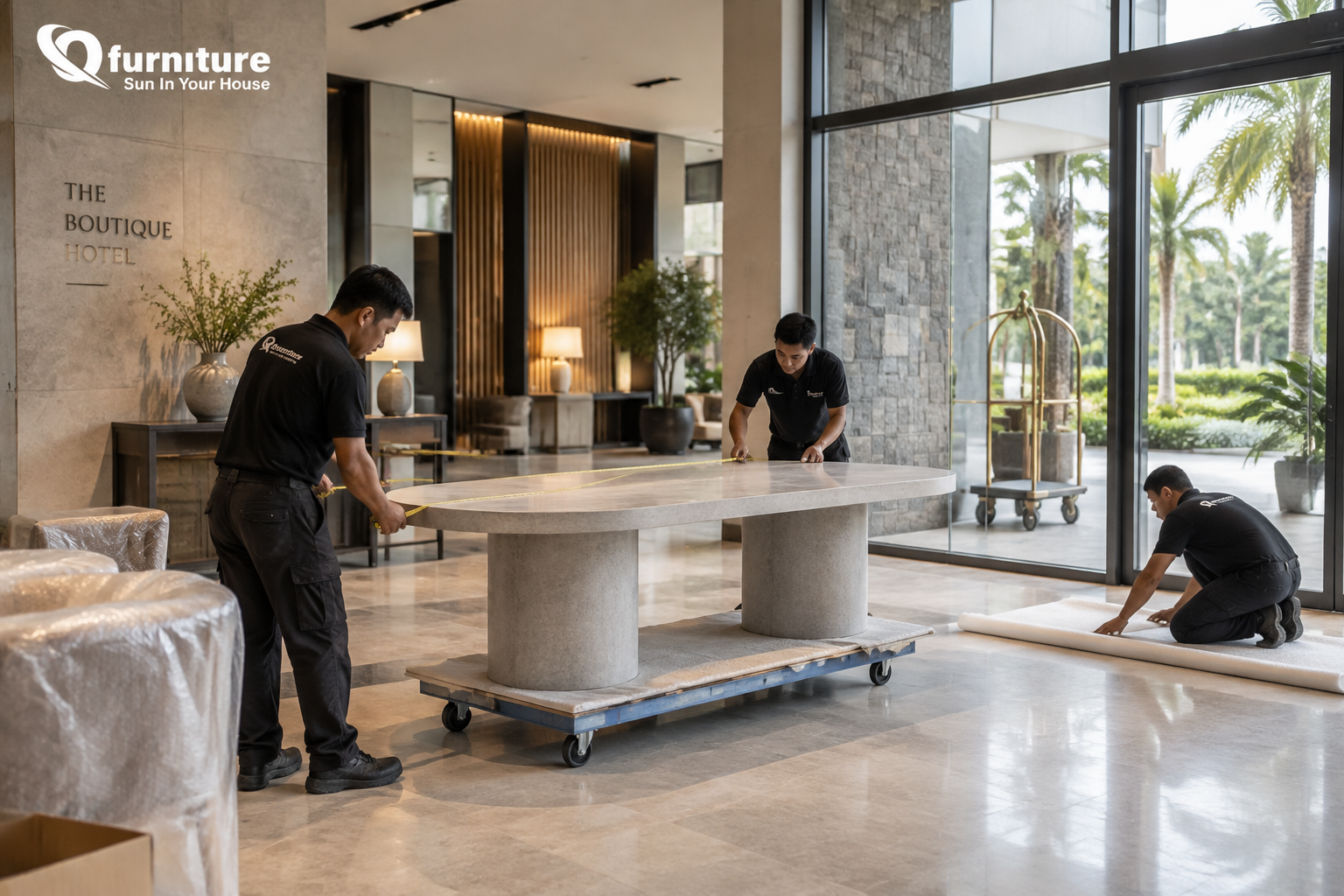
Concrete has visual strength because it has real material presence. That also means weight must be planned early. Buyers should check elevator size, door width, stair access, floor protection, installation route, and final placement before confirming a large table. These details can affect design decisions before production begins.
Modern production methods can reduce weight through GFRC, UHPC, lightweight aggregates, and carefully designed profiles. Still, a concrete table is rarely treated like a lightweight folding item. A good specification should balance the desired monolithic look with realistic handling and shipping needs.
Packaging is part of the product quality. Corners, edges, legs, bases, and surface finishes should be protected during export. This is especially important for B2B buyers who need reliable delivery for hotels, restaurants, showrooms, and retail projects.
Compare Product Options
When buyers are ready to compare designs, concrete dining tables gives them a more focused next step than a broad furniture category because the page matches the exact table type they are researching.
A product comparison should include more than shape and price. Buyers should compare thickness, edge profile, base type, color, surface texture, sealing method, packaging, lead time, and whether customization is available. These details help separate a decorative concept from a table that is realistic for the project.
For brands and importers, repeatability is another important point. One sample may look good, but bulk orders require stable production control. The buyer should confirm how finish approval, tolerance, inspection, and packing are handled before placing a larger order.
Work With the Right Manufacturing Partner
A qualified concrete table manufacturer can help buyers adjust the design before production. This may include changing the top thickness, refining the base, suggesting a lighter construction, improving the edge detail, or recommending a finish that is easier to maintain in the target environment.
Working with a Vietnam furniture manufacturer can be useful for buyers who need OEM/ODM support, export packing, finish sampling, mixed-material production, and project communication. The manufacturer should understand both furniture design and the technical behavior of concrete.
For a custom concrete dining table, the buyer should prepare dimensions, reference images, target quantity, finish direction, use environment, timeline, and delivery market. This information helps the supplier evaluate feasibility and suggest improvements before sampling.
The best result comes from early communication. If weight, installation, color control, sealing, or maintenance is discussed only after production, changes become slower and more expensive. Specification protects both the buyer and the final user.
Final Specification Checklist
Before confirming a concrete dining table, buyers should review the project use, number of seats, room layout, table shape, top thickness, base structure, finish sample, sealing method, care requirements, delivery route, packaging, and lead time. This checklist keeps the decision practical and reduces surprises later.
The right table should look intentional in the space, feel comfortable for guests, and be realistic for manufacturing and logistics. Concrete is a strong material choice, but it performs best when design, production, and maintenance are considered together.
For project quotations, finish samples, or OEM/ODM specifications, buyers can contact Q-furniture before confirming sizes, quantities, materials, and shipping requirements.
FAQ
What is the best use for a concrete dining table?
A concrete dining table works well in homes, restaurants, hotels, villas, resorts, showrooms, patios, and commercial dining areas that need a durable table with a strong design presence.
How should buyers choose the right size?
Buyers should check seating needs, chair clearance, walking space, service access, room proportion, and delivery route before confirming the size. The right size should support both comfort and movement.
Can concrete dining tables be made lighter?
Yes. Modern mixes, thinner profiles, and reinforced construction can help reduce weight, although concrete remains heavier than many wood or metal alternatives.
Is concrete suitable for outdoor dining?
Yes, but the specification should consider sealing, drainage, sunlight, humidity, cleaning, and placement. Outdoor use should be discussed with the manufacturer before production.
What information should buyers send for a quotation?
Buyers should send dimensions, quantity, use location, reference images, preferred finish, base style, target delivery market, and timeline. Clear details help the manufacturer quote more accurately.








