


Outdoor concrete furniture is designed to handle everyday outdoor use, but regular cleaning is still important to keep its surface looking clean and well maintained. Dust, leaves, food, drinks and other outdoor debris can gradually build up on the surface, especially when furniture is placed on a patio, terrace or garden.
Fortunately, cleaning concrete furniture does not have to be complicated. With the right tools and cleaning products, you can remove everyday dirt and spills without putting unnecessary stress on the surface or its protective finish.

How to Clean Concrete Furniture
1. Remove Dust and Loose Dirt
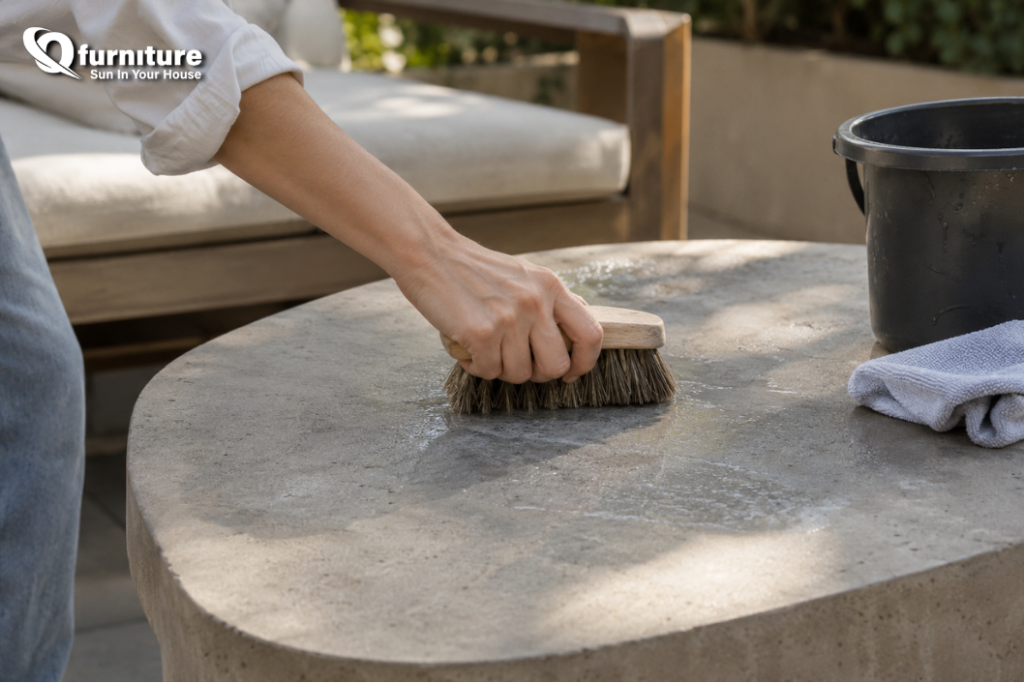
Start by removing loose dirt, dust, leaves and other debris from the furniture. Use a soft cloth, microfiber cloth or soft-bristle brush to gently clean the surface.
If there is sand or other abrasive debris on the furniture, remove it before wiping the surface. Rubbing these particles against the concrete can cause unnecessary scratches or marks over time.
For outdoor dining tables, make this a regular part of your cleaning routine, particularly after windy days or when the table is surrounded by trees and plants.
2. Clean the Surface with a Mild Cleaner
For general cleaning, use clean water together with a mild or pH-neutral cleaner. Apply the solution with a soft cloth or sponge and gently wipe the surface.
There is usually no need for aggressive cleaning products when dealing with everyday dirt. Strong chemicals can be unnecessary and may affect the protective finish of the furniture.
Always follow the care instructions provided for your specific concrete furniture, as the appropriate cleaning method can vary depending on its finish and construction.

3. Clean Spills and Stains Promptly
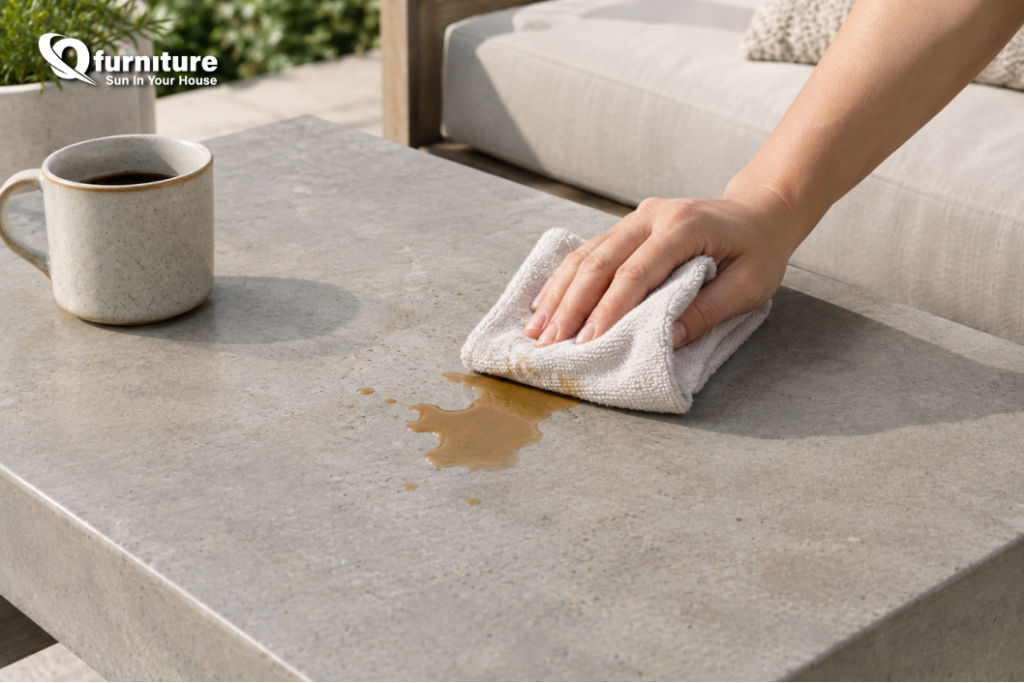
Outdoor concrete tables and other concrete furniture can easily come into contact with coffee, food, wine, oil and other liquids. Instead of leaving spills on the surface, wipe them up as soon as possible.
Prompt cleaning is particularly useful for colored or acidic substances, which may leave marks or affect the protective finish if they remain on the surface for an extended period.
For a fresh spill, gently remove the liquid with a clean cloth before cleaning the area with a mild solution. Avoid aggressively scrubbing the stain, especially if the surface has a protective coating.
4. Rinse and Dry the Surface
After cleaning, remove any remaining cleaning solution from the surface with clean water. This helps prevent residue from building up.
Use a soft, clean cloth to dry the furniture or allow it to dry naturally in a suitable outdoor environment.
Keeping the surface clean and free from cleaning residue can help maintain its original appearance over time.
What to Avoid When Cleaning Concrete Furniture
Cleaning concrete furniture is relatively simple, but using the wrong cleaning method can create unnecessary problems.
Avoid Harsh or Acidic Cleaners
Avoid using strong acidic or abrasive cleaning products unless they are specifically recommended for your furniture.
Some cleaning chemicals can affect the protective finish or change the appearance of the surface. A mild, suitable cleaner is generally a better choice for regular maintenance.
Avoid Abrasive Tools
Steel wool, abrasive pads and rough brushes can scratch or mark the surface.
Instead, use a soft cloth, sponge or soft-bristle brush when removing everyday dirt.
Avoid Cutting Directly on the Surface
If you use a concrete dining table for meals or food preparation, avoid cutting directly on the tabletop.
Knives and other sharp objects can leave scratches or marks on the surface. Using a cutting board is a simple way to protect the tabletop during everyday use.
Avoid Excessive Cleaning Pressure
Concrete is a strong material, but that does not mean every cleaning method is appropriate for its surface.
Avoid using excessive pressure or aggressive scrubbing when cleaning your furniture. If pressure washing is being considered, check the manufacturer’s care instructions first to make sure it is suitable for the specific product and finish.
How Often Should You Clean Concrete Furniture?
There is no single cleaning schedule that works for every outdoor space. How often you clean your furniture depends on its location, how frequently it is used and how much dirt it is exposed to.
For everyday maintenance, remove visible dust, leaves and dirt whenever necessary. Spills should be cleaned as soon as they occur, while a more thorough cleaning can be done when the surface begins to show accumulated dirt or stains.
Furniture placed in busy outdoor dining areas may require more frequent cleaning than pieces used occasionally in a private garden or terrace.
Regular, simple cleaning is usually more practical than waiting until dirt and stains become difficult to remove.
Keep Your Concrete Furniture Looking Its Best
Concrete furniture can be a practical choice for patios, terraces, gardens and other outdoor spaces. While the material is durable, regular cleaning can help maintain its appearance and keep the surface looking its best.
Use gentle cleaning methods, remove spills promptly and avoid products or tools that may damage the surface or protective finish.
For a broader look at how concrete furniture can be used in commercial outdoor spaces, explore our guide to outdoor concrete furniture for commercial spaces.
Cleaning is only one part of maintaining outdoor furniture. If you also want to learn how to protect outdoor concrete furniture from sun, rain and changing weather conditions, read our guide for more practical tips.








