Concrete Furniture Or Wood Furniture – Planter Material Comparison
Are you on the way to figuring out the right pot that could match your lovely plant? Actually, we don’t have the “one type fits all” type of container. Since plants are adaptable, there is no “correct” material or design pot. This also depends on your creativity, budget as well as the size and theme of your outdoor space. However, we could lend a hand by giving pros and cons for the two most common materials: concrete planters and wooden planters. Before starting, you could have a look at our patio concrete furniture collection, including the concrete outdoor dining table and more!

Planters vs Concrete Furniture
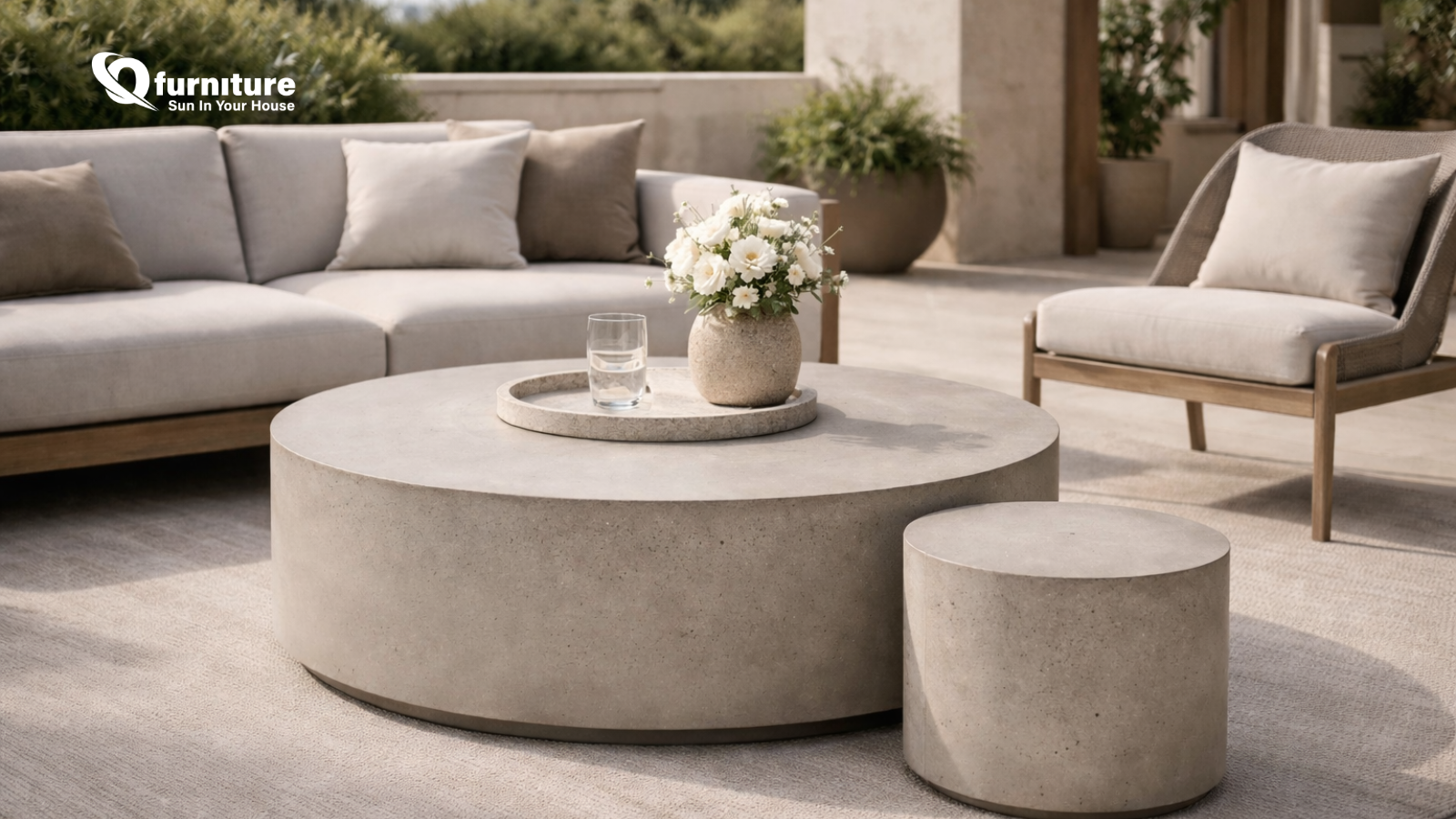
Making concrete for any intent mostly involves sand, rocks, and of course, cement mixed with water, sand. The material is well-known for constructing buildings and monuments since ancient times. Maybe because of this reason, most people would think of concrete as cold, heavy, and inelegant materials. However, with the advent of the minimalist trend, cement-based furniture in general has dominated the decoration industry. The bulky and raw feature turns out to be aesthetic, contributing a fresh contemporary look for both exterior and interior spaces.

Weather-resistant concrete furniture
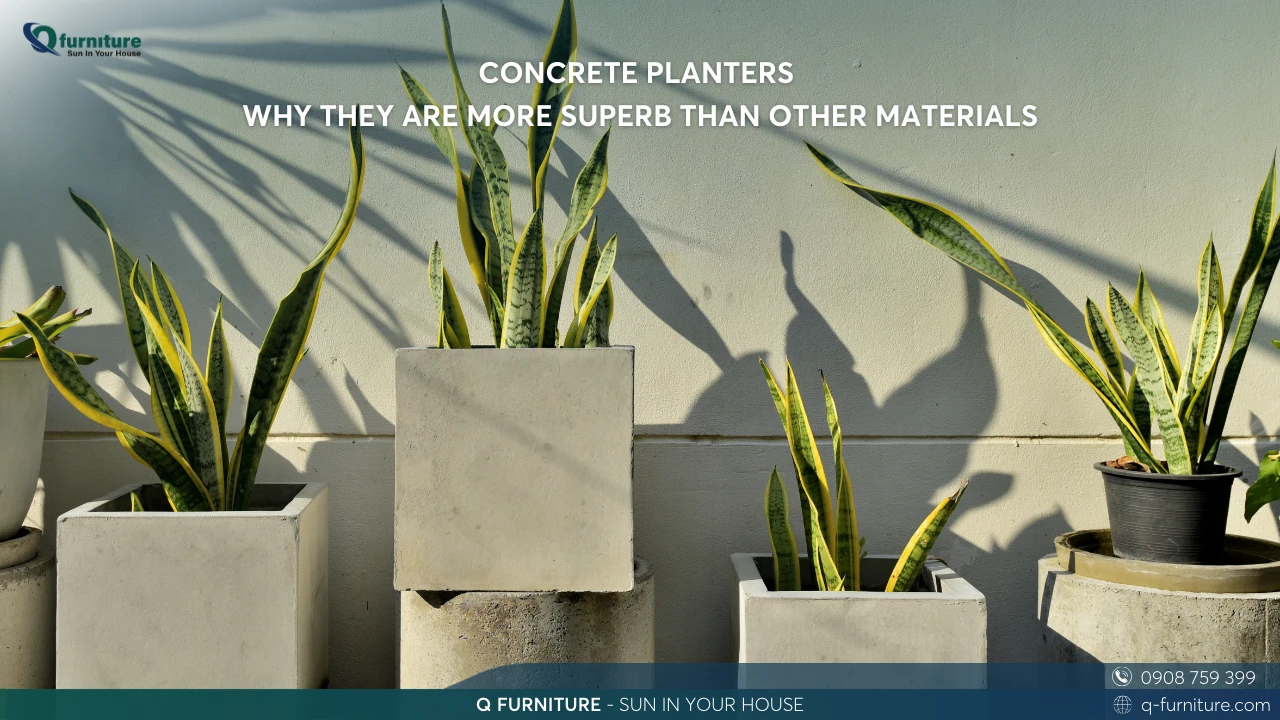
When we talk about the best outdoor furniture material, concrete definitely comes first to our mind. Because of its durability and strong texture, the cemented planter can tolerate harsh weather conditions such as rain and storms without being severely corrosive. And on a windy day, lightweight objects are particularly vulnerable as the hazardous wind could damage your properties, however, this case does not apply to the concrete planters.
Flexible size and shape
Concrete pots can vary in any form and size considering the nature of the forming process. They can be curvy or in basic rectangular. They can also serve as small pots, complementing with other items or make a real statement as gigantic containers. This also means the feature allows you to tailor the appearance of your concrete planters regarding their size and design.
However, there are some certain disadvantages of buying a concrete pot. Although the material is sturdy, damage while delivering is also possible. And during winter, it is necessary to protect the planters more properly.
Planters vs Wood Material
The beauty of wood in plant pots is stunning, showing a deep, natural appeal. On the market, there are several varieties of wooden planters. The majority of them are constructed of pressed wood or rot-resistant wood.

Visual Appealing
It is no doubt that wood has an attractive appearance and intriguing look. It has the ability to offer elegance and warmth to your house in a simple yet classy approach. However, the material is significantly more expensive than the concrete one. The more high-quality and beautiful the wood is the more those pots cost, especially the cedar and rosewood ones.
Environmental friendly
Wooden pots are natural materials and do not endanger plant health; however, you must pay special care to them to ensure that there is no rot. Additionally, certain types of flowers and plants, such as succulents and cactus are the perfect fit for pots made from wood. And, because wood can insulate extreme heat, if you live in a hot, dry area, the plants can benefit as the soil (and hence the roots) will stay cooler.