


When people think of concrete furniture, they may picture heavy, industrial pieces designed mainly for public spaces. Modern concrete furniture, however, has evolved far beyond that image.
Today, concrete tables, stools, benches, planters, and other furniture pieces can be found in contemporary homes, hospitality spaces, restaurants, and commercial environments. With its distinctive material character, clean forms, and ability to work across different design styles, concrete has become an increasingly popular choice for both indoor and outdoor furniture.
So, what is driving the growing interest in concrete furniture?
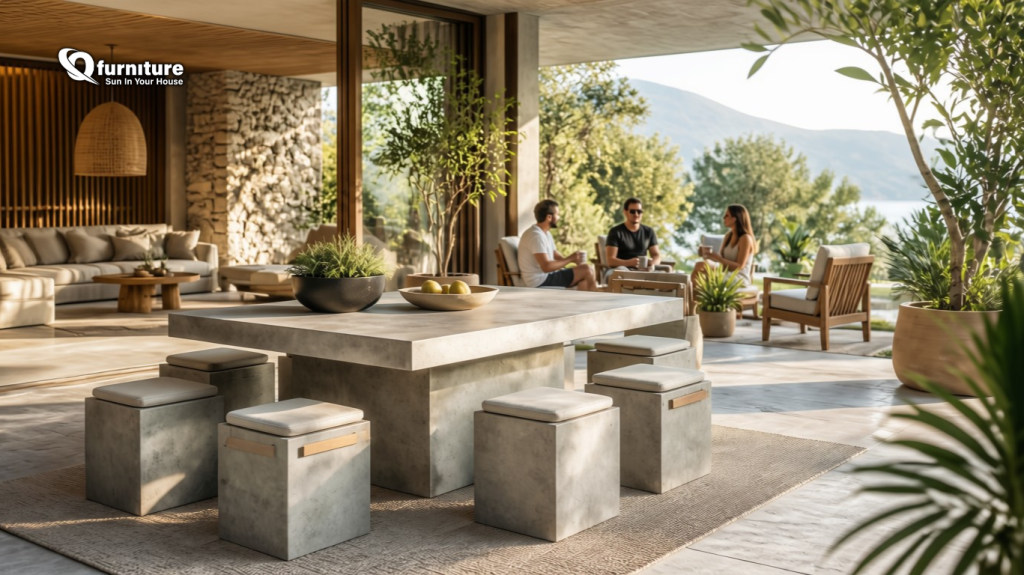
Concrete Furniture Is Becoming More Popular
Concrete has been used in architecture for centuries, but its role in furniture design has expanded significantly in modern interiors and outdoor spaces.
Designers increasingly use concrete furniture to create contemporary, industrial, minimalist, rustic, and even more natural-looking environments. Its neutral appearance allows it to work with materials such as wood, stone, metal, glass, and greenery.
A concrete dining table, coffee table, bench, or planter can therefore serve not only a functional purpose but also become part of the overall design language of a space.
The growing interest in concrete furniture trends reflects a broader preference for materials that combine visual character with practical performance.
Why Concrete Furniture Works in Modern Spaces
Concrete has several characteristics that make it particularly interesting for furniture design.
Its natural tones and tactile surfaces can add visual depth without relying on elaborate decoration. Clean lines and simple geometric forms also work well with contemporary architecture.
At the same time, concrete furniture can be used across different settings. Depending on the product, finish, and construction, it can be suitable for living spaces, hospitality environments, patios, terraces, gardens, restaurants, and commercial areas.
This combination of design flexibility and practical function is one reason modern concrete furniture continues to attract attention.
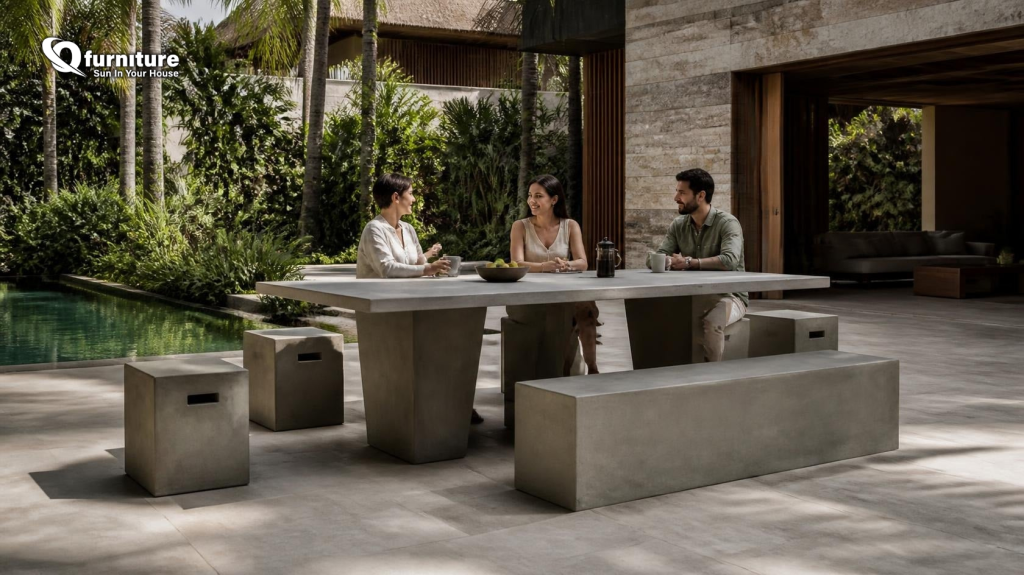
7 Reasons Behind the Growing Concrete Furniture Trend
1. Durability and Long-Term Use
One of the main reasons people choose concrete furniture is its solid construction and long-lasting material character.
When properly designed and manufactured, concrete furniture can withstand regular use and can be suitable for demanding indoor and outdoor environments.
However, durability depends on more than the material itself. The concrete composition, reinforcement, curing process, surface finish, sealant, and intended application can all affect how a product performs over time.
For buyers, it is therefore important to look beyond the word “concrete” and consider how the furniture is actually made.
2. Versatility for Indoor and Outdoor Spaces
Concrete furniture is not limited to outdoor environments.
Concrete tables, stools, benches, and basins can be used indoors as well as outdoors, allowing designers to create visual continuity between different areas.
Outdoor applications can include:
- Patios and terraces
- Courtyards
- Resort gardens
- Poolside areas
- Outdoor restaurants and cafés
- Commercial landscapes
Indoors, concrete can complement contemporary living rooms, dining areas, hospitality spaces, and other environments where a strong material presence is desirable.
For commercial projects, modern concrete outdoor furniture can be particularly effective when the furniture needs to feel visually connected to the surrounding architecture.
3. Design Freedom
Concrete offers considerable flexibility in furniture design.
Its neutral appearance works with a wide range of colors, materials, and interior styles. Designers can use simple silhouettes for minimalist spaces or combine concrete with contrasting materials for a warmer and more layered look.
Concrete furniture can work particularly well with:
- Natural wood for a warmer appearance
- Metal for an industrial aesthetic
- Stone and terrazzo for a cohesive material palette
- Plants and greenery for outdoor environments
- Textiles and cushions for softer seating areas
This flexibility allows concrete furniture to become part of many different design directions rather than being limited to one specific style.
4. Distinctive Material Character
Unlike materials that are designed to look perfectly uniform, concrete can have subtle variations in tone, texture, and surface appearance.
These characteristics can give each piece a more architectural and tactile quality.
For designers, this makes concrete useful when a space needs a strong focal point without relying on complex decorative details. A simple concrete coffee table or dining table can add visual weight and structure to an otherwise minimal setting.
5. Practical Maintenance
Maintenance requirements vary depending on the product, finish, environment, and manufacturer.
In general, smooth and properly sealed concrete surfaces can be relatively straightforward to clean. Regular cleaning with appropriate methods can help maintain the appearance of the furniture and reduce the buildup of dirt or stains.
However, outdoor concrete furniture is still exposed to weather, moisture, spills, and everyday use. The quality of the surface treatment and the care instructions provided by the manufacturer should therefore be considered when choosing a product.
6. Long-Term Value
Concrete furniture can also be considered from a long-term value perspective.
A product’s value is not determined only by its initial purchase price. Durability, maintenance requirements, expected service life, appearance, and suitability for the intended environment all contribute to the overall investment.
This is particularly relevant for hospitality and commercial projects, where furniture may be used frequently and exposed to demanding conditions.
For buyers evaluating outdoor furniture, factors such as stability, maintenance, replacement frequency, transportation, and installation should be considered alongside the unit price.
7. Increasing Availability and Customization
As interest in concrete furniture grows, buyers have more options in terms of shapes, sizes, finishes, and applications.
This is especially relevant for commercial and hospitality projects that may require furniture to match a particular design concept or project specification.
Concrete furniture can be manufactured in different forms, including coffee tables, dining tables, side tables, stools, benches, planters, and other project-specific pieces. For more examples of available designs and applications, explore our concrete furniture collection.
For B2B buyers, customization and OEM/ODM capabilities can also make concrete furniture more suitable for private-label collections or large-scale projects.
How Concrete Furniture Fits Different Design Styles
One reason behind the popularity of concrete furniture is its ability to adapt to different aesthetics.
Modern Minimalist
Simple forms, neutral colors, and clean lines allow concrete furniture to complement minimalist interiors and outdoor spaces.
Industrial
Concrete naturally works with metal, exposed materials, darker tones, and unfinished textures to create an industrial atmosphere.
Rustic and Natural
Concrete can also be combined with timber, plants, natural textiles, and earthy colors to create a softer and more organic environment.
Contemporary Outdoor
In outdoor settings, concrete furniture can provide a strong architectural element while working alongside landscaping, stone, wood, and greenery.
The result depends less on the material alone and more on how the furniture is designed and combined with the surrounding environment.
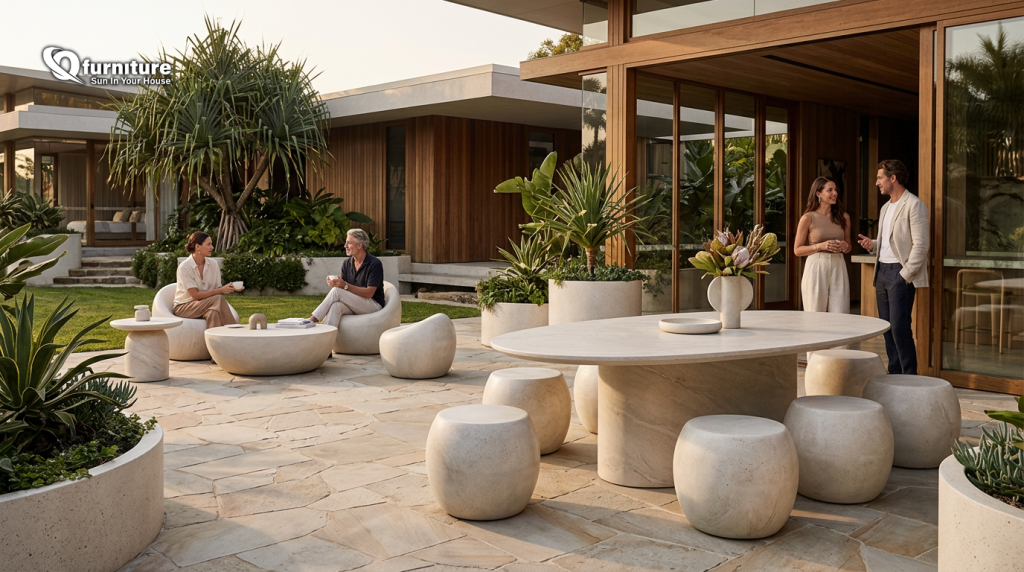
Not All Concrete Furniture Is Made the Same
The term “concrete furniture” covers a wide range of products, and their performance can vary considerably.
Material composition, reinforcement, manufacturing processes, curing, finishing, and sealants can all influence the final product.
For example, lightweight concrete formulations can make certain furniture pieces easier to handle and reposition than traditional solid concrete. Surface treatments can also influence resistance to moisture, stains, UV exposure, and everyday wear.
For buyers, evaluating the construction and finish of a product is therefore just as important as evaluating its appearance.
What Should You Consider When Choosing Concrete Furniture?
Before purchasing concrete furniture, consider:
- Where it will be used – indoor, covered outdoor, or exposed outdoor
- How frequently it will be used – residential, hospitality, or commercial
- Weight and mobility – whether the furniture needs to be moved regularly
- Surface finish – texture, color, and level of protection
- Maintenance requirements – cleaning and surface care
- Design compatibility – how it works with other materials and furniture
- Customization requirements – dimensions, finishes, colors, or project-specific designs
- Manufacturer capabilities – especially for commercial or wholesale orders
These factors can help buyers select furniture that fits both the design and functional requirements of the project.
If you are still deciding whether concrete is suitable for a specific outdoor setting, our guide on when to use outdoor concrete furniture can help you evaluate where concrete works well and where other materials may be more practical.
Why Concrete Furniture Continues to Gain Attention
The growing concrete furniture trend is not simply about making furniture look industrial.
Concrete has become more versatile in modern furniture design, with products ranging from minimalist indoor tables to outdoor seating and commercial hospitality furniture.
Its combination of material character, design flexibility, durability, and long-term usability makes it an interesting option for projects that want furniture to contribute to both function and visual identity.
The key is choosing the right product for the right environment and evaluating the material, construction, finish, and maintenance requirements rather than assuming that all concrete furniture performs the same way.
Q Furniture manufactures concrete furniture for commercial and export projects. Explore Q Furniture to learn more about its products and manufacturing capabilities.
About Us
Q Furniture brings more than 15 years of furniture manufacturing experience, with a dedicated focus on concrete furniture and customized OEM/ODM solutions.
For businesses, retailers, interior brands, and other professional buyers looking for concrete furniture manufacturing and customized solutions, Q Furniture can support projects from product development and mold making to production and finishing.
Looking for customized concrete furniture for your next project? Contact Q Furniture to discuss your requirements.








